Biola University
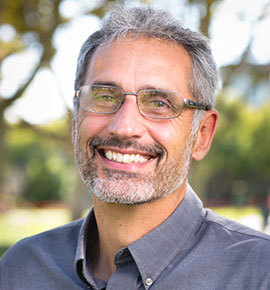
Is social media the new public square? If it is, when so much anger exists online and social media incentives bad behavior, is it possible to have civil discourse? And what does Christian witness look like when buttons get pushed and the discussion becomes divisive? Today鈥檚 guest knows a thing or two about these questions. Dr. Sean McDowell (Ph.D.) joins today鈥檚 podcast to speak with Tim and Rick about having public discourse online. Sean talks about his vision for his YouTube channel and how he sees his work online as a way to mentor the next generation.
Transcript
Rick Langer: Welcome to the Winsome Conviction podcast. My name's Rick Langer and I'm your co-host. I'm also a Professor Emeritus from Biola University and Co-Director of the Winsome Conviction Project, along with my good friend and colleague, Tim Muehlhoff.
Tim Muehlhoff: Rick, so great to be back with you. A 2021 Pew Research Survey found that more than 40% of US adults have faced harassment online, and that in its most severe forms, physical threats, which alarmingly is on the rise. Researchers from the Neely Center for Ethical Leadership and Decision Making at the University of Southern California have co-opted a term called conflict entrepreneurs who actually gain an audience by stoking the fire. The lead researchers said this, most people are not actively seeking out conflict, but the way these platforms are engineered to reward activity and engagement, people can game the system to get bigger platforms. Here's an interesting response which leads perfectly to our guests for today. These are what the researchers at USC said. Public policing of the internet is impractical. Instead, what they said is we need to reward and incentivize constructive behaviors and constructive platforms.
We heartily agree with that at the Winsome Conviction Project, and we are always on the lookout for people who we think are doing a great job speaking truth in love and engaging rather than shutting down conversation. We can't think of anybody better than our colleague. Dr. Sean McDowell, he's a Christian apologist, author, professor at Biola University's Talbot School of Theology. He's known for his work equipping young people to defend their Christian faith who is teaching, writing, speaking, outlined content. He's co-host, the Think Biblically podcast, has authored or co-authored more than 20 books. And his YouTube channel is rapidly growing with over 362,000 followers, but without a doubt, his crowning achievement of a very illustrious career, he is the co-author of End The Stalemate with Tim Muehlhoff. He's laughing, which is kind of hurtful, Rick. I would just be honest with you, it's a little hurtful.
Sean, welcome to the Winsome Conviction podcast.
Sean McDowell: Good to be back. Been looking forward to this.
Tim Muehlhoff: We don't want to place all the blame on the internet. We don't want to place all of incivility on social media, but we are really concerned about what we're seeing on social media, and this rise of conflict entrepreneur. Today, many people believe that we're in something called the argument culture. My goodness, this was coined by Deborah Tannen, a Georgetown linguist almost 25 years ago. Imagine the phrase she would use today to see some of the ranker that we're exploring. Do you think today we are in this argument culture, and would you agree with the assessment that there are conflict entrepreneurs today?
Sean McDowell: I found it interesting that you said we don't want to blame the internet. I would say a lot of what social media and the internet does is it doesn't create character. It reveals character that somebody already has, but then it exacerbates it. It becomes like a cycle so it's both cause and I think it's effect. Now, are we in an argument culture? I think that's hard to deny. There are pockets I want to point to you guys as one shining example of people like we're going to have conversation, we're going to listen. I just saw a big podcast this not long ago about an atheist and Christian person with different faith. And it was a civil, thoughtful, substantive conversation. They pushed back at times. But I thought, what a wonderful model of how to do this today.
Are there conflict entrepreneurs? I hadn't thought of that term before, but I think social media favors, it doesn't favor like calm things down. It favors heat things up. We've all seen the studies about how likely to a retweet or a share on some different platform is something that drives anger. And so people know this and they see this. And what's behind it often is money that somebody has, power that somebody has, influence that somebody has. This is why we might be getting ahead of ourselves, but one thing my dad often taught me, he said-
Tim Muehlhoff: Can you explain who your dad is? Just give us a quick Josh McDowell. We love him.
Sean McDowell: Yeah.
Tim Muehlhoff: Rick and I are Campus Crusade for Christ. We are in the shadow of Josh McDowell, we absolutely love, but just bring people up to speed, your dad.
Sean McDowell: Sure. And in some ways that was just a quote like anybody would say I learned something from my dad, but my dad's, he's not just my dad, fair enough. Josh McDowell's name, he's written over 160 books probably or covered it and whatever. Probably he's spoken at 1200 universities.
Tim Muehlhoff: Amazing.
Sean McDowell: Charlie Kirk did 120 universities, my dad literally did 10 times that.
Tim Muehlhoff: That's unbelievable.
Sean McDowell: Massive audiences. Probably spoken to more young people live than anyone in history, as far as they can tell. And one of the things he would tell me over and over again, he'd say, "Son, live by principles. What are your principles about relationships? What are your principles about health? What are your principles about God?"
And so if somebody comes to social media and they don't have certain principles about how you treat people and what's important, they will almost certainly get taken in by the argument culture, getting taken in by the analytics. And I can watch it happen to him. I can see somebody have a video where they're more provocative than they were, and I'm like, "I know what's coming up next." And then they go a little more, and then they go a little more and they compromise their principles. So I think you're right, that's a fair description of an argument culture as a whole, although there's some good exceptions to it.
Rick Langer: One thing I might add on that, like we've said, you don't on the one hand want to blame the internet, but I think Sean, you identified this well that the internet just, without anyone designing it that way per se, is a mechanism that incentivizes what I would simply call bad behavior.
Sean McDowell: I agree.
Rick Langer: Divisiveness, anger, baiting, things like that. So it proves a high level testing ground because people, if you want to get income from your channel, it's fed by clips. It isn't fed by winning prizes for civil discourse or gaining great insights into some social issue, it's just fed by raw click behavior and that incentive mechanism is really, really harmful and it's a grave testing towards our souls that I think we often take too lightly. It's graduate school for temptation on violating principles relative to communication.
Tim Muehlhoff: Let me, before we get into your reasoning why you stepped into the fray of social media, I want to get your opinion if you agree with this statement. Some have argued today that social media is the new public square or the new town square where we go to flesh out our differences. Do you agree with that? Do you think this is the place, for good or for bad, it's become the new electronic town square?
Sean McDowell: I think largely, yeah. People are still having conversations over a meal. People are still going to town square, so they're communicating in what we might consider the traditional or older fashions, but the main way people are communicating is probably through some kind of online social media platform, whether it's X, Instagram, you name it, YouTube. So yeah, I do think that if you want to be a person who shapes the ideas of our culture today, you can write a book, and if you promote it in the right way through social media, people will likely read it, but the influencers are those who are using social media.
Tim Muehlhoff: But you know what really strikes me, Sean, besides our book, you have 362,000 followers. Now I'm going to venture a guess that you've not had a book that has sold over 300,000 copies, or have you?
Sean McDowell: Oh, that's an interesting question. Well, I think yes, because I piggybacked with the success of my dad's books, Evidence Demands a Verdict and More Than a Carpenter.
Tim Muehlhoff: Really? Wow.
Sean McDowell: So updating those to them. I don't have numbers, but I would suspect, I know more than Carpenter, the update is sold more than that. I did an apologetic study Bible for students that I don't know the numbers, but I wouldn't be surprised if it was higher than that. But in terms of the vast majority of books, far more people are watching videos than reading my books, if that's what the point is, yeah.
Tim Muehlhoff: And that's the point. It is amazing to look at some of the numbers that you have produced where you... It's like you're the guest speaker in the town hall and you're able to talk directly to them in a way that a book just can't get those numbers usually, right? That's got to be enticing for a Christian communicator like yourself to say, "I want to have an opinion. If these numbers are being had, I want to speak into that platform."
Sean McDowell: Yeah. I mean, one of the things that motivates me is that my dad has spoken, like I said earlier, to more young people live than anyone in history. I think, I haven't checked in a little while. I think the views on my YouTube channel is about 50 million views. Now, how many of those are the same people? How many are young people? I don't know. But the amount of people today that can reach the number of people, and my YouTube channel is smaller than a ton of people that are out there. I mean, that's for sure. The amount of people today that can reach people through these mediums and don't have to get in a plane and fly to university, university, university, it's incredible. So that is the motivation. I was like, "That's where people are at. If I want to reach people, I've got to go there."
Rick Langer: Tell us a little bit, Sean, about what your original vision was for the YouTube channel, and what kind of communication style did you want to foster? And talk us through how this process has gone for you.
Sean McDowell: Well, I didn't have much of an original vision. If we go back to about 2010 when I actually started it, I would record a video a week, two or three minutes and just throw it on there. And people were watching it and it was like, it was worth an hour a week, but I didn't have a huge vision for it. And then some of my friends were YouTubers would say things like, "Sean, you got to get on YouTube," they encouraged me.
Sometimes they'd make fun of me and give me a hard time to try to motivate me to do so. I was slowly starting to think about it, plan what would it take to do YouTube, but I'm not great with technology, I don't know how to do it. There was just some fear of doing something new for me. And when COVID hit, I was like, "Okay, I don't know if I'm ever going to be able to speak again."
And we just didn't know at that point. I got to replace, number one, the income if I can, and number two, how do I reach people? And so I was like, "I'm just going to make every mistake and figure this thing out," and I could tell you all the mistakes that I made.
But I think part of the vision was, A, defend the faith, apologetics; B, evangelism; but C, I wanted to model for people and literally mentor people, how to have the difficult conversations in their life that they don't know how to have. So when I started, I had a popular YouTuber that's got a much bigger channel than I have. He's an incredible YouTuber. And he said to me, I'll never forget, he goes, "Sean," I don't remember the words, but it was like, "the kind approach that you take is not going to work on YouTube. People need some drama. They need some provocation."
And he's right on one level. My channel could be way bigger if I leaned into controversy, if I attacked people by name. I mean, I don't know, probably five times the size, maybe bigger if I chose to do that.
Rick Langer: Wow.
Sean McDowell: But to me, I think you lose something if not just the content is distinctly Christian, but the way we communicate. And I'm not saying I've got it figured out and I'm the unique Christian in the room, don't hear me say that. But with the giftings that God has given me, and the way I like to talk with people, I'm just not threatened by people who see the world differently.
I have people all the time coming up to me and they'll say things like, "Thank you for having that conversation with the progressive Christian. Thank you for having that agnostic and you didn't get angry at each other. You listened. That gives me courage and the ability to do this myself."
That's a huge piece of why I do what I do. I'm trying to literally mentor people and say, "You can do it. Here's an example of how to do so."
Tim Muehlhoff: Can you unpack just for a little bit, you said it very quickly, "I'm not threatened by thoughts that might go against what I believe." Okay, where did that come from?
Sean McDowell: I think that came from two things. Number one, a dad who's not threatened by people, he would model all the time. He'd say to me, he goes, "Son, I would rather sit down for a meal with somebody who thinks I'm completely wrong and has reasons than someone who agrees with me and just doesn't have reasons." He goes, "That's a boring conversation." So he would debate and model.
So I'm like, "Wow." So I think I picked some of that up from him. I think the other reason why is I'm actually pretty confident in terms of what I believe and why I believe it.
I do this atheist encounter where I put on glasses, role play an atheist, and audiences get really defensive and angry with me over time. These are Christian audiences. And one of the things I ask is I say, "Why are you so defensive?"
And eventually people say, "Because you know what? We really don't know how to defend the Trinity or the Bible or the deity of Jesus, but if we know what we believe and why, then we're not threatened by people who see the world differently." So I think that's where it comes from.
Tim Muehlhoff: Okay. You went by that really, really quick. Let's unpack that. You do this really unique thing where you stand up and you do what we promote here at the Winsome Conviction Project, perspective taking, but you role play, rather than saying this is what an atheist believes these are the best arguments. Tell us a little bit about your decision for you to do this, to embody that perspective and actually speak to a Christian audience. Why do that and what do you think of the benefits and what has been the pushback?
Sean McDowell: I first started doing this in the classroom when I was teaching high school students, trying to figure out how do I motivate students to care? So I'd role play a Muslim, I'd role play pro-choice, I'd role play an atheist and I'd just push back on them, and they would engage. And then I started thinking, "Well, I'm just going to try the city youth group. I'm going to try this at a church."
I actually did it in the Philippines at a church with 8,000 people, which I think was too many. It was almost unmanageable like microphone set up around the stadium. And I tell people, "Hey, they know who I am, role play an atheist, introduce the character who's a friend of mine, and I just adapted to protect his identity." And then I start taking questions and do my best to respond as an atheist would. I don't straw man, and I really try to steel man.
Tim Muehlhoff: I've heard you do it. It's very good.
Sean McDowell: As best I can. And people have pointed out, you could have made a better argument here. I said, "Okay, I'll use that next time. Great, thanks." And then I'll usually go 30, 40 minutes and then I take the glasses off and everybody's waiting for me to say, "Here's why the atheist was wrong." And I just start by saying, "Let me ask you a question, how did you treat your atheist guest?"
And it's a cool moment, Tim. It's like you see people's body reactions being, you guys are calm people here, it's like, "Oh man, you got me."
So I could all day tell people, be patient, loving, ask questions. They'll go, "Yes, thumbs up."
But when I push them and I get them out of their comfort zone, then all of a sudden they realize they don't do it and they're like, "We were really angry with you."
I'm like, "Where does that come from? Why?" So it's just an exercise that motivates people to care, but also services that we really don't communicate well.
Tim Muehlhoff: Can we push into that a little bit?
Sean McDowell: Of course, wherever you want to go.
Tim Muehlhoff: So buttons get pushed, right?
Sean McDowell: Yep.
Tim Muehlhoff: Later, I want to ask you about what do you do when your buttons get pushed and you're doing an interview with a podcaster, but why do you think Christians, what contributes to these buttons getting pushed, and how fascinating, Sean, that they know this is Sean McDowell. This is not an atheist. This is Sean McDowell role playing and it's still causing visceral reactions from them. Why do you think sometimes these buttons are really getting pushed in individuals, and obvious role play perspective taking situation?
Sean McDowell: Yeah. I mean, I've had people storm out. They know it's me. I've had people yell across the room, call me names. I had a guy who wrote me an email of guys, you shamed me in front of my church. And then I came back and he goes, "You know what? Actually, you were right."
I felt terrible for a little while. I was like, "I'm not trying to shame people, man."
And he goes, "You were right," which made me feel better.
I guess there's a couple things going on. One, like I said earlier, if we don't know what we believe and why, and someone pushes, there's an insecurity there, and so I think people lash out at that. I think, second, people don't know how to communicate. They don't know how to ask good questions. They don't know how to listen well.
I mean, so many times, people will just ask questions. I'm like, "I don't even believe that. Some other atheist does. Why don't you ask me what I believe first instead of assume that?" We don't know how to communicate well.
I think so much of it is a heart posture more than it is a strategy. So if my heart is, how do I love this atheist, which could mean kindness and it can mean pushing back on certain issues. If that's the heart posture, a lot of the communication will tend to take care of itself, but it's not. A lot of times it's like, "I want to prove that I'm right. I want to show everybody else that I'm smart. I want to put you in your place." That is so often what happens.
And I think the other piece on top of this is when I role play an atheist, one thing I'll say to people is, how many atheists do you actually know? How many Muslims do you actually know? How many people from the LGBTQ community do you actually know? Because you both know this. When you know someone personally, you talk about them differently.
My friend Adam Davidson, who you've had on this show. We were Zooming yesterday with his brother and we're talking about writing a book together called Can We Talk? And his brother was on there, and we were just ribbing each other and having fun. But when I think about atheists, I'll think about Adam, and so I talk about him differently. So I think those are some of the reasons why people respond that way.
Rick Langer: Sean, I just wonder if another thing is that there's a disposition I think sometimes where we think that we are called to be attorneys for Christ, not witnesses. So you think of a courtroom setting and the witness just says he's the blind man in John 9 where it's like, "Look, I don't know who the guy was. I'm blind, remember? All I'm telling you is I used to be blind and now I see." And he's being a witness and he doesn't have to give an argument for Jesus. He's just telling, "This is what happened in my life."
And when we think we have to be the attorney, it's like we're giving the closing argument and we're really worried that what if we declare God guilty? That would be really bad if you got sent to prison or whatever. We feel like we've got to win and we also have to know everything.
If someone asks us a question, one of the great responses in my book is saying, "Boy, you know what I love about you is you make me think better. I'm going to have to think about that and get back to you tomorrow." I mean, is this a crime to admit that we don't know everything about any question that might be asked? And I think if we can defuse some of that anxiety, we may be able to respond in more gracious manners, and it gives us intellectual breathing room.
Sean McDowell: I think that's really interesting. I agree, and there's one slight thing I would maybe amend and maybe we just disagree on this one, Rick, because I think we are supposed to witness, but not just from our experience, we are to make a case for what we believe. I mean, classically 1 Peter 3:15, "Sanctify Christ as Lord in your heart, always be ready with an answer for the reason within," and what's translated answer or reason Greek apologia carries a legal connotation of making a case for something.
So where we err, which I think is your point, is when we go into like prosecutorial combative posture and it's like, I'm going to win this case, I'm going to just destroy this person. That's completely out of bounds, but we are to witness, and I actually think this is a part of what witnesses. It's like the blind person in John 9, but it's also witnessing from what I know. I think it's both of those.
But what you said about not knowing, I sent out an X recently and I asked people, I said, "What do you think are the three most powerful words in the English language? I love you, I am sorry, or I don't know."
Now that's just an interesting question to let sit. A lot of people said, "I'm sorry," which surprised me.
I think people, I'll actually say at audiences, I'll say, "Okay, when somebody asks you a tough question, what do you do? Let's practice together. Repeat after me: I don't know."
And it's like just giving people permission and that shows humility to do that, that somebody will listen next time and think, "Oh, you're answering. Maybe you do know."
Tim Muehlhoff: I think that Peter passage can actually mess people up. Always be ready to give a reason for the hope that is in you. Eugene Peterson in his book Subversive Spirituality said, "One of the ways people can take that is a term he used, lying for God."
In other words, "I have to answer." An atheist is bringing into question God, my faith, and I'm going to give an answer because I really feel horrible not to give an answer, so I'm actually just going to make things up.
Sean McDowell: Oh, bad idea.
Tim Muehlhoff: I'm going to make up statistics, I'm going to say there's actually a million original copies of the Bible. And Peterson said, "With the best of intentions, I lie for God because I can't let God down, I can't let the Christian community down." So I'm going to have a response, and I don't necessarily at this moment think accuracy is the highest value. I need to respond because my faith, God is being challenged.
Sean McDowell: Amen.
Tim Muehlhoff: Yeah. Let's not do that.
Sean McDowell: And by the way, so a question I ask myself a lot, why is anybody going to listen to me? There's a million voices out there. And part of the answer is trust. Trust comes from character, it comes from relationship, but it also comes from knowing something. I don't trust my dentist to work on my car. He doesn't know what he's talking about. So when we make up stuff and people fact check it, we lose all credibility.
Tim Muehlhoff: In a fact check world, it's so easy to fact check. Being a professor is so annoying.
Rick Langer: It is uncanny how students can sit there with their cell phone and you're sitting there trying to think of some statistic and then they just pull it up, it's right there. And yeah, it's a different ballgame nowadays, isn't it?
Tim Muehlhoff: Let's go back to your YouTube channel. So you want to invite people onto your YouTube channel, and here's a distinction you said before, I don't want to let it go by. There are apologists for the faith, and their job is to strengthen the faith of the Christian community. Absolutely needed.
Sean McDowell: Amen.
Tim Muehlhoff: Where would we be without the JP Morelands of the world, your dad strengthened the faith when I first heard him the first time I was a sophomore.
Sean McDowell: Wow.
Tim Muehlhoff: You need more than a carpenter. You just need evidence that demands a verdict and you get strengthened. But this was true of your dad as well, but there's a different idea if you want to be an evangelist. I'm not just going to strengthen the Christian camp. I may even weaken it a little bit by the people that I bring on that are really articulate, right? So what does an invitation sound like when you're going to invite somebody on the show? Like literally, how do you offer... If I got an email to be on your show, what does that email sound like? And let's say it's just somebody you know, we're going to disagree. It might be in the camp or outside the camp, but I know we're going to disagree. What's the preamble you give them that would make them consider joining your show?
Sean McDowell: Well, first off, you are one of my favorite guests, Tim, because we can push back and debate and discuss and rattle things and then go get coffee and talk about it. I love that. I would say a couple things. One is I always want to tell people what, put my cards on the table with what the conversation is about, what the expectations are, if they're okay with it, and then stick to it. If I'm just interviewing somebody on their book, they don't need to do that. Maybe they know my channel.
But if I'm going to bring on someone who differs with me, I don't want anybody when they're done saying, "You know what? Sean said A and it was B."
And as far as I'm aware, I don't think anybody has said that. I don't think so. And I actually had one progressive Christian on, I invited another one, and the one I invited went back to the one I had earlier and said, "Hey, should I do this? Is he a standup guy?"
And he goes, "Yeah, do it."
Tim Muehlhoff: Oh, that's so good.
Sean McDowell: I've seen people being interviewed, and I can see on their face like this is not what I expected or where I thought this conversation was going to go and I just don't think that witnesses well for Christians. So put your cards on the table.
The second thing is the success of a conversation in my experience is often determined before you even have the conversation. So our mutual friend, Jay Warner Wallace, cold case detective, he told me one time, he's never lost a case by the way. He said, "A trial is one before you go to trial in jury selection."
And I take his word for it because I don't have a clue. The one time during COVID I wanted to be on a jury, I got voted off. I was like, "Select me. I want to do this actually." I had time and we were sitting at home and they didn't select me.
So I take his word for it, but a lot of the success of my conversations are somebody who is the right person and a fit, and the times that it hasn't gone well and I've gotten grief for it is I just trusted somebody who didn't give me word I thought was the case or I didn't do my homework. So it's determined ahead of time, but if it's someone I disagree with, I'd just say, "Hey," I briefly introduced myself and I would say, "I've seen this about you. Here's what I'm hoping to have in terms of the conversation. Are you open to this and is this fair?"
And sometimes we just go, "Yes, let's find a date."
Other times people reach back and go, "Well, I'd like to have this, but not that conversation." And we settle it beforehand.
Rick Langer: So one of the questions I have is you have a very... There's not many people who have the kind of platform you have relative to social media. I understand there's people who have a bigger one.
Sean McDowell: Sure.
Rick Langer: But I'm thinking, I was a pastor for 20 years before I was a professor and I think of people in a congregation. We maybe had 1,000 or 2,000 people in our church and none of them are doing the things that you do. What would you say to the people who are doing, what they're doing is that they're hanging out with their other teachers at their school in the teacher's lounge and somebody makes an inflammatory statement about Christians or whatever it might be, something that triggers a controversial topic. What would you say to the people who are living, let me just call it a little bit more the ordinary world. I'm not sure that means I'm calling your world, Sean, but anyhow.
Sean McDowell: No, I get it.
Rick Langer: What do you have to say for folks who live in that world who, by the way, I would argue oftentimes don't have the ability to give all the answers that you might, literally they don't, and probably won't in the future either. So what would you say to them in that kind of a situation? And I'm thinking probably particularly people who you might see again and again, this is why I mentioned teachers that you're teaching with or employees that you have a common workplace with.
Sean McDowell: You know what I would say? Is I would say, A, be curious. Don't get defensive. Probably go to the person more in private than address it in front of other people, depending on how severe or the nature of the comment. And just rather than going in with an agenda or being upset, go in wanting to understand, build bridges in common ground and start a conversation rather than end it. So somebody says something out loud, it's like, "Wow, that was kind of offensive," or where are they coming from? I mean, one option is just to be, call them out on it. And there's times I've done that and I think there's a time and place to do it, but those tend to be few and far between, not the common response.
And by the way, when somebody's mouthing off in front of a lot of people, trying to sound smart or ticked about something, when you sit down with somebody face to face, and this is what social media doesn't do. You mentioned earlier about how it pulls out the worst of us, so to speak. It's just human nature. If I'm having a meal with somebody, looking at them in the face, I'm going to communicate differently.
But when it's anonymous, I'm not going to likely communicate the same, or at least I'll feel a temptation to dehumanize this person. You go to that person and go, "Hey, you made this comment. I really want to understand you tell me about that? Why did you say it? Where did it come from? Just help me understand."
And if that person has an argument you don't understand, you go, "Wow, I've never thought about it that way. Let me give it a little thought and do a little research and then come back to you. Would you be willing to continue the conversation?" I think most people are willing to do that.
Tim Muehlhoff: Boy, I hope that's true.
Rick Langer: Good. Yep. Well, and I appreciate the wisdom on that. And I think this is one of my anxieties for people when you try and bear a burden that's bigger than your size is you end up doing something Tim was talking about from the Eugene Peterson kind of a thing, lying for Jesus, or it's hard to take that deep breath. Love the idea of expressing curiosity, inviting more of a conversation, starting one, not ending one. I think those are great, great principles to apply.
Well, thanks Sean. That was a great insight, and I think this is probably a good place to draw a close to this particular episode. I know we want to have you back, so this won't be the last time we talk about some of these things, but we're really grateful for all that you shared.
And I'd like to just say a couple words to our listeners. We are grateful for you and we would love to have you subscribe on Apple Podcasts or wherever you get your podcasts from. And we'd also encourage you to check out the Winsome Conviction website for more resources and articles and information on cultivating convictions, holding them deeply and conversing with others in ways that honor our differences but avoid dividing our communities, and that's really what we're all about. Thanks again for joining us. We're really grateful to have you, and tune in next time as we continue to seek to communicate convictions with a winsome and gentle heart.