Biola University
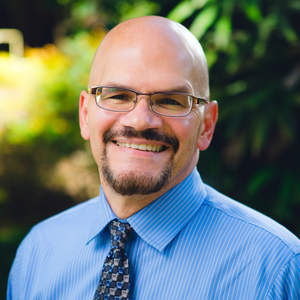
How do we transcend the culture war and transform the world with the good news of Jesus Christ? J.D. Greear, pastor of Summit Church in Raleigh, North Carolina, and author of recently released, Everyday Revolutionary, is on today’s episode to speak with Tim about this question. They draw from the biblical example of Daniel as a model for how we might think about Christian influence in our current cultural moment. J.D. spends time unpacking a call to “live quietly but testify loudly� and what this might look like when it comes to social issues, and they also discuss how the Church might engage culture with a faithful witness that is neither combative nor compromised.
Transcript
Tim Muehlhoff: Welcome to the Winsome Conviction Podcast. My name is Tim Muelhoff. I'm the senior director of the Winsome Conviction Project, housed at Biola University in La Mirada, California. Our goal is to open up lines of communication rather than close them. Can we, as Peter said, respond with a blessing when insulted, or will we fall into the argument culture and meet an insult with an insult? It's been a five-year journey. We've had some successes and some spectacular failures, but we'll keep plugging on. We have some very exciting news to come with some funding that has come. We're going to tackle some curriculum building. We'll talk about that a little bit later. But we're always looking for resources. We're always looking for individuals that are thinking deeply about today's context and how we can live out our faith. And we're super excited to have on our podcast right now J.D. Greear. He is the pastor of the Summit Church in Raleigh, Durham, North Carolina. Huge shout out to the Tar Hills. I did all my graduate education at UNC Chapel Hill, not Duke. I feel very compelled-
J.D. Greear: Amen to that.
Tim Muehlhoff: Amen, thank you J.D. I knew I was going to like you. Under Pastor J.D.'s leadership, the Summit has grown from a plateaued church of 300 to one over 12,000. J.D. Greear is an author, he's written some amazing books. Essential Christianity, What Are You Going to Do With Your Life, Above All, Not God Enough. He's one of the thought leaders today, and we are so privileged that he would join our podcast. He completed his PhD in theology at Southeastern Baptist Theological Seminary. He served as the 62nd president of the Southern Baptist Convention. J.D., welcome to our podcast.
J.D. Greear: Tim, I am honored to be on here. By the way, just maybe meaningful to you, we did the Dean Dome. You know, where UNC-
Tim Muehlhoff: Yes.
J.D. Greear: For the first time in 15 years, they let somebody use it for a non-basketball event, and that was our church this past Sunday. We held two services there right in the heart of campus, and had probably around 400 people that got baptized right there. Obviously a lot of UNC students. But God is doing something amazing on that campus. A lot of college campuses, as you know, across the United States, but it was amazing to see it happen there. So at the school you love, God's doing some amazing stuff.
Tim Muehlhoff: And let me just... I know I ripped on Duke a little bit, but a bunch of us just attended this amazing partnership between Duke University and UNC's public policy program on how to teach civility in higher education.
It was an amazing group of individuals, and I was so pleased that evangelicals had a seat at the table, and we were asked to be a part of it. And so I think there's great things happening at the grassroots level, because I think all of us are asking the question that your book asks, which is Everyday Revolutionary: How to Transcend the Culture War and Transform the World, Zondervan Press.
Because J.D., I don't think it's just a Christian question anymore. I think left, right, center, I think people are saying, "We cannot continue on this kind of trajectory today. We have to find a way of transforming and getting out of this rut of the culture war." And you feel like, drawing heavily from the book of Daniel, that there are some answers that we can borrow from this ancient story and biography to bring into the modern context. So how has Daniel informed your thinking about this issue?
J.D. Greear: Yeah, yeah, great question. So let me just say from the beginning, it's not just Daniel like an isolated thing, because whether you're talking about Peter, who directly ties his book to Daniel, uses a lot of the same imagery, or the Apostle John, how he writes Revelation [inaudible 00:04:11] John or Paul, there's a lot of tie back to this unique moment that happened in the book of Daniel. Because Daniel's one of the only books in the Old Testament that's not written in Hebrew. Every other book is written in Hebrew, but Daniel is actually written in Aramaic. Well, the narrative parts are. The intro and conclusion are in Hebrew.
But the very structure of the book is like it's presenting a question to Israelites. It's like, "Hey, you know how to be faithful to God in Hebrew, but when you're in a land where they only speak Aramaic, do you still know how to be faithful to God?" And I think a lot of Christians find themselves in a similar situation, because we're now in a world that, I don't know. I don't know who came up with the terms first, but what I've heard described as a negative world. Meaning, whereas Christianity at one point in our country was a positive asset, then there was a neutral era where Christianity was just one option among many, and then now you see a lot of times Christianity is seen as part of the problem. It's a negative thing.
That's similar to what Daniel dealt with in Babylon, because everybody thought, "Well, if your god was strong, then you wouldn't be our captives, and so we don't want to do anything to anger our gods." And so Daniel was seen as in some ways part of the problem. Same thing with the early Christians in Rome. And what you see is that Daniel, in one sense he is so courageous that he gets thrown into the lion's den, and yet he is so beloved by the king who put him there that that king stays outside the lion's den all night long, hoping against hope that he'll make it through the night. And my question in this book is, how do you become like that in our community? Where you're so filled with courageous truth that yes, you are angering people because of your boldness, and yet you're so beloved that they couldn't imagine the city without you.
I don't think King Darius was standing outside the lion's den because he missed Daniel's prophetic diatribes. I think what he was standing there for is because Daniel was a friend who really loved him, and he was having a hard time seeing Babylon without Daniel in it. And so that's the question, is how do we become like that in our society? Because I think a lot of Christians right now find themselves, just with all that's going on right now in our society, is they're like, "I know I want to be courageous, but I don't know if just going to these polarized extremes," which social media seems to drive us to, "is just picking a tribe and launching grenades at the other side. Is that really what God wants me doing right now, as I'm a social media warrior and putting signs up in my yard? Is that really the primary objective of God's people?" And that's the question.
Tim Muehlhoff: When you use the phrase beloved, I immediately thought of... Christianity Today for a while did this great periodical called Christian History, and they did one on G.K. Chesterton, and my favorite essay was called His Beloved Enemies. And he would debate everybody, like Rudyard Kipling, H.G. Wells, and how they talked about him was with this beloved attitude. Like, "Dude, we disagree, but I really value you and appreciate you." So I love that you're morphing into that, because I don't know if I necessarily know the answer to that question. How can we be a beloved enemy of people that we disagree with? Where that is that affection, admiration for you, but we do really disagree on certain social issues, political issues.
J.D. Greear: Sure.
Tim Muehlhoff: You make a distinction between a culture war and gospel transformation. Is that kind of hinting at how we arrived at this beloved tension with people?
J.D. Greear: Yeah, yeah. So in one sense, here you've got the apostles standing on the Mount of Olives. Jesus is about to ascend, and their question is, "Will you at this time restore the kingdom to Israel?" And they're looking for Jesus's political reign on earth, and what they can help do to bring it about. And Jesus' famous answer, of course, is, "It's not for you to know the times or the seasons. Those are under the Father's authority. But what I want you to be is my witnesses."
Now, it's interesting. He's putting that in direct contrast to their question about political strategy. He's like, "Redirect. I want you to be my witnesses." And then He charges them with what we call the Great Commission. And sometimes Tim, I think about all that Jesus could have said right there and still been correct. He could have said, "You will be my Bible studiers, you will be my social justice advocates, you will be my..." Any number of things, He could have put there, but the one He chose was witnesses, because that was the primary identity of the church, was to be His witnesses.
And the book of Acts is essentially them going out into very hostile territory and proclaiming the gospel in word and deed. So Acts 8, you've got the story of Philip going into Samaria, and it says that as a result of the works that he did and the message that he preached, there was much rejoicing in that city. And so okay, all right. If that is to be the posture of the people of God in their Babylon, their Samaria, what is that going to look like? Because it's not just the words that we preach, as if they are our winning arguments and convincing people of the rightness. That's an important part of our testimony, but there's also works that we are doing that so accentuate the message.
I can't remember who said it, but I want people to say about the Summit Church, our church, I want them to say, "Hey, we may not believe what those crazy people over there believe, but thank God they're here, because if not, we'd have to raise our taxes. Because they're the ones that are making this community better." And that's all part of this witness aspect. If your goal is political transformation, that's a different strategy than if your goal is witness.
And I would hasten to add, just so I don't get taken out of context or anything, everywhere the gospels preach, there is social transformation. You know? I mean, Tom Holland, the historian, he points out that you look at almost every cherished social reform in Western history? Came from some application of the Christian worldview or the gospel to that area. So that's an important part of our witness, and it's part of what the church is doing, is transforming society. But the point is, that's not what they led with. What they led with was preaching the gospel, disciple making, teaching the whole counsel of God.
You've got several places in the New Testament where you see Jesus or the apostles kind of back away from what is obviously becoming a political discussion. And they're not backing away because it's not important, they're not backing away because they don't have an opinion. They're backing away because they're like, "Okay, this is my primary thing over here, and to engage in this one is actually going to dilute my bandwidth for this other one." There's a lot of discussions, I feel like, that I as a pastor... Because I'm a professional officer of the church, so to speak. There's a lot of discussions that I have strong opinions about, but I just say, "You know what? That is not my calling to get involved in that one."
I say this tongue in cheek to our congregation. I've got an opinion on global warming. I think my opinion's right, otherwise I wouldn't have it. But I might be wrong in my opinion on global warming. I'm not wrong about the gospel. And I don't want to let my opinions on the former ever keep people from hearing me on the latter. I've got a gospel too precious, a mission too urgent, to really let anything get in its way. And that's I think what you're seeing, is that that kind of trajectory, that movement, from Jesus through the apostles to the early church.
Tim Muehlhoff: And isn't that this idea that you have, "Don't make it hard for gentiles to turn to God?" And you quote from Acts 15, right? Jewish and gentile believers were so divided over a cultural issue, they can no longer worship together. And James steps in in an amazing verse in Acts 15:19. "We should not make it difficult for the gentiles or Jews who are turning to God." And yet what you just said is, "But if I wade into certain issues, people are not going to feel welcomed in my church."
J.D. Greear: Yeah.
Tim Muehlhoff: "Because they can read it on my social feed. They can read a blog I wrote where I make a very hard stand on a controversial issue, and a person says, 'Well, obviously Summit Church isn't for me, because they've just said, "This is the hill that I'm going to die on."'" So maybe we back off of some of those if we think it's going to keep people from coming to our church?
J.D. Greear: Yeah, so let me ask you. Acts 15 is a wonderful one, because you've got the apostles, who... The compromise they came up with, it's a little weird when you read it on the surface. They're like, "Okay, stay away from immorality and idolatry, that makes sense. But also, don't eat stuff that's been strangled." And you're like, "That seems kind of random." You know? But what these guys realized was that even though gentiles were technically free in Christ to eat things that had been strangled, because all things are now clean, they knew that that would create such a stumbling block for other Jews that they were like, "Hey, if you could lay off of that one, it would actually make it where the new Jewish believers wouldn't feel like they couldn't be in here." And so they were asking them to think about keeping certain things as a priority, even if they had to step back from some of these secondary things.
And what James says is, "We ought not make it hard for gentiles or Jews who are turning to God." And my thought is, we ought not make it hard for Democrats or Republicans who are turning to God. Now, that doesn't mean ever backing down from what the Bible teaches. I mean, I'm convictionally, without any hesitations, pro-life.
Tim Muehlhoff: Right.
J.D. Greear: Traditional marriage. All the things that scripture is clear, I want to teach those clearly. But I also know, yeah, I don't want to encumber that message with things that are at best secondary and tertiary. There's nowhere in the Bible I know of that gives the ideal marginal tax rate or the number of refugees that a society ought to let in, or that talks about nationalized healthcare or approaches to global warming. Those are all applications of wisdom and a Christian worldview. I want to reserve my bandwidth that I have for the things that Jesus... the direct line between what He says and what's going on in society.
If I could use one other example I think is really helpful in unpacking this, there was a story in Luke chapter 12 where a couple of brothers... Well, actually one brother comes to Jesus, and is complaining because his older brother has cheated him out of the inheritance. The great preacher D. Martyn Lloyd-Jones points out, that's a legitimate social justice complaint, because this guy is leveraging the law to cheat his brother out of his inheritance. Jesus' response to this guy is, "Man, who made me a judge over you?"
And D. Martyn Lloyd-Jones says, "What's going on there? Does Jesus not care about injustice?" Well, of course not. He spends His whole ministry talking about the importance of justice. Does Jesus not feel qualified to give an answer? Well, of course not. Jesus would have given the best answer. Lloyd-Jones explains. He said had Jesus weighed in on this one... What he meant by the question "Who made me a judge over you?" is, "If I get involved in this one, first of all I'm going to create a division here in society. Second of all, tomorrow I'm going to have a line of people a mile long who are wanting me to weigh in on this, and that's going to take me away from my primary mission." So, Lloyd-Jones points out, what He actually did, what Jesus did in that moment, is he preached a sermon on greed that would have applied to both sides, both the older brother and the younger brother.
Well, when I think about what that means for me, my call is to preach a gospel that confronts political idols on both the right and the left. That is not an attempt to equate them, or to morally equate them and say there's never a clear choice. I'm just saying, I preach a gospel that Republicans need and one that Democrats need also. And while I won't back away from speaking the whole counsel of God and truth, I do want to do all that I can to not make it hard for gentiles, for Black citizens, for white citizens, for police officers, for Sunday school teachers. I don't want to make it hard for anybody to find their way to God, and so I want to limit my bandwidth, like Jesus did, to preaching the gospel and making disciples.
Tim Muehlhoff: And don't you think, J.D., it's okay to be pro-life, and Biola University is unapologetically pro-life, but one of the most interesting and controversial guests we've ever had on our podcast was Connecticut State Representative Treneé McGee, who is a pro-life Democrat. See, that way we can say to people, "Look, Democrats, you're welcome here."
J.D. Greear: Right.
Tim Muehlhoff: "Because here is a great representation of a woman who's unapologetically pro-life, but chooses to be a Democrat for a host of reasons that she thinks furthers the kingdom of God."
J.D. Greear: Right.
Tim Muehlhoff: So making the camp broader than what we traditionally do, which means if you're pro-life, you have one option how to vote.
J.D. Greear: Right, which is tragic. Now, the other tragic thing is I think it was eight years ago the last pro-life Democrat left Congress. Which is a tragedy of tragedies. I may not be exact on the eight years, but it was about that long ago. But there ought to be room for people who may have a different approach to healthcare than I would, or the helpfulness of regulations, and like I said, the ideal marginal tax rate. I've got too many British friends who, I mean, they are fiercely pro-life and they are fiercely pro traditional marriage, but they just believe in a more activist type of government.
Now again, I'm just be honest, I don't agree with them a lot of times, but those things aren't divisive for us as believers, and we can sit in the same church because we're agreed on what the Bible teaches, even if we're going to have spicy discussions on what the best form of public healthcare is. And I think we ought to have room for that without saying, "Yes, the only way to be pro-life and pro-Bible is to be in this one political party and to adopt everything that goes along from that political party."
Tim Muehlhoff: Well, and we did another podcast on use of preferred pronouns, and I entered a discussion with one of our top Christian apologists here who, we see it differently. He believes that using a preferred pronoun is violating the ninth commandment, is telling a falsehood. And I'm like, "No, I think you're confusing that with empathy." And I would use a preferred pronoun if it meant that I could share God's view of sexuality. The point being, and it was very controversial and I got slammed, to be honest, called woke, is both can be under the umbrella. Both.
J.D. Greear: Yeah.
Tim Muehlhoff: And one person can believe, "Absolutely, I think we should not use," and I'm saying, "No, there's occasions I would use," but we're both under the camp. You don't have to make a decision one way or the other to still be an evangelical.
J.D. Greear: Yeah. Yeah, obviously we can get on some tricky ground here because we wonder what goes in that category.
Tim Muehlhoff: Right.
J.D. Greear: Can somebody say, "I'm pro-choice," and can somebody say, "Well, I believe in gay marriage"?
Tim Muehlhoff: Right, right.
J.D. Greear: And so I don't think you and I are trying to answer what goes in that list, but I think all of us, regardless, have to acknowledge what you just said, that there is a category of things that we deal with right now that are what I refer to in Everyday Revolutionary as dotted line issues. We agree, direct line, that homosexuality is sinful, and that trying to switch your gender away from whatever God created you at birth, that's sinful.
Tim Muehlhoff: Right.
J.D. Greear: You're talking about the application of that to a specific situation, and that's going to be a dotted line issue. And our biblical example for that, in fact I love this one, is Romans 14, you've got Paul.
Tim Muehlhoff: Yes.
J.D. Greear: You know, when Paul talks about this controversy, it doesn't seem like a big deal to us, because I've never had an argument over whether or not I could eat meat or not, certain kinds of meat, with anybody in our church. But that was a very tender issue for them. And Paul, he doesn't not declare a side. It's kind of funny when you read Romans 14, the way that he's writing it. He pretty clearly tells you where he stands. Paul is team meat eater. In fact, he calls people who don't agree with him weak in their faith. He's not shy about, "This is how I feel."
But then he concludes, "If this is going to cause, though, some kind of division over essential things, I actually won't even play my conviction up on that, because the essential things are more important to me than these secondary things. Even the secondary things that I'm right about." And that's how I think about some of these issues. Whether the one you're talking about or whether we're talking about some specific political issue, it's like, "Yeah, I think I'm right. And you know what? It's an important discussion. But I know that in the church and in the mission, the essential mission of the church, we have a gospel too precious and a mission too urgent to let anything important get in the way of it."
Tim Muehlhoff: And I think it's okay for Biola University, the Bible Institute of Los Angeles. I sign the doctrinal statement every year, and we land the plane on certain issues. Like, we would say God did not use evolution to create the first human couple. And that's okay for us to land the plane like that.
J.D. Greear: Yeah.
Tim Muehlhoff: But how we talk about other institutions and other Christians who are equally committed to the Bible who do feel like, "No, maybe God did use that, and we have to reinterpret maybe Genesis chapters one to 10..." But how we talk about them is where I think Paul would step in with Romans 14. He says, "I do not want you to have condemnation for each other." And I think, J.D., sometimes in our conviction, we go after other Christians who hold different positions in such a way that even non-Christians step back and go, "Wow, I can't believe the way you guys talk to each other."
J.D. Greear: Yeah. You know, one of the things we forget, I believe, is that... Well, I grew up in a very, very conservative context. You know? I won't go into the specifics of that, but we were pretty far on the right. And I'm still pretty far on the right, but that's just how I grew up, was very, very rules driven. And all my life, I was warned about the ditch on the left side of the road, the gospel road, and that ditch was compromise, liberalism. And you know what, Tim? That ditch is real and it's an ever present danger for the church, and we have to be vigilant to stay out of it. But nobody, nobody when I was growing up, warned me about the ditch on the right side of the road.
It's like the old Scottish proverb. For every one mile road, you got two miles of ditch, and nobody warned me about that ditch on the right side. And that ditch on the right side is... Whether you just call it an enshrining of cultural secondary things and making it essential as a part of the gospel, that road will take you off the road just as fast. Jesus' crucifixion was a joint project between, this is a little bit of a generalization, but the secular left and the religious right. And I'm not trying to equate the two, I'm not saying they're morally equivalent or equally wrong. I'm just saying that when it came down to it, Jesus's crucifixion involved those who were angry at Him because He spoke the truth about God and the 10 commandments, so to speak. It was a combination of that, plus the Pharisees who were as right as Jesus was on that front, but they had no category for a love for people and a grace and a befriending of sinners.
And Jesus warned that those kinds of leaven, they both still exist in our world. And I grew up warring against the leaven of the one kind, the leaven on the left, but I wasn't really aware of the leaven on the right, which can spoil the gospel loaf, so to speak, just as quickly. I love John 1:14, where... I think it's John 1:14, but it says Jesus was filled with grace and truth.
Tim Muehlhoff: Yeah.
J.D. Greear: Both. Because truth without grace, that's fundamentalism. Grace without truth is liberalism. But the gospel is filled with truth and filled with grace, and only both together constitute the glory of Jesus.
Tim Muehlhoff: I'm a communication professor, so we talk about the content level of communication and the relational. So the content is what I believe, the relational is made up of the amount of respect, compassion, empathy. So when you get to the classic apologetics passage in 1 Peter, "Be ready to give a defense of the faith," content, but "with all gentleness and reverence," that is the relational. And I don't think we get to choose to say, "Well, one is more important than the other," or, "I'm going to exclude one over the other."
J.D. Greear: Right.
Tim Muehlhoff: Is what you're getting at, is no, we need to hold those two in tension, that when Peter says, "When insulted, I want you to bless."
J.D. Greear: Right.
Tim Muehlhoff: That's interesting in today's argument culture, to have that kind of tension, but I think we're called to that.
J.D. Greear: Yeah. No, exactly, and that brings us back around to Daniel, where Daniel, he seemed to be somebody in the Old Testament that really was possessing both of those. And I think that is what Christians ought to be pursuing. Jesus, he warned in Matthew 23, he said, "Beware that leaven of the Pharisees." Because their robes are long, they're long on righteousness, but they travel the world for a single convert. When they find one, they make them twofold the child of hell. I think we have to be very careful of those today that would be long on Substacks and Twitter threads on some issue of public righteousness... Which, that's great, they should be. But when you look at their lives, they couldn't point to the last time they befriended someone who was gay and helped that person experience the love of Christ.
Tim Muehlhoff: Yeah.
J.D. Greear: And Jesus would say, "Beware that leaven," because they're long on righteousness but short on the relational gospel aspects. And Jesus is filled with both. He wasn't half full of each. He didn't have one face on one day and one face on the other day. He was filled with grace and truth at all points. And grace, even in John's listing of it, comes before truth, because he's trying to put that first, and say what characterized an experience with Jesus was the relational grace where you felt like, "He loves me, he knows me, he's interested in me as a person, he speaks truth that makes me want to crucify him, but I know that he loves me." And that's what we're supposed to be in our society.
Tim Muehlhoff: Well, thank you for giving us direction and input. And again, the book is Everyday Revolutionary: How to Transcend the Culture War and Transform the World by Zondervan Press. If you've enjoyed what you've just heard, please check out Summit Life with J.D. Greear. It's a daily half hour radio broadcast featuring the teaching of Pastor Greear. Thank you so much, J.D., for taking time to come to our podcast. Just know that you have fans here at Biola University. We love Bryan Loritts every time he comes. Students just love him, and I know they'll resonate with this book as well.
J.D. Greear: Yeah. Well, Bryan's one of our teaching pastors and he's a close friend, and he and I have talked for hours about these things. But Tim, let me also say to you, since your listeners are listening in, your ministry out there at Biola and Beyond, and you in particular, have had a very shaping influence on our church way out here in the East Coast, just in how we think about engaging our community and evangelism. In fact, I told you offline that if you ever come teach out here in Raleigh, there's a whole set of things I'm going to ask you not to say, because people think I came up with them, but they come straight from your pen or your mouth.
Tim Muehlhoff: Wow, that's very kind. Thank you.
Thank you for listening to the Winsome Conviction Podcast. If you want to learn more, go to winsomeconviction.com, all of our past podcasts are there archived, and sign up for our quarterly newsletter. There's some very exciting news coming about our future direction based on some grants we've been able to secure. So thank you. We don't take your listening for granted.