Biola University
What is alternative medicine? What does the Bible have to say about it? What is the connection between one鈥檚 faith and one鈥檚 health? We'll answer these questions and more with our guest, Ohio State University Professor Dr. Donal O'Mathuna, around his book, .
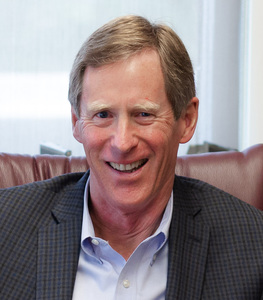
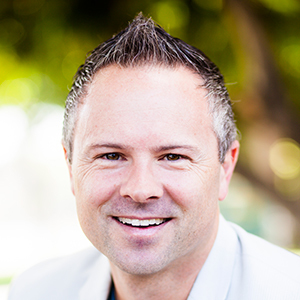
Dr. Donal O'Mathuna, a native of Ireland, is Professor in the College of Nursing at Ohio State University. He is the author or co-author of nine books, and has served on the World Health Organization's (WHO) Ethics Research Review Committed and has contributed to several ethics initiatives for WHO.
Episode Transcript
Scott Rae: [upbeat music] What do we mean by the term alternative medicines? What, if anything, does the Bible have to say about that? And what is the connection between a person's faith and their, and his or her health? These are some of the questions we'll talk about today with our, with our guest, Dr. Donal O'Mathuna, who is the author of, what I think is a f- a fairly exhaustive... Although he tells me it's not, but it looks to me like an exhaustive compendium on alternative medicine, entitled by that, Alternative Medicine: The Options, Claims, the Evidence, and How to Choose Wisely. Donal, thanks so much for being with us. We really appreciate you, coming on with us, and I look forward to having you, having this conversation with you. I'm your host, Scott Rae.
Sean McDowell: And I'm your co-host, Sean McDowell.
Scott Rae: This is Think Biblically from Talbot School of Theology, Biola University. Donal, welcome. Great to have you with us.
Donal O'Mathuna: Thanks very much, Scott and Sean.
Scott Rae: Yeah, tell us a little bit about your background. Now, Donal and I have a relationship that goes back many years- ... In the bioethics community, through a number of projects that we were on. But Donal, tell us how you got interested in alternative medicine, enough to write a book of this length on the subject.
Donal O'Mathuna: Well, I grew up in Ireland, and my dad was a pharmacist in a small town, in County Monaghan. And, he was always mixing up, different things, and it was-- that was always really curious to me. And then I went to college and, decided to ki- go into pharmacy, and in... I loved the science. It was, it wasn't the retail dimension of it I loved, but it was the science. And in my senior year, I got to do a research project looking at herbal remedies, trying to see are there, were there active ingredients in them. And I just really loved that, kind of puzzle dimension to that research, and ended up, going, pursuing my PhD in that area. Came to the US to do that work. And so just really loved, the investigation, trying to figure things out. Kind of get, got a bit disillusioned with lab work, and so decided when I was finishing up that I just really much more wanted to go into the teaching side of things. And, then, during, actually, during my gra- my PhD work is when I, became a believer, accepted Christ as my Savior. And started to wonder, how might God want to use all this training I have? And it didn't seem very obvious at first. And then during the nineties, all this interest in alternative medicine started to develop, and, I started to give some talks about it in terms mostly of looking at the science of it. As you mentioned, Scott, we got to know one another through looking at, ethical issues, in various types of healthcare and scientific research. And I was approached by the Christian Medical and Dental Association because they told me their members were getting all sorts of questions about all these alternative therapies-
Scott Rae: Wow!
Donal O'Mathuna: ... And herbal remedies. Would I be willing to put together, some sort of a book for them? And they linked me up with,
Donal O'Mathuna: With Walt Larimore, to kind of add the clinical, medical side of things to our book. And so the book came about through that.
Sean McDowell: Two-part question: What, what defines alternative medicine, and can you give us some examples of the kinds of therapies and medicine that would fall into that category?
Donal O'Mathuna: Well, that's actually a kind of a hard question- ... Because the definition is, it's a kind of a moving, enterprise. In the nineties, it very much was to do with something other than what you would get from your doctor or at your hospital. But as the years have gone by, there has been more of a, of an integration of some of these alternatives into mainstream medicine, and so you got the term integrative medicine that has developed. There was a dimension that these, alternatives were looking at something more than the physical body, and so they were looking at integrating emotion, spirituality, and you got the phra- the term, of, complementary medicine or, holistic medicine. So it's hard to pin it down, but I would say in terms of the remedies and the, [notification sound] the supplements that people take, it's much more about, things that you wouldn't get a prescription for, or, medications that are not regulated, like even your over-the-counter aspirin and ibuprofen, that they're, they're regarded as supplements. And the different regulation is a very important issue. They often are of a herbal source, and so you often get the plant material mixed into, a tablet or capsule as compared to the pure material of a medication. And then they often do have a spiritual, root in terms of the therapies, in contrast to what might be called more secular approaches. So distinguishing, say, a massage is just a physical activity, whereas something like therapeutic touch or reiki- ... Would be an alternative therapy that has a very strong, spiritual, dimension or spiritual roots to it. So it covers-... Lots of different things, herbal remedies, dietary supplements, things like yoga, meditation, [lips smack] and then, a lot of manual therapies like craniosacral therapy, various, very specific types of massage. So it's, it's a, it's a huge mixed bag with all sorts of overlapping areas. And, and I think as Christians, if you just take the idea of meditation, that's something that is biblically described and called for-
Sean McDowell: Mm-hmm.
Donal O'Mathuna: -and yet, as a therapy, it can mean some very different things. It can, you know, be a mindfulness that's kind of sort of secular, or it can be something that's deeply embedded in other religious views, like a part of Buddhism. So it's, it's really hard to pin it down to just one set of things.
Sean McDowell: That, that's fair. And is it a moving target? Because what was once considered alternative, like, say, marijuana, becomes considered mainstream, and then is no longer alternative, not because anything has changed, but what is considered the norm changes. Like, maybe psychedelics are in that process right now. So is that really why you said it's a moving target, because of what's just considered alternative?
Donal O'Mathuna: Yes, it is. And, you know, like, you know, for example, it, I think it's estimated about 50% of our prescription drugs were originally found in natural sources, and so in some ways they originally were herbal remedies. Um- ... Aspirin is the classic example that, was initially found and used as willow bark. And then, pharmacognosists discovered in the late 1800s if they purified it and modified it chemically a little bit, it became much more effective, much more easy to regulate the dosage, and so you have aspirin that is now a mainstream part of medicine.
Scott Rae: So Donal, what are-- what would you say are maybe the one or two most common misconceptions about these alternative therapies?
Donal O'Mathuna: I think the most, one of the most important ones would have to be that if it's natural, it's safe.
Scott Rae: Mm-hmm. [chuckles]
Donal O'Mathuna: And there is this percept or this view put out there that, you know, you've got the big, bad pharmaceutical companies putting out these terrible drugs that have side effects, and instead, if you go with something natural, and safe, and softer, then you're, you're, at the very least, you're not gonna have any side effects. But if you just think about the natural world in any sort of a, an, you know, an objective way, it's full of poisons. Many of our strongest poisons are natural substances, like strychnine. You know, you can overdose on, you know, almost anything. And, I think as well, that it's very important to think about that spiritually as well, that there's a perception, well, if it's just something spiritual that you're pursuing, what could be harmful about that? And yet, if, again, if you read the Bible, God is regularly warning us that there are evil spiritual beings, and they're, out to harm us, so that in both the natural and the spiritual world, we have to have discernment. We have to keep our eyes open and, be willing to carefully consider whatever it is we, are k- thinking about doing for our health or are putting into our bodies and our spirits.
Sean McDowell: Now, the idea of alternative medicine as well as medicine is to restore us back to health, but of course, that implies a certain standard of what it means to be healthy. How would you compare and contrast a biblical view of health with maybe what we see sometimes in our wider culture?
Donal O'Mathuna: Well, I would say that a biblical view of health is founded on the idea of flourishing as, someone who is an image of God, if we just talk about the human health aspect as opposed to, you know, like, a, an environmental health. But if-- it, so it's a flourishing, and it's a doing well, and it's doing so in light of the way God has made us. And part of what I think we see with health these days, in a more general sense, is that it has become very much focused on the physical and maybe the mental health dimension of it. It's about our bodies being able to continue to be, healthy and whole, and w- function at a high level, our minds being, you know, at peace and calm, and, having, I think, a very selective view of what it means to be healthy. And I think what we see throughout Scripture is that there can be aspects of our, of our health, of our lives that are not going well, and yet we can still flourish, so that as, you know, Job, suffers and goes through excruciating pain, there is still a way that by his being properly related to God, he is able to flourish in the midst of difficult circumstances. You see Paul talk about how, he-- God has given him this, or sorry, Satan has given him this thorn in his flesh. And yet even with the, or partly, I think, because of the weakness that he's suffering, he's actually stronger because of how God is working in him. So I think there's... Our world has put out this view of health is about-... Keeping your strength, your youth, your beauty, your vigor. And the biblical view is much fuller and much more based on our spiritual wellbeing, even with the physical and mental and age-related deterioration that we're going to see as part of living in the fallen world that we do at the moment.
Scott Rae: I'd say since Father Time is still undefeated-
Sean McDowell: [laughing]
Scott Rae: LeBron James notwithstanding.
Sean McDowell: Yeah, exactly. [chuckles]
Scott Rae: I think we're, you know, we need, we need to be careful that we don't take the cultural definition and turn it into an idol. Um-
Sean McDowell: Mm-hmm.
Scott Rae: So, Donal, one of, one of the things I think that's really helpful in the book is you make-- you draw the link between someone's faith and someone's health. I mean, the examples you just described seem to suggest that there's no necessary connection between one's Christian faith and one's physical health. Is that, is that the case, or is it more complicated than that?
Donal O'Mathuna: Well, I would certainly say it is complicated. But I think if you think about somebody like Joni Eareckson Tada, and from a physical dimension, she, her... She does not appear to be healthy. She's got so many physical limitations. But from a biblical health perspective, she is flourishing, she is, you know, active, in her faith and in God's work. And I think that's where we have got to, really think carefully that as our bodies decline, as, you know, we get older or when illnesses, and come our way, that, we not become so focused on needing to get, back to a complete physical health stage, and pursuing anything, whether medical or surgical or, alternative, in order to get back to that, you know, full physical health, but that instead, we're looking to see how can God use this limitation, this thorn in my flesh, to actually deepen my relationship with Him. And at the same time, we may be restored physically, either through, you know, what medicine has to offer or what, you know, diet or relaxation or other, you know, kind of secular, approaches may provide, or that through our coming to a deeper understanding of our relationship with the Lord, through, you know, being better integrated into fellowship with others that can help us go through relational healing, that we can actually flourish even while our bodies, deteriorate or have to accept disabilities and, other things that come with illness.
Sean McDowell: A moment ago, you kind of compared and contrasted what health is often viewed in our world with a biblical view of health. It would include like a, an awareness and recognition of dying and sinfulness and spiritually flourishing. What are some of the underlying worldviews behind some of these alternative therapies? And I imagine there could be dozens of different ones. So maybe just give us one or two examples of a kind of worldview motivating certain alternative medicines that's contrary to Scripture.
Donal O'Mathuna: Well, I think one of the clearest examples is a therapy called Reiki, and, this has its origins in some Eastern, practices and belief systems. But, as you kind of read the s- the sources of those who developed this and, who actively promote it, at its basis is the, connecting with, a spiritual world, with what they call spirit guides, in order to both learn from those spirit guides about, what the problems are in a person's health and how to correct them. And so it's, it's based in what I think is clearly described to us in the Bible, as the spiritual world where there are spiritual beings, who can be contacted, but who, either as Christians or not Christians, it's dangerous to, attempt to, go to these, spirit guides or spiritual beings. And, because of that, then, the Bible, you know, prohibits us from taking-- from going and attempting to use those. So I think that is a clear example. And then there are, some things like yoga and meditation that are based in a, an Eastern religious, point of view. And there are, views of various types of energies that, are part of these, religious systems. And, there is also a complex mixture of-... For example, with yoga, the various postures that are taken, within, the, that practice, which in some ways, I think science has validated that by learning to enter these postures or to, learn to become more subtle- supple and, more flexible, that there can be physical benefits without having to, you know, believe in the energies that are involved. But that there is this mix of ways that these have their origin in Eastern religions, have physical dimensions to them that can be, you know, I think, taken and, adapted without those spiritual roots. And yet, you know, always are going to have that ultimate connection in a very different worldview, which, you know, I think there are controversial or there are controversies over, whether believers should have nothing to do with, these types of therapies- -or whether they actually can filter out the spiritual side and the energy side and just use them as, a form of calisthenics, um- ... And physical exercise. And I think that is, a, it's a, it's a complex and difficult way to move forward. I think, part of what's really important is to understand, if somebody has a teacher of these practices, to have a very open discussion over what exactly is it that this teacher or trainer, is trying to, help you learn about or expose you to, if it's a receiving of some of these therapies. Because that would hopefully start to expose whether there's a spiritual basis to these practices, or practitioners, or whether they're taking it as a purely physical, exercise type of thing.
Scott Rae: Yeah, that makes sense. Now, Donal, I take, you know, three or four different supplements every day. But honestly, I don't actually know if they're the least bit beneficial to me. [laughing] I'm taking this purely on faith.
Donal O'Mathuna: Sure. [chuckles]
Scott Rae: So how do you decide, or how would someone know if a particular alternative therapy is harmful or beneficial? Or just doesn't work at all?
Donal O'Mathuna: It, it is, it's complicated, and there's a couple of things you can, you can do. One is there's, an organisation, they have a website, it's called consumerlab.com. And Walt and I, in, doing the research for our book, found that this is probably the most reliable, source of information on what do we actually know from a scientific perspective.
Scott Rae: So say the name of that site again.
Donal O'Mathuna: It's consumerlab.com. So-
Scott Rae: Good. That's helpful
Donal O'Mathuna: ... Consumer and lab.com. They're an independent lab, and they, will,
Donal O'Mathuna: Look at the literature, search the scientific and medical literature for information and studies that have been done on various, remedies and herbs and supplements. And then they will also do, testing of a variety of brands of those, particular remedies. So what... So that, so there's the challenge of just, is there scientific research to support the use of these, therapies and remedies and supplements? And then you have the second challenge of, let's say, there is, evidence to support their use, what brand should you buy? And this is where it gets even more complicated because there are so many different brands of all of these individual supplements out there. One of the things that's really important to remember is that a herbal remedy or a dietary supplement is not regulated in the same way that even over-the-counter, products, are. So your aspirin goes through a lot more regulatory oversight than, the dietary supplements, and they fall into this category of, products, which as, if you've ever purchased them, you'll see in the fine print, it'll say these, any claims have not been validated by the FDA. Basically, these brands are put out there, they're marketed, they're sold. There will sometimes be claims out there, sometimes these are just people talking about how great, these various, supplements were for them. But the marketing materials don't have to get the, support of the FDA or, be, put through the regulatory oversight-
Scott Rae: Yeah
Donal O'Mathuna: ...
Scott Rae: That's, that's helpful.
Donal O'Mathuna: You know, a regular medication, even an over-the-counter one, would have to go through. But what ConsumerLab does is they will go into stores, buy up a collection of different brands, and then test them. And what they can show is that if it says there's five milligrams in the tablet, they will test them and say, there is or there isn't five milligrams, or within a, an acceptable range is what's in there. Another of the challenges is, if there isn't scientific evidence to show whether or not these, supplements work, it's gonna be even more difficult to know how much of them do you need to take. And that then is another challenge when you're going to use these. You know, do you take one or two a day, or, um- ... You know, in some of them, there are claims out there, well, kind of like the more you take, the better it is gonna be for you. But if you just think about that with any sort of medication, you wanna take a, you know, a-... As a well-supported amount of aspirin or whatever you might, say. You don't wanna just keep, eating aspirin, you know, and taking more and more, thinking that if a little is good, more is better. That just isn't, a common sense approach to any of these things. And yet sometimes you get them promoted on the basis that, you know, just take as much as you feel you need.
Scott Rae: Yeah, that's helpful.
Sean McDowell: So, so this book with the subject index is over 500 pages, and you deal with dozens of herbal remedies, vitamins, dietary supplements, alternative therapies. You first wrote in 2001 and have since updated it, but one I don't see in here, unless it goes under some, you know, medical name I don't recognize, are psychedelics. There seems to be such a push in culture towards it's okay, even people like the Joe Rogan Podcast and others from the top down, praising psychedelics in a way that makes me think it's moving towards the norm. So I guess a two-part question, we could do multiple shows on this: Do you think we're moving towards the norm of psychedelics being considered not only not alternative medicine anymore, and what's your take on that? Is there a place for them, or are you concerned about psychedelics as a whole ever being used in medicine?
Donal O'Mathuna: Yeah, that's a, that's a tough question, and, a complicated one. I think what I would say is that at various stages in the history of medicine, things like morphine, cocaine, marijuana, have had this similar sort of trajectory. It's, the substance is viewed as very powerful. It seems to have some potentially beneficial effects, and there are lots of concerns, from various angles in terms of, both, you know, is it safe, are there side effects, and then also the mental health and even spiritual sides, of some of these types of medicines. So what I would say is that i- from a starting point, I'm not surprised that there are, [lips smack] natural materials, these psychedelic mushrooms usually, that are out there that, do have a powerful effect, on our brain, on our, physical bodies, and that there, is the potential for them being, very helpful. What I have a lot of concerns about is that if these go forward in a way that, they're just used, you know, by anybody for... In any way that they want, in other words, if they're not strictly regulated, if there isn't an evidence base to support, how do you use these, when do they become a problem, how do you recognize side effects, that we could have a really serious outbreak of adverse effects. And I think part of what's happening at the moment is that there is legitimate research happening, and that they're trying to uncover the details of how these substances may or may not be safe enough to be used. The other side of it is also producing, versions of these products that are, that have a, an unknown amount of the active ingredient. The challenge with all of the natural things, like herbs and supplements, is that, you know, I use the analogy, if you, if you wanna ha- if you like apples, there are so many different brands and flavors of apples, and depending on the weather and the soil and the climate, you're gonna get very different flavors in your apples or your tomatoes and whatever fruits. Well, the same thing happens with the mushrooms or with the, with marijuana as it grows naturally, that different years are gonna produce different crops with different ranges of ingredients, both the ones that are being looked to as beneficial and the other ones that maybe hinder its effectiveness or lead to side effects. And that's one of the underlying problems with using a pure or a pure... A natural, material, especially with the psychedelics, that have such a powerful impact on, a person's physical, mental, and, spiritual well-being. That if you're kind of running the roulette of what, you know, crop has been produced this year from whatever region, you could, use something this month that, is manageable for you, and next month is, you know, way too powerful for where you are at the moment. So my bottom line would be that I can see that there could be potential with these, but that there's a lot of work needs to be done scientifically, clinically, and in a regulatory way, to ensure that these are brought in in a way that's safe and helpful.
Scott Rae: Yeah, and I apprec- I appreciate the nuance on that it's not, it's not as simple and straightforward as we might like to think it is. Donal, this has been... We- I mean, there's so many more of these alternative-
Scott Rae: ... Therapies that we could talk about, but I appreciate you giving us a framework to think about it in, and a way to integrate our faith into the assessment of these alternative therapies, particularly the, being careful about the underlying worldview that is a part of so, of so many of these. So really grateful for your work on this, your research on this. Is, I mean, I think the book, Alternative Medicine: The Options, Claims, the Evidence, How to Choose Wisely, is a very helpful resource. As Sean mentioned, it is over 500 pages, so it's probably, it's probably not for bedtime reading. [laughing] but it's a very, I think, a very useful handbook for people who are exploring some of these alternative medicines. And I admit, there were, there were a whole host of these things that I'd never heard of. And I think there are a lot more-
Donal O'Mathuna: Me too
Scott Rae: ... A lot more things out there than a lot of us are aware of. So it just goes, shows a need for this, and I think the more, the longer time goes along, the more we're gonna see, more and more of these products coming on the market, like psychedelics and other things- ... That have yet to be fully assessed. So very grateful, Donal, for your expertise on this, and for coming on with us, and trying to explain a very complicated area of medicine in 30 minute, or roughly 30 minutes. [laughing]
Donal O'Mathuna: [laughing]
Scott Rae: So, we know, we know that we've given you a tall task today, so thank you for hanging with us, and, we will look forward to, thinking about this a little bit further. And, I suspect we'll have... Some of our listeners may have questions for you on specific alternative therapies, and if they do, we'll have you respond to them as we can.
Donal O'Mathuna: Okay, Scott and Sean, thanks very much for inviting me on.
Scott Rae: This has been an episode of the podcast, Think Biblically: Conversations on Faith and Culture, brought to you by Talbot School of Theology at Biola University, offering programs in Southern California and online, including master's degrees in Bible theology, marriage and family therapy, philosophy, apologetics, spiritual formation, pastoral ministry, and I'm sure there's some others that I've missed. And if you, if you wanna find out more about those, we'd love to have you come study with us. Visit biola.edu/talbot in order to learn more. If you have comments for us, par- or particularly if you have questions that you'd like us to consider, or suggestions on issues you'd like us to cover, or guests you'd like us to consider, please email us at thinkbiblically@biola.edu. [upbeat music] If you enjoyed today's conversation, please give us a rating on your podcast app. Every one of those is really helpful. And, and share it with a friend. In the meantime, thanks for listening, and remember, think biblically about everything. [upbeat music]