Biola University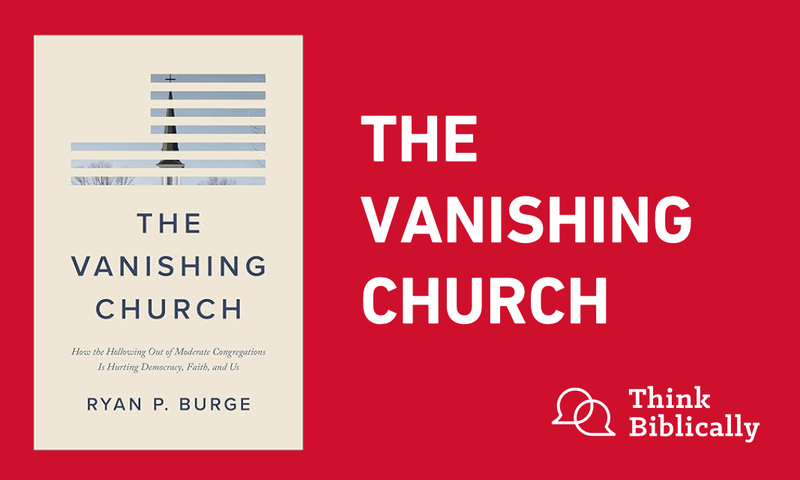
Is it true that the moderates are a vanishing breed, both in the culture and the church? Who are the religious moderates and what are the implications of their disappearance? How has religion shifted from a faith journey to a tribal identity? We鈥檒l answer these questions and more with our guest, Dr Ryan Burge, from his new book, .
Ryan Burge is professor of practice at the John C. Danforth Center on Religion and Politics at Washington University in St. Louis. He is the author of 6 books and has written for the New York Times, POLITICO, and the Wall Street Journal. He has also appeared in a number of other media outlets including, the CBS Evening News, as well as 60 Minutes which called him, 鈥渙ne of the country鈥檚 leading data analysts on religion and politics."
Episode Transcript
Scott Rae: [gentle music] Is it true that moderates are a vanishing breed, both in the church and the culture at large? Who are the religious moderates, and what is, what are the implications of their disappearance? And how has religion shifted from a faith journey to a tribal identity? We'll answer these questions and a whole lot more with our guest, Dr. Ryan Burge, from his new book, The Vanishing Church: How the Hollowing Out of Moderate Congregations Is Hurting Democracy, Faith, and Us. I'm your host, Scott Rae.
Sean McDowell: And I'm your co-host, Sean McDowell.
Scott Rae: This is Think Biblically from Talbot School of Theology, Biola University. Ryan, thanks so much for being with us. You've become our go-to guy over the past several years when it comes to data and demographics about, particularly about the status of religion in America. So we appreciate your book, The Vanishing Church, is a, takes a little different tack from the directions you've gone in the past. So tell us a little bit about, what prompted you to write in such depth on the moderates. You've done a lot about evangelicals, a lot about the nones. Why the shift toward dealing with the moderates?
Ryan Burge: Well, I've written a bunch of books, and the feedback's always been, "Ryan, your books are great, but they're very descriptive, and we want you to be more prescriptive, like have an argument, have a thesis that, you know, that might be controversial. It might make some people mad." And so I've always had this idea in the back of my mind that I think that religious polarization has sort of had all these knock-on effects, in American democracy and American society and just culture at large. And I wanted to just articulate my view that I think that, you know, religion has always played a very important role in especially American democracy. And by the church becoming, you know, so bifurcated, so polarized, and, you know, the nones are very liberal, and Christians tend to be more and more conservative every year, we're not being in these spaces where people are mixing and matching and finding differences and working out their problems and compromise and all the things that you sort of... The muscles you need to make a democracy work. And I wanted to sort of, like, make a big swing book, you know, that said, like, I think this is a problem. There's a, there's an alarm bell going off. And I really felt like I was sort of the only person to write this book in terms of having my data background and all that platform, but also my personal background of of being a mainline pastor for almost 20 years and seeing my church close. And thousands of churches like mine are going to close over the next 10, 20 years, and what's that gonna leave us with?
Sean McDowell: That's a great question and prompting. I can see why you'd lean into this book personally and professionally. Maybe talk for a minute, if you will, about the traits that characterize the religious moderate, and why do they seem to have disappeared from the religious landscape?
Ryan Burge: I think that, you know, a religious moderate doesn't... They, it's not that they don't hold strong views on certain issues. I think that's the key point here is, like, the subtitle is, like, Hollowing Out of Moderate Congregations. And I don't, by moderate, I don't mean that, like, everyone in the congregation's moderate. I mean, for every Republican, there's a Democrat. For every liberal, there's a conservative, right? This sort of aggregates out to the more middle of the spectrum. And I think a lot of Christians do hold very strong views about same-sex marriage or abortion or religious freedom or whatever it is, but at the same time, they also understand that you can't get everything you want, when it comes to politics, that politics is a give and take. It's a compromising situation. And then if you can just move the conversation one click toward your preferred position, that's a win. But there's a growing number of religious people who feel like anything less than 100% of what they want is a, is a capitulation to the culture and is a betrayal of the gospel. And I wanted to argue strongly against that position because without compromise, American democracy doesn't work. That doesn't mean you compromise your values, but, at the same time, it also means you have to understand that we live in a world where you have to compromise on certain issues to make sure American democracy functions. And so a lot of moderate Christians, that's how I would define a moderate Christian is not they don't hold strong theological views, but they also understand the practical realities of what it means to live in a pluralistic, you know, Western-style democracy.
Scott Rae: Yeah, I think it it's becoming clearer, I think, that pub- the arena of public policy and the arena of the church are two sort of fundamentally different places.
Ryan Burge: Mm-hmm.
Scott Rae: And the approach has, I think, has to be somewhat different. But let's spell out a little bit more clearly, what's the difference between a political moderate and a theological moderate?
Ryan Burge: Yeah, that's... I mean, first off, I gotta say I'm not a theologian. I was a pastor for 20 years. I'm a, I was a lay preacher. I was never ordained. I took, like, nine hours of Bible, which means I've taken the perfect amount of Bible to have, like, think I know everything and know nothing.
Scott Rae: [laughs]
Ryan Burge: I think a lot of us fall into this trap-
Sean McDowell: [laughs]
Ryan Burge: ... So I'm not gonna fall into that trap. I think a theological moderate is one who struggles with doubt, you know, with certainty especially, on, like, they want to believe that X is true, but there are other things in their life that pull them away from that position. And I think, you know, there's one chapter in the book, called Are We As Polarized As We Think We Are? And if you look at actually, like, individual-level data on how people answer questions about, let's take abortion, for instance. You know, there's a great study in the book I highlight from Tricia Bruce, where she interviewed over 200 people about abortion, these long-form, like, one-hour interviews. She would ask them questions about abortion, sort of yes/no questions at the beginning of the conversation, and then ask them the same questions at the end, and they would give different answers at the end than they gave at the beginning. And when she pointed that out, they would just laugh and go, "Yeah, I know." Like, that's the thing is, like, I think a lot of Americans, a lot of theologians, and a lot of pastors, and a lot of denominational leaders want to believe that people have sort of pure views on things like abortion, like they have clear black and whites. But a theological moderate is someone who can see pragmatic differences. Like, they'll say, "Yeah, I think abortion is wrong from an elective standpoint, but what if it's rape, or what if the mother's life is in danger? I'm willing to be less black and white in situations like that." So I think, for me, a theological moderate is someone who sees a lot more gray in these conversations. Now, a political moderate, I think, is someone who elevates, who elevates the idea of compromise being the most important value we can hold as part of American democracy. You know, it's important to have your own values, but it's also important to make sure the government [chuckles] stays open on a day-to-day, year-to-year basis. And they'll, they're willing to not change their views, but, compromise their views a little bit to make sure that the, you know, that we have a balanced budget, a, we're never gonna balance a budget ever again, a budget, period.
Scott Rae: [laughs]
Ryan Burge: You know, that we have a Speaker of the House, that we don't say things that are factually untrue, like the election was stolen, you know, things like that. To me, that's what a, what a political moderate is one who just seeks- They they're, they like their ideal to happen, but they also understand the realities of the world we live in, and we need to compromise on certain things.
Sean McDowell: So Ryan, just for clarity, is your concern primarily for the Church, or is your concern primarily for our democracy and our nation? Or if you said both, how would you prioritize those?
Ryan Burge: Yeah, so I, think about it. If... And there are a number of people online, and the online's not real life, Twitter's not real life. I think it's one thing I've been convinced more and more writing the book and talking about the book is there are a lot of people who are hardliners on social media who get all the clicks and all the likes and all the shares and all the retweets and all the, all the juju. They don't represent most of us.
Sean McDowell: That's right.
Ryan Burge: That's what I know, you know? The problem, though, is if more and more people begin to adopt the posture of those extreme people on the left and right, what's gonna happen, Christians, by the way, are some of these people. They're the extremists. I mean, I think on the, on the right, most extremists are Christians in one way or the other. The problem with that is saying, "It's my way or the highway," these Christians are gonna lead to the shutdown of the government, which is gonna lead to large-scale suffering of not just Americans, but people all over the world. And so I think if, you know, Christians being unwilling to compromise on certain issues is going to lead to, like, a destabilization of the power structure on the global scale, like, that to me terrifies me because it means Christians are leading to more suffering, not alleviating suffering in the world, which I think is actually anathema to how I understand the Gospel, which is the kingdom is about alleviating suffering and making the world a better place not just for Americans, but for all of us. And if we say, "You know what? I'm..." Kevin McCarthy got removed as Speaker of the House. We didn't have a replacement for three weeks. Imagine we would've gotten attacked. Imagine there was an economic, you know, disaster. How do we respond to that without a functioning Congress because there are members of a certain party who said, "I will not capitulate. I will not compromise on who the new speaker of the House is gonna be"? If that continues to happen, we are putting the future of the global economy and the global power structure in peril because, like, 20 or 30 people are unwilling to compromise. That's how I think the the the reticence of religious people can lead to large-scale negative impacts that we don't even understand yet.
Scott Rae: Ryan, let me go back to the the emphasis on the Church for a moment. You describe in a number of your works, this one, this one as well, the sort of dramatic decline of the mainline denominations. And that, I think that's been well-documented. You've been at the top of the pile doing a lot of that. But in this, in this book, you seem to suggest that that's something to be lamented. But if the decline of the mainline is due, you know, maybe, you know, maybe even primarily or at least in part due to theological departures from historic orthodoxy-
Ryan Burge: Mm-hmm
Scott Rae: ... I'm not... It's not clear to me why that decline is necessarily a bad thing.
Ryan Burge: Yeah, I think that's a, that's a, that's a valid critique, for sure, and I think that's... Here's where I come. I come at this from a much more practical standpoint than I think a lot of evangelicals come at this question because, I mean, if the future is nothing... Like, on the Protestant side, it's nothing but evangelicals or nuns, right? So either you're and, a, you know, a strong-believing certain evangelical or you're non-religious. That's gonna leave a lot of Americans out because a lot of Americans actually do believe in Jesus, but they always... You know, they have a bit of doubt that's sort of sprinkled in that, and sort of the black-and-white thinking of evangelicalism is not attractive to them. They believe in Jesus, kind of. They believe in the resurrection somewhat, but they're not willing to sort of buy into the evangelical mindset of religion, and so what is left for them? You know, I think that's the problem that I want... I think that evangelical leaders need to think about a whole lot more is how do you take people who are 60% of the way there, 40% of the way there, 80% of the way there? Do you accept them into your fold? Do you say that, you know, "Unless you're all the way with us, you're against us"? Do you say, "We're happy where you are, but we'll take you a little bit farther"? And I think there's a lot of Americans who are in that camp who actually sort of have a mainline approach to Christianity but will have no place to worship now, and because those churches are closing, they're gonna lose the community aspect of all those things. And that's a, that's a secondary benefit of religion that we don't talk about a lot in the Church, is the communal aspect, the social aspect of religion, which I think for some people is as important to them, if not more important, than the theological aspect of religion. So what do we do with those people? Do we say, "Hey, either come all the way on our side or become a nun"? I don't like that outcome.
Scott Rae: Yeah. I mean, I would agree that those are, you know... The, I think there are more options in the, in the middle than just those two.
Ryan Burge: Mm-hmm.
Scott Rae: But spell out a little bit more what you mean. If you don't adopt the sort of the full evangelical mindset-
Ryan Burge: Mm-hmm
Scott Rae: ... You're not with us. What do, what do you mean by that term, the the evangelical mindset?
Ryan Burge: Yeah. And I'll say this as a kid who grew up evangelical, and I'm not ex-evangelical, by the way. Like, I'm not, like, one of these, like, angry, like, beat on the walls, like, they're ter-
Scott Rae: [laughs]
Ryan Burge: ... You know, evangelicals are terrible. Like, I think that's way overwrought, by the way. The share of Americans who are actually, ex-evangelicals are around 3% of the country. We just... They're... Again, they're very loud online, and it seems like they're all over online. I am a person who will never 100% believe basically anything in my life, and I've come to terms with that reality for me. Yes, I do believe that Jesus died and came back from the dead most of the time, but I still struggle with doubt. Yes, I do believe the idea that there's eternal punishment and eternal reward, yes. Yes, I absolutely believe in the idea of sinfulness most of the time. But the evangelical mindset that I was given growing up in the 1990s in the Southern Baptist Church was if you don't believe all of this, then somehow you are less than. You know, the stridency, the confidence, the certainty and surety, some people are very much drawn to that, and they go, "Absolutely, I can walk into that mentality and that framework." But for people like me, I'm 75% of the way there on an average day. Some days I'm 90, some days I'm 40, you know? But- I can't, the certainty that I hear from the pulpit scares me 'cause I wanna, I wanna and my mind thinks, "How can you be so sure of anything?" You know, I'm a doubter. I I, all, I deal with ambiguity. I live in shades of gray, and the Evangelical church it seems like, at least the public face of the Evangelical church, is a lot of guys pounding the pulpit saying, "Unless you believe in Jesus Christ, the Son of God, with everything that you have, if you die, you will go to hell." That mentality does not help me. It actually hurts me because it makes me feel like I'm less than, and I think I'm psychologically wired to be less than then, which means I'm sort of defective. I'm a, I'm a misfit toy in the Evangelical world, and that's what I struggle with, by the way. That's where, that's where my faith is at right now.
Sean McDowell: Ryan, maybe this would help if we spell this out a little bit. So when I think about the Evangelical mindset, I probably would characterize it a little bit differently.
Ryan Burge: Mm-hmm.
Sean McDowell: And similarly with theological moderates.
Ryan Burge: Mm-hmm.
Sean McDowell: I would think somebody theologically moderate would be more a position that somebody has rather than how they hold that position.
Ryan Burge: Okay.
Sean McDowell: That's where I thought that you were gonna go, and I think that's probably how most Evangelicals see it because [chuckles] we're more creedally driven than anything else.
Ryan Burge: Mm-hmm.
Sean McDowell: Now, I don't think in the Evangelical world we do a great job of embracing doubt and questions, but the way you describe yourself is, sorry to use this example, but 100% me. [laughs]
Ryan Burge: Mm-hmm.
Sean McDowell: I'm not certain about a ton of things, but it's like you're describing me. I believe in the resurrection, but some days I look in the mirror and I'm like, "Am I crazy? I really think this guy was buried in the grave and three days later walked out." I believe it, but sometimes say, "Help me with my unbelief."
Ryan Burge: Mm-hmm.
Sean McDowell: So I wonder if we could just kinda clarify because for me, when you say, "I believe in the resurrection," presumably I believe the Bible's true and the word of God, but I just have doubts and questions about it. That wouldn't place somebody outside of the Evangelical fold. And I grew up with a pretty prominent father in the Evangelical [laughs] ... Who certainly is bold in what he teaches-
Ryan Burge: Mm-hmm
Sean McDowell: ... But regularly say, "I have questions, I have doubts, and I'm working things out."
Ryan Burge: Mm-hmm.
Sean McDowell: So I wonder, one level, if we're talking past each other based on our experiences, what we mean by the Evangelical mindset.
Ryan Burge: Mm-hmm.
Sean McDowell: Because the way you characterized it is just not my experience and not the way I would. And that's not to say that you're wrong. That's not my point.
Ryan Burge: Mm-hmm.
Sean McDowell: But I just wonder how much we're talking past each other in these conversations. What do you make of that?
Ryan Burge: I think there's probably something to be said for that. I think, let me expound upon this just a little bit, though.
Sean McDowell: Please.
Ryan Burge: And and the, and the question I think about a lot is, you know, Evangelicals will say, "The Bible is clear on blank issue," right? And let's, we can fill in the blank, right? Whether it be female pastors, abortion, same-sex marriage, transgender, whatever it is. My natural inclination when I hear that is to go, "But how do you know you're right?" Because there are people in Sub-Saharan Africa who are reading the Bible, the exact, the exact same Bible that we have, and coming to an entirely different conclusion on that situation than I do, because I'm reading it with Western, 21st century, you know, white, upper middle class eyes, and they're not. How do we know that our interpretation is the sort of
Ryan Burge: this issue when we've changed how we understand the Bible over time based on social, cultural, historical changes in the world? That's where I struggle is I am ... I don't, I don't wanna call it humility, but I just have a lot of skepticism that my understanding of the scriptures is the only understanding of the scriptures, and it feels like the... And you see this Evangelical mindset. They say, I mean, you hear this all the time. "The Bible clearly says blah blah blah." Again, I read that and go, "Yeah, but theologians 300 years ago didn't read the Bible that way, so why are they wrong and you're right?" How do you, how do we justify that?
Sean McDowell: I think I see where you're coming from. I don't think we do a great job as Evangelicals kinda nuancing what areas the Bible is clear about and what areas it's less clear about. So for me, and, obviously [chuckles] we don't need to debate this right now, but one area I think the Bible is about as clear as possible would be on the nature of marriage. And for me, that comes from studying [chuckles] church history. I mean, that is, it is as catholic of a position, lowercase C, throughout the history of the church. I think the scriptures clearly argue for that.
Ryan Burge: Mm-hmm.
Sean McDowell: And so I will say things like, "The Bible is clear on this," because I've done my homework, and I've thought about it, and can make that case, and have considered church history, not just modern Western thinking on this one.
Ryan Burge: Mm-hmm.
Sean McDowell: And so I find myself within the Evangelical fold, although I still at times hear people say what you describe, and I'm like, you gotta nuance that a little bit. You're overstating certain things." So it feels to me like that's just something we need to correct and do a better job at nuancing, but it doesn't make me feel, oh, like I'm outside of the Evangelical fold.
Ryan Burge: Mm-hmm.
Sean McDowell: And so maybe we're just experiencing processing that differently. But what do you make of that? And then we'll move on.
Ryan Burge: Yeah, no, I think this is a great conversation. I think we need to have more conversations like this, by the way, like, just explicating the differences here. The one thing that I constantly, I, there are two, there are two issues that I constantly roll over my mind and go, "How do we know we're right on this issue?" For instance, the abortion issue, right? If you look historically, Evangelicals were not completely opposed to abortion not that long ago in America. I mean, I don't wanna go through the historical record-
Sean McDowell: Yeah. No, you're right
Ryan Burge: ... Of the Southern Baptist Convention. 30 years ago, not 30 years ago, the 1970s had a very sort of moderate, squishy position on abortion, and then the 1993 convention said, yeah, they were, unbiblical and apostate in their views 30 years ago. So how does, how do we know that the 1993 resolution is the biblically accurate one and the 1975 version is not?
Ryan Burge: You get my point, right? Like-
Sean McDowell: Yeah I'm, I was letting
Scott Rae: I'm just-
Sean McDowell: I was letting the pause sink in. [laughs]
Ryan Burge: Letting the pause breathe, right? So to me, that's one issue that I struggle with, is like-
Sean McDowell: Okay
Ryan Burge: ... But there are people, there are people who died believing, Southern Baptist evangelicals who died in 1975 believing they held the most theologically coherent, cogent position on abortion, which was it should be up between a woman and her doctor, and they died believing they were 100% true. And now the next generation will die saying, "That was absolutely apostate. That was a wrong understanding of theology, and we, and those people are incorrect, theologically improper on that." So who's right?
Sean McDowell: So I'll let that one sink in. We don't wanna have that debate-
Ryan Burge: [laughs]
Sean McDowell: ... Obviously right now.
Scott Rae: I think that's
Sean McDowell: The conversation-
Scott Rae: ... That's a debate for another day.
Sean McDowell: Yeah. If anything, that's a reminder to be humble and do our homework and go
Ryan Burge: Mm-hmm
Sean McDowell: ... The text and not let somebody speak for us and just parrot what's given to us in the moment. If anything, it's a reminder to go back and do that. Let's keep-
Ryan Burge: Well, and I'm a, I'm a big believer in theological humility, right? Intellectual humility, which is like when I preach, I would say, "Here's what I think the passage means, but I could be wrong," right? Like, "Here's how I think this passage, and here's how other people have interpreted this passage." So it's that, to me, if we could, like, boil all this conversation down, it should be how much confidence versus how much humility we should have in our approach to the Gospel, right? And I think that the dial can go either direction on that, and I feel like the environment that I grew up in, being Southern Baptist, going to church three times a week from the time I was born to the time I was, you know, 18 years old, it was much more in the certainty side and a whole lot less of I could be wrong, or I think this means, or those kind of things. And I would've appreciated a faith that was much more on the here's how I'm struggling with this passage, or this verse doesn't make sense to me and here's why. Instead, it was very, like, "No, this is exactly what the Bible says. You have to, have to have absolutely believe it." That's where I struggle. That, to me, that's the evangelical mindset, and that's where I struggle with the- ... Evangelical mindset.
Scott Rae: And I think what we're getting at is a little bit more a difference in style as opposed to a difference in substance.
Sean McDowell: I think as a
Scott Rae: As a whole
Sean McDowell: ... I think that's true.
Scott Rae: Now-
Ryan Burge: Yeah
Scott Rae: ... Ryan, you've, you maintain in the book that one of the things that characterizes the evangelical mindset today is a set of political positions and propositions-
Ryan Burge: Mm-hmm
Scott Rae: ... As well as theological ones.
Ryan Burge: Mm-hmm.
Scott Rae: But that's, you... But you make the point that that's been a shift. ... How have the political affiliations of evangelicals changed between, say, the 1970s and today?
Ryan Burge: Yeah, so a lot of people don't remember this, but in the 1970s, the majority of white evangelicals were actually Democrats. I know it feels like a whole, like, different era. Like, how did, how did that happen? They were Democrats, but they were sort of what we call Dixiecrats, sort of like Southern, pro-FDR, pro-New Deal, not so cool with, African American kind of Democrats, you know-
Scott Rae: [laughs]
Ryan Burge: ... Sort of segregationist Democrats. But that changed over time. By the 1990s, the share of white evangelicals who were Republicans and Democrats ended up being about equal. And now, obviously, the share of white evangelicals who are Republicans is vastly larger than the share who are Democrats. I mean, the white evangelical Democrat is sort of an endangered species now. They're less than 20% of evangel- white evangelicals identified as Democrats. And, Donald Trump got 84% of, the white evangelical vote. So there's this, been this dramatic transformation, right, in how we understand politics in the evangelical world. And it's just, it's just empirically the case that evangelicals, white evangelicals particularly, are more theologically homogenous... Not theologically. Politically homogenous today than they've ever been. You know, like, this idea that I hear often is like, "Well, the problem with the Southern Baptist Convention is it's become too liberal or too woke." You look at the data and go, I just don't see how that can be mathematically the case. I mean, the share of evangelicals who go to church every week is actually up 15 points in the last 50 years. The share who identifies Republicans is actually up, you know, 60 points in the last 50 years. Like, on the Bible being, believing the Bible is literally true, it's higher than it's ever been right now. So on every objective metric, the Southern Baptist Convention and evangelicals writ large are more theologically and politically conservative today than they've been at any point in the last 50 years.
Scott Rae: So you would say they're theologically more homogenous as well?
Ryan Burge: I think in many ways... Well, okay. Let me, let me challenge my own assumption there. In some ways, yes, and in some ways, no. I think on certain issues, like we just talked about, abortion, same-sex marriage, they are more homogenous, but they are less organizationally homogenous, if that makes any sense, like, institutionally homogenous. Because evangelicalism has become much more fractured from a structural standpoint. And what I mean by that is, the share of evangelicals that are non-denominational has risen astronomically in the last 30 years, and now one-third of all Protestants identify as non-denominational, and there's actually way more non-denominational evangelicals than there are Southern Baptist evangelicals. And I think we all understand that, you know, being non-denominational, you could go to 10 different non-denominational churches and get 10 totally different, you know, approaches to theology. There's some Pentecostal, there's some Reformed, there's some more, like, traditional Southern Baptist, and every, deviation in between all those things. So I think in some ways they're, politically homogenous. That's a fact. Theologically, I think they're, they hold a lot of things in common, but there are these sort of vast differences between, like, a Joel Osteen evangelical and a Paula White evangelical. They're both evangelical, but just not at all in the same way.
Scott Rae: So let me
Sean McDowell: Yeah, go ahead
Scott Rae: ... Let me just... A little bit further on this. What do you think are some of the reasons behind that shift in political affiliations-
Ryan Burge: Mm-hmm
Scott Rae: ... Among evangelicals?
Ryan Burge: Well, I think the Democratic Party has done no favors to, you know, white Christians who wanna be Democrats. I think they've actually gone out of their way to say, "You're not super-duper welcome in our party anymore," and I think that's a tremendous strategic error on the side of the Democratic Party by act... You know, I did this analysis one time of the tweets of the candidates running for Democratic nomination in 2020, and they spoke seven times more about Islam than they spoke about Christianity. Which is strategically dumb, to be honest with you, because American Christians are 63% of the country, Muslims are 1% of the country, so you're basically ignoring a huge swath of America, and that's, like I said, that from a tactical standpoint, I have no idea what they're doing there. I think a lot of the Democratic Party is more interested in feeling right than winning, and I think that's a huge problem because a lot of, you know, white Christians are actually open to the idea of voting for Democrats. It's just the Democratic Party offers nothing for them, and at the same time, the Republican Party has sort of bought in to evangelicalism and, you know, sort of more conservative Christianity, even Catholicism, as sort of a core of who they are. You know, we're gonna talk a lot more explicitly about Christian themes. We're not gonna talk about family values. We're gonna talk about Christian values. You know, by bringing JD Vance in the White House, a Catholic. You know, Donald Trump is kinda smart in bringing that coalition together. And so I think it's kind of a push and pull thing. I think the Democratic Party has pushed a lot of, Christians, particularly white Christians, out of the fold, and the Republican Party started to pull them in by just changing their messaging a little bit to being more amenable to sort of under, you know, well-understood traditional Christian values. So I think it's it's sorting because the parties have made it easier to sort themselves out, and I think that's... It's top-down and bottom-up at the same time, to be honest with you.
Sean McDowell: Ryan, you talk about the polarization starting really in the '90s-
Ryan Burge: Mm-hmm
Sean McDowell: ... Which I think is interesting because that's where the nones really begin to emerge, if I remember your data on that as well.
Ryan Burge: Mm-hmm.
Sean McDowell: Is there a connection between those two, and what made that decade so pivotal?
Ryan Burge: Yeah, the '90s are when everything sort of changed in American religion. We're gonna look back on, you know, if we look at American religious history, like, 50 years from now, we're gonna look at the 1990s as sort of the moment when things went a different direction. You know, the share of, young people who are non-religious jumped 12 points in seven years between 1991 and 1998, and the share who were Christians dropped by the same amount during that same time period. So that's when the nones really started to get, like, a major foothold in the general public. They were, like, 5 or 6% of America before that, and then out of that, they were around 12 or 13% of America, which sociologically is humongous 'cause that means now that you actually probably know a non-religious person, and the stigma against being non-religious has gone down significantly. And then those kids are gonna, or those young people are gonna grow up and have kids, and they're gonna raise them in the same way they wanna be, which is non-religious. So a lot of what we're doing now is living in sort of, like, the aftermath of what happened in the 1990s. You know, there's a couple reasons why we think the 1990s were so important. One is because of the fall of the Berlin Wall. I think for people who grew up a little bit, you know, are a little bit younger, than the three of us, people don't realize that to be a an atheist was to be a communist in America before, you know, during the Cold War period. And now, when the Berlin Wall falls, it's like, "Okay, I can be an atheist and not be anti-American." And so that I think that opened people up to the idea of saying they're atheists on surveys. You know, politics got crazy in the 1990s. This is the rise of Newt Gingrich and the Contract with America. You know, Newt Gingrich is very interested in winning at all costs, and then, you know, him doing that led to the Democrats doing the same thing on the other side, and basically became us versus them. You started hearing more and more about how one party's immoral and the other party's evil and all those kind of things. And the third thing I'll point to, which is harder to measure, is, the internet. You know, the internet exploded in the 1990s, and almost everyone got the internet by the end of the 1990s, and that had all kinds of sort of effects on American religion that we can't, we can't measure and quantify because it happened so quickly. I wish, like, we could've taken, like, 30% of Americans, said, "You're not getting the internet for 15 years."
Scott Rae: [laughs]
Ryan Burge: You know what I mean? So we have, like, a control group to figure out, like, what the impact the internet was because, like, everyone got the internet in, like, a four-year window of time. So that's what makes it, like, causally hard, like, empirically hard to, like, sort out, but I think we all sort of know, like, just inherently that the internet changed everything about everything, including how we reorient ourselves toward religion.
Scott Rae: So Ryan, one of the most helpful things in the book is one of the final chapters entitled How Polarized Are We Really?
Ryan Burge: Mm-hmm.
Scott Rae: And I, so tell me, or tell the listeners, how would you, how would you answer that question?
Ryan Burge: Mm-hmm. So the way I think about it is if, like, American politics is, like, a 1 to 10 scale, you know, like, 1 being very liberal, 10 being very conservative, the 1s and 2s and 9s and 10s seem to make up most of the discussion on social media, yet they represent probably 10 or 15% of America total. Most Americans are 4, 5s, and 6s. You know? It looks like a normal distribution, and yet the opinions of the 4, 5s, and 6s don't go viral on social media because they tend to be moderate. They tend to be sensible. They tend to be sort of, like, kind of boring and mundane, where it's like, "Yeah, well, this, but maybe that." You know, instead you want people to... The online people who do well are the bomb-throwers. And I think the problem is, like, in the work that I do, I think, like, one of, like, the through lines of what I do in my work is my job is not to explain the outliers, it's to explain the average, and I think we forget the average because the average is not sensational. And so, you know, the average church is 70 people on Sunday. Like, I think people are... Like, they're drawn to, like, the megachurches, right? 3,000, 5,000, 10,000. There are less than 2,000 megachurches in America out of 300,000 Christian churches. The average church is, you know, like, 65, 75 people on a Sunday morning. The average American on political issues is sort of like, "Eh, you know, like, I'm a Republican, but I would vote for a Democrat in this case," or, on, you know, gay marriage, "I don't think it's good, but I think it's okay if those two people can get married legally speaking," or on abortion, "I'm not fine with it, but I think it should be legal in certain cases." So that's what the average American is, this sort of, like, compromising. They don't hold black-and-white positions, and yet the discourse almost always circles around the edges of the, of the conversation.
Scott Rae: Now, a couple other things before we wrap up here. You know, Sean and I make a point of teaching our students that their political convictions should be, should follow from our theological ones.
Ryan Burge: Mm-hmm.
Scott Rae: And that their those political convictions are actually entailments of what we hold theologically. But in the book, you describe, you say that the data has this reversed now, that as you describe it, religion is now downstream from politics. Explain what you mean by that, and how did we get there?
Ryan Burge: Yeah, that is, when I went to grad school, I started in 2006, you know, in the religion politics literature, it was just assumed that, you know, religion was the thing impacting the politics, that we sort of like thought, "Okay, well, what would, who'd Jesus vote for?" And then we vote for whoever Jesus votes for. And I think that was the operating assumption, 'cause I think that's how a lot of political scientists thought it should work, like in an ideal world. But the more we dig into the literature, and there's become... There's been a lot better data coming out the last five or 10 years or so, and it points really strongly in the direction of people pick their religion based on their politics, that politics has sort of become, a master identity. It becomes the first lens through which we look at everything in the world, and now we sort of read the Bible with our theological, you know, The theology we have is directly related to the ideology we have. So like for instance, you hear James Talarico say, "Of course Jesus would be in favor of universal healthcare." You know, it's like, maybe, but I don't know if that's true or not. Then I had a friend tell me the other day that, you know, the Bible clearly says that we should have no immigration policy at all, that we should allow no immigrants in the United States. I'm like, "Okay," like that's an interesting perspective, but I don't know if that's super biblical or not. So we're seeing more and more of that. Now, how that happened, I don't think the mechanisms are gonna be ever fully understood, but I think a lot of people... You know, the problem with Americans, the American system, is we have two choices. I know we say we have well, no, we don't. We have two choices, Republican and Democrat. So what happens is when you pick a choice and you pick a side, red or blue, you sort of like psychologically start changing other things that you are and what you believe to align with who you vote for on Election Day. There's a great paper that was written a couple years ago by Patrick Egan where he actually shows that, Republicans are more likely to say they grew up rural even if they didn't-
Sean McDowell: [laughs]
Ryan Burge: ... Because they think that being rural is being part of being a Republican.
Sean McDowell: Huh.
Ryan Burge: But you get what I'm saying here, right? Like, you want to align your identity with your politics. And guess what? Religion is voluntary. You don't have to go to church. You don't have to go to that church. You don't have to go that much to that church. So what you're gonna do is you're gonna pick a church, pick a tradition, pick a background that matches your political affiliation. We're seeing that all across America now, and I think, I don't know if that's a modern phenomenon or not, but it's certainly there in the data, that politics is now, it guides everything that we say, what we do, what we believe, what we preach, how we act. And I think that's, from a, from a, you know, to get pastoral for a second, I think that's a betrayal of the gospel. I think it's a deep betrayal of the gospel, because, you know, I think that Jesus is above politics. Yeah, certain policies do map on certain parties, but if you can't, if you can't find a single thing that your party believes in that you think is antithetical to the gospel, then you've created, you know, God in your own image, your own political image. And I think that's the real problem that I worry about, is when we act like God's on the side of one party or the other completely. That's hard. That's how, that's not how we operate in a democracy.
Sean McDowell: Ryan, I know Scott's gonna wrap us up here, but one of my takeaways I just wanna say to the audience is not only what we communicate, but just how we communicate it is monumentally important.
Ryan Burge: Mm-hmm.
Sean McDowell: So even talking about theological moderates, what does that mean?
Ryan Burge: Mm-hmm.
Sean McDowell: Well, in the way we talked about it's the way we communicate. Do I have questions? Do I have doubts? Is there room for nuance here? And when we communicate everything with certainty that maybe we haven't done our homework on and there's debate on, we might be turning people away who are open to a deeper conversation in the faith. And also online, bomb-throwers will get clicks and views and attention and revenue and platform, but how does that undermine our witness as Christians? How does that undermine the gospel? How does that affect our democracy? So my call for Christians, a particularly out of this, it's a side point but important, not only what we believe, but how we communicate that individually and online should be distinctly Christian. Not just what we believe, but how we communicate it is vital. So I appreciate you drawing our attention to that.
Scott Rae: Amen. That's a great point on that from both of you guys. Ryan, one final question for you. You say as you conclude the book that you are, quote, "more hopeful and more afraid"-
Ryan Burge: Mm-hmm
Scott Rae: ... For the future. Tell, what are you fearful of, and what makes you hopeful?
Ryan Burge: Yeah, I'm fearful that people will will... They'd rather be, they'd rather feel right than have a functioning country, and I think that's the real problem. I think that extremism on both sides and a desire for purity on both sides is is so antithetical to how I understand the world and what it means to live in a pluralistic democracy that I would push back that on the left and the right in the strongest terms. I do in the book, by the way. I criticize, I think I criticize atheists more than I criticize evangelicals in the book. For just to go a quick aside, Richard Dawkins, famous atheist, right? You know, he won the Humanist of the Year Award, 1996, for all his good atheist work. The atheist community revoked that award a couple years ago because he went on this podcast and said there's only two genders, male and female.
Scott Rae: Exactly.
Sean McDowell: That's right.
Scott Rae: Yeah.
Ryan Burge: You know what I mean? Like, if we wanna talk about, like, extremism, you know, I think evangelicals do hold some extremist views on certain things, but I also think the atheists hold some extremist views on certain things. And if you can't allow someone in your tribe who disagrees with you on one issue, then you're doing exactly what you accuse the other side of doing, and it's not good. If you think it's bad when they do it okay when you do it either. I think that's the problem, is there should not be, you know, ideological purity tests, you know, litmus tests, if you have to believe these things to be an atheist, or you have to, you know, vote this way to be an evangelical. Like, that's, I think that's fundamentally incompatible with how I understand how we should operate in the world. But what gives me hope is that, golly goodness, American democracy is resilient, and the Church has always been resilient. Like, think about what the Church has survived, [chuckles] right? Like, how it survived the first 50 years of American Christianity is an absolute miracle by any understanding of the word. But it survived, you know, the Crusades. It survived the plagues. It survived two world wars. It survived all these things, post-modernity. It survived all these things. And we'll survive this. I think American democracy's incredibly resilient, and I think obviously American, you know, world Christianity, Protestant Christianity's also been incredibly resilient in the West as well. I think at the end of the day, I have to believe that tomorrow is gonna be better than what we've got right now. And I think that we're gonna survive this because the the human spirit and our understanding of Jesus Christ and the Kingdom of God has weathered all these storms. It's gonna get over this. It might be hard, might be bumpy, might go through a lot of trouble, but we'll get to the other side some way. And I have hope that we'll be the ones who can kind of pass that baton on to the next generation, and they'll continue to run that race.
Scott Rae: Well, Ryan, I I so appreciate that hopeful note on which, on which we close. Because we, you know, we remind our listeners that, you know, Jesus stated that in pretty profound terms when he said, "The gates of hell will not prevail against the Church." and it has... I think you're right about the resiliency of both our democratic institutions and the, obviously, the vibrancy of the Church as well. So Ryan, this has been super insightful. We appreciate your book. We want to recommend it to our listeners, called The Vanishing Church by Ryan Burge. And we so appreciate you just having a I think, a really helpful conversation to help clarify some of these things for us.
Ryan Burge: Thanks, guys. Always a pleasure being with you.
Scott Rae: So we want to, we want to remind our listeners that we're brought to you by Talbot School of Theology at Biola University. We've got programs that we'd love to have you come study with us, both at the at the bachelor's level or at the master's level, in fields like apologetics, philosophy, spiritual formation, Bible, theology, pastoral ministry, marriage and family therapy. Probably one or two that I'm missing, as I usually do. But, if you, if you'd like a little bit more information on that, visit biola.edu/talbot in order to learn more. Hey, if you've got questions or comments, please email us at thinkbiblically@biola.edu. If you enjoyed today's conversation with our friend Ryan Burge, please give us a rating on your podcast app. We encourage you to share it with a friend. And join us on Friday for our weekly cultural update. In the meantime, remember, think biblically about everything. [outro music]