Biola University
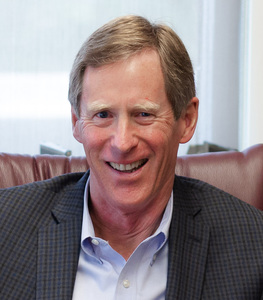
What is the state of Christian efforts to reach out to their Jewish friends and neighbors? What are the biggest barriers Jews have to considering the claims of Christ? And how can Christians lovingly engage their Jewish friends with the gospel? In this episode, Sean and Scott talk with Mitch Glaser, from Chosen People Ministries, to discuss these questions and more. Dr. Glaser gives practical, historical, and biblical insights to these questions.
Even though he grew up in a nominally Orthodox Jewish home in New York, and he dabbled in New Age beliefs, Mitch Glaser became a Christian in 1970. Dr. Glaser is an alumnus of Northeastern Bible College and holds a Master of Divinity degree in Old Testament from Talbot School of Theology as well as a Ph.D. in Intercultural Studies from Fuller Theological Seminary, School of Intercultural Studies. Both Mitch and his wife Zhava teach at the Charles Feinberg Center for Messianic Jewish Studies — a partnership between Chosen People Ministries and Talbot School of Theology.
Episode Transcript
Scott Rae: [upbeat music] What are the biggest barriers today to Jewish people accepting Jesus as their Messiah? How has the church's history of anti-Semitism hindered Jewish evangelism? And what is the future of the Messianic movements among the Jewish people? We'll answer these questions, and more with our guest today, Dr. Mitch Glaser, president of Chosen People Ministries and director of Talbot Extension in Messianic Jewish Ministry in Brooklyn, New York. I'm your host, Scott Rae.
Sean McDowell: And I'm your co-host, Sean McDowell.
Scott Rae: This is Think Biblically from Talbot School of Theology at Biola University. Mitch, so glad to have you with us, and looking forward to hearing a little bit more about some of what you've worked on in the history of the Messianic movement and the history of Jewish evangelism.
Mitch Glaser: Well, looking forward to it, and shalom, my brothers.
Scott Rae: So tell me, you've been invested in studying sort of the modern outreach movements to the Jewish people-
Mitch Glaser: Yes
Scott Rae: ... For some time. Now, you head a, you head a ministry that is a part of that-
Mitch Glaser: Yes
Scott Rae: ... And has been a part of that for a long time, but what specifically sort of sparked your interest in this particular project?
Mitch Glaser: Well, of course, it's personal because I'm a Messianic Jew, so, I, The actual spark for my studies, which basically, deal with the 19th, 20th centuries, and, now we're working on the 21st, but not a whole lot of research, yet. S- We're still new. But, very heavily on the 20th century, pr- particularly pre-Holocaust and during the Holocaust and post-Holocaust has been a real interest. And what spurred me on was I needed to know whether or not my grandparents, who came just before the Holocaust from Minsk to New York City, I needed to know whether or not they ever had a chance to hear about Jesus. And so it was very deeply personal. And I've been studying this for really decades now, and I think I have some answers, about whether or not they could have heard, the Gospel, and then if ongoing, you know, did... Was the Gospel preached in concentration camps, or did Jewish people who were about to get gassed, you know, hear anything about Jesus? And, and so those were, those were really questions that I needed to find answers to.
Sean McDowell: Those, those are both personal and also perhaps some of the toughest questions that can be asked. So I appreciate your willingness to really dive in and look at those. We're gonna look at how some historical events, like the founding of Israel and the Holocaust, shaped Messianic movements. But maybe before we jump into that, can you just frame for us, what are some of the biggest barriers, whether they're biblical, cultural, historical, for Jewish people to believe that Jesus is the Messiah?
Mitch Glaser: Fundamentally, there's one major, problem, and that is when a Jewish person thinks about becoming a believer in Jesus, they're under the impression that if they believe in Jesus, they're no longer Jewish. Now, if we define what it means to be a Jew, we have to... You know, there's always a debate. Is it a religion, or is it a people group, or is it, is it racial? Is it ethnic? Is it... You know, what is it? And the answer is yes to all of them. [clears throat] And, and so a Jewish person, can... Somebody can convert and become a Jew, but then they're always called a Jewish convert- ... You see? So, [clears throat] the biggest obstacle is that you're no longer a Jew. So what you do spiritually then affects you sociologically and community-wise. So, for example, I mean, just bringing it down home, so I've lived in Brooklyn, which is where I was born, but then I was away for a number of years, but I've been there for 35 years. So I live next door to a Reform rabbi. And f- this rabbi, perfectly nice guy, good synagogue, he's retired now, but he would never talk to me. He barely still talk, talks to me now. I've, I've done his le- blown his leaves. I've shoveled the snow [chuckles] you know? I mean, we've been as the best kind of testimony we know how to be, but he won't talk to me. What is he offended about? What did I do? I didn't do it. I just believed in Jesus. But from his perspective, even though he's a Reform, more liberal Jewish person, I have taken myself outside the Jewish community by accepting an, a foreign faith. Now, let's think about that one. Jesus was what? Scandinavian? [laughing]
Sean McDowell: [laughing]
Mitch Glaser: Right? Italian. So I am being accused of embracing a foreign faith when the leader of that foreign faith was Jewish. He claimed to be the Messiah. Now, how would the Gentiles have known about a Messiah in the first place? So how could it be pagan? It's not pagan; it's Jewish. If anybody converted, it's the Gentiles, not the Jews. We convert from sin, but when it comes to religious faith, being a Jew who believes in Jesus is more of a fulfillment than a conversion. And so there, these folks are upset. My own grandparents, when I told them I became a believer in Jesus, the ones that I wanted to find out whether or not they could have heard the Gospel, they never talked to me again.
Scott Rae: Really?
Mitch Glaser: Yeah. So I'm not crying in my matzo ball soup, you know, so to speak. I'm, I'm just saying that the... You're talking about an impediment to evangelism, and that is a massive impediment. So somehow we have to communicate two things to Jewish people. Number one, you can be Jewish and believe in Jesus. What that means is gonna be defined in many different ways, but you can. And number two, not all Christianity, or not every Christian maybe is a better way to say it, hates Jews. Because that's at, that's the problem, that the Christian Church is not just neutral, it's just... It's not just non-Jewish. They're hostile.... And there's a lot of historical background to that. And so it takes a, it's a long haul trying to, talk to a Jewish person because then you're fundamentally against, coming up against a deep-seated worldview issue. Jews can't cross the line, because if they do, they're no longer Jews.
Sean McDowell: So yeah, I remember talking to you in the past, where you said your evangelistic strategy is one person at a time.
Mitch Glaser: Absolutely.
Sean McDowell: And it's a long, it's a long-run strategy.
Mitch Glaser: It's a long-term investment.
Sean McDowell: Let me, let me explore the background of antisemitism a bit. How big a factor is that, and how much of the antisemitism that the Jewish community has experienced falls at the feet of the church?
Mitch Glaser: Most of it.
Sean McDowell: Most of it.
Mitch Glaser: Yeah. So I just was working on, another,
Mitch Glaser: I just was lecturing in, Korea, of all places, on Jewish people and Jewish evangelism. Koreans have a deep interest in Israel and in Jewish people, and so on. And so I prepared a lecture, and I n- I really needed to take everybody from the New Testament to the modern date, and I needed to do it quick, and I couldn't take too long because it was through translation. [chuckles] And then so, and so the, I went fast. But it started early, very early. You had the debate between, Justin Martyr and Trypho the Jew, whoever that Jew was. And Tr- and Justin Martyr, who is a beloved church father, was pretty nasty about the Jewish people, firmly believed that the church was in competition with the Jewish people. After 70 AD, when the temple was destroyed, Judaism then became a more universal faith and wasn't, s- wasn't tethered to a local spot like the temple. And so there was a lot of, lot of, tension, and Jesus even talked about, Jewish people going out and making converts, you know? And [clears throat] then Nicaea came, and then at the Council of Nicaea, the calendar was changed, and so there was an intentional break with Jewish life and the Jewish calendar so that Easter was no longer attached to the Lor- you know, to the Sunday after Passover, and that was a big deal, a really big deal. And then, of course, you had, church fathers in the early Middle Ages, giving, you know, the charge of deicide, and you had Chrysostom, who was a, if you read his homilies on the Gospel of John, he was not very kind towards the Jewish people. And then as you work your way up, you know, you end up with the Reformation, and you've got Luther, and Luther, when he first began, was pretty nice to the Jewish people. He wrote a tract in 1517, I believe, that Jesus Christ was born of a virgin, and that was, a very good piece of evangelistic literature trying to appeal to Jewish people. But then right before he died, 1547, '48, somewhere around there, Luther wrote something called The Jews and Their Lies. And, in the course of his table talks and so on, he called for the burning of synagogues, the burning of Jewish books. He called for-
Sean McDowell: Wow!
Mitch Glaser: There was one line where he said the next... He was disappointed that Jewish people weren't responding to the gospel, and he said, in his table talk, he said, "Next time I baptize a Jew, I'm gonna tie a rope around his neck, attach the rope to a stone, and throw the stone into the Elbe, River." You know, not too good. Now, Luther stroke, spoke strongly about others, [chuckles] so we know that, so we can give him a little pass on that. But on the other hand, Calvin was not much of an improvement, and it wasn't really until the 19th century, the early 19th century, maybe a little bit in the 18th century, where, uh-
Sean McDowell: Yeah
Mitch Glaser: ... Things became a little bit better between Christians and Jews, and there was a surge in e- in evangelistic agencies in the 19th century, beginning with the CMJ, the Anglican agency in 1809, that began treating the Jews a bit more kindly in trying to appeal, to the Jewish people. And so basically, we had a long haul, and then on top of that, you've got Crusades, you've got pogroms led by the Orthodox clergy. Then you have the capstone, which was the Holocaust, which of course in the Jewish mind was perpetrated by German Lutherans. And so by the time you get to our modern day, I mean, what do you think? I mean, you've got so much negativity, about, of Jewish people towards institutional Christianity. Now, if you ask me, are Christians antisemitic? Or I would say, "No, that's not been my experience." But my definition of a Christian would be someone who's not nominal, somebody who could belong to a Christian institution, but they have a vital personal faith, they read the Bible, and they unders- and they can even have a different view on the fulfillment of, prophecies about Israel and so on, but they understand the gospel, and that is the kind of Christian that I want my Jewish family to meet.
Sean McDowell: That's a really sobering history going back so long, [chuckles] and it's, it's interesting to hear you say that the primary, you know, resistance is not a different interpretation of Isaiah 53.
Mitch Glaser: [chuckles]
Sean McDowell: As important as that may be-
Mitch Glaser: I wish. [laughs]
Sean McDowell: ... It's really just, it's antisemitism and just giving up being Jewish. So that's, I just wanna emphasize that for our listeners. Now, you talk about so many historical movements that have shifted in reaching out to Jews, but there's really two in the 20th century that I think would be important to talk about. One would be kind of the Holocaust, and then the founding of Israel. So let's start with the Holocaust. How did that affect Messianic movements to Jews?
Mitch Glaser: Well, first of all, just some, I mean, good news in the midst of a horrendous situation. I did discover that-... There were, there was quite a movement of Jewish people believing in Jews, Jesus in Europe- between World War I and World War II. I would say multiple hundreds of thousands. And, that's pretty well documented in a lot of sources, and so I have every reason to believe that when the Jewish people went into concentration camps, that there were a lot of Jewish believers in Jesus sharing the gospel. I've got testimonies of people sharing in the gospel and-
Sean McDowell: Wow
Mitch Glaser: ... And getting saved, in the middle of the Holocaust, and, so it's very encouraging. And so I would say that even though it was a terrible circumstance for the Jewish people, that there was grace in the middle of that horrible time. But by the end of the Holocaust, the Jewish population of Europe was reduced by two-thirds. So there were a little over 9,000 Jews. A little over 6 million Jews were killed, 3 million in Poland alone. And so, Jewish people basically, lay that at the feet of Christianity because, I mean, Hitler in Mein Kampf did say that he's only trying to continue the work that Luther, began. And so, you know, what do you, what do you, what can you say? [chuckles] I remember, handing out gospel tracts in Westwood Village in Los Angeles, and I waited till late one night, and I just wanted to wait till all the movies were out and offer everybody a tract. Actually, I was going to Talbot at the time, so it was many years ago. And there was this old man who came out of the theater last. He was the last guy out, and came and started walking across the street. I could see his face in the, in the, in the light of the streetlamp, and man, he looked just like my grandfather, my other grandfather, not the one that I was talking about, and, who also didn't believe and had rejected me. And so he's walking across the street, and I felt like... I mean, obviously, I knew it wasn't my grandfather, but I said, "You know, he looked grandfather-like," and I couldn't wait to try and talk to him about the Lord. So he steps up onto the curb and, takes one of my tracts, and I said, "Wow!" And then walks by, turns around, reads it, comes back, looks me in the eye, and begins meticulously, tearing up this tract into little pieces, and he threw them at me. And he said, "It's people like you who are trying to finish the work that Hitler started." So this is a, this is a mentality of... So, I mean, what in the world does telling you about Jesus [chuckles] have to do with Hitler? I mean, where is the connection? Well, of course, other people would have to ask, but I knew what the connection was. The connection was, "You hate us. You try to destroy us. You did it physically, and now you're doing it spiritually, because..." And he would never even understand his own mentality this clearly, because if a Jew believes in Jesus, they're no longer Jewish, and they become Christians, and when they're Christians, they're no longer Jews. Meanwhile, all the Christians who were first called Jews in the New Testament, by the way, were all Jewish. And so [chuckles] you know, the gospel slowly transformed and thankfully went to the Gentiles. We're grateful for that. But we are left with a big problem because Jewish people don't want to become Christians because of what Christianity did to them in their understanding. That's the problem.
Sean McDowell: So, Mitch, how... Given those obstacles, how do you contextualize or recontextualize the gospel message to have some sort of impact on Jewish people?
Mitch Glaser: Pray a lot, you know, and personalize your prayers. Pray about, pray about the person you're gonna talk to before you talk to them, and then ask God for wisdom. And, I always start by asking a lot of questions. You know, a lot of us in the ministry and a lot of Christians, when they learn about evangelism, learn about what to say. They don't learn about how to listen, and we, and we just don't listen. And if we can ask a couple of good questions and posture ourselves as learners to the Jewish person we're speaking to, then we can find out where they are. I mean, how can you really apply the gospel personally to someone if you don't know what their thoughts are about God, whether or not they believe in God, whether they want a relationship with God, how they feel about, celebrating Jewish holidays, or they... I mean, you have to understand what their values are before you can talk to them with any depth. And I think, I think you can have a gospel conversation without knowing a lot about somebody and present the gospel in a sensitive and true, and to true- and truest in form and theological content, but that's not the best conversation. The best conversation is when the Jewish person's talking to you, giving you clues about where they're at spiritually, and then you're able to take from the wealth of your relationship with the Lord and personalize it for that person. So I think that's, that's good advice.
Sean McDowell: That's good advice for reaching anybody, but I'm glad to hear that it applies in your experience also with Jewish people. We have some more questions about kind of how to minister to Jews today, but I'm really curious. The other historical piece is how the founding of Israel influenced Messianic movements and outreach to Jews. And do you see a kind of resurgence today since 1948, when it was founded there?
Mitch Glaser: Yeah, we just did a survey of, Israelis.... Within the last six months, I'm working with two Jewish academics, formerly from the, University of North Carolina, and, we did a Hebrew language survey. And in that Hebrew language survey, we just wanted to know where things are at. They have their agendas. We pay for the survey-
Sean McDowell: Sure [laughing]
Mitch Glaser: So I have my agendas. You know, there's a, we're, we're, we're dear friends now, and, but, we asked a number of questions, but the best one was: Do you believe in the God of Abraham, Isaac, and Jacob in a traditionally Jewish sense? Because a lot of secular Israelis, particularly Tel Avivians, you know, are into Eastern religions and things like that. And so we asked the question, and, lo and behold, 71% said that they did. I was stunned. I didn't think it would be that many.
Sean McDowell: This is 71% of citizens or people who live in Israel?
Mitch Glaser: Yeah, and the survey, of course, was in Hebrew, done by a very reputable, survey company in Israel. We then did a flip survey and asked American Jews the same question, and the American Jews came out at 41%.
Sean McDowell: Wow.
Mitch Glaser: So a 30% [chuckles] drop. So if you ask me, are Jewish people in Israel open to the gospel? I'm not, I'm not sure if they are. I have other read-- other things I've done which make me think that they are. We just, I think, three weeks ago, just baptized 14 Israelis, you know, who came to faith, mostly because of the war and their insecurity and their... And all this, and it was a, it was a beautiful thing, you know? And that's a lot of Jewish people, to be baptizing, particularly all pretty much brand-new believers. And so I think that Jewish people in Israel are open, but we did another question on our survey, and that was-- it was an interesting one. We asked them how many Christians they knew, and then we broke it up into Evangelical, Catholic, Orthodox, and Messianic. And, the o- aggregate answer, I think, was about 8% who knew a Christian, and the number one Christians that they knew were Catholic, 12%, Orthodox, 9%, and then, Evangelicals were about 4%, and then Messianics were, like, 1%, [chuckles] maybe. And the interesting thing is, you know, we like to say that Evangelicals are known as the best friends of the Jewish people. That's true, but that's mostly among politicians and- ... And others, who, but not the average Israeli. Think about it. How would they know an Evangelical? Where would they meet them, you know? The reason why the other numbers were high is because all of them were Arabs.
Sean McDowell: Oh, is that right?
Mitch Glaser: Yeah.
Sean McDowell: Wow.
Mitch Glaser: Yeah, so they know Arab Catholics, Arab Orthodox, you know, and then this small number of 4% Evangelicals of only, you know, I don't know, 8 to 10%, whatever it was, who know a Christian, maybe 12%. So, I think we're, we're, we're having a, an interesting time of trying to get the gospel to Jewish people. All I can say is, since the Israelis do th-- say they believe in a more traditional God of Abraham, Isaac, and Jacob, I think that there is an openness, and I think we've seen that the war has caused an even greater openness, but we don't have enough people to tell them. [chuckles] Not that God needs us to tell them, but we should. And, and so I think if there was more gospel preaching... We have about 30 staff members in Israel. Chosen people, I think, we're pretty much the largest group in Israel, or one of the-- There are maybe two or three that float around the same amount of people, but certainly, we're doing our best. We even have Talbot and Biola grads serving on our staff-
Sean McDowell: Yes, we do
Mitch Glaser: ... In Israel.
Sean McDowell: Yeah.
Mitch Glaser: You know, and so we're really praying that the Lord will bring, more people to Israel, and if you're interested, you can attend the Charles Feinberg Center for Messianic Jewish Studies, a part of Talbot School of Theology in Biola University, and you can come to Brooklyn or do it online. So please contact me, Scott Rae, or, somebody else in registration at, Talbot.
Sean McDowell: I apprec- I appreciate that commercial. But that's, you know, that's a significant part of what we're doing at Talbot-
Mitch Glaser: It is
Sean McDowell: ... Is for the next, you know, the next generation of folks who will be leading the Messianic movement, both in the US here and in Israel.
Mitch Glaser: We have a h- we've planted a half a dozen Messianic congregations- ... Recently in the United States, and right now, five out of six are pastored by Feinberg grads.
Sean McDowell: Let me raise that, a question on that. When, say, somebody, a Jewish person, comes to faith in the United States, do you encourage them to join a Messianic congregation, or should they just be a part of a mixed, you know, a Gentile church? Which, which would you prefer?
Mitch Glaser: The cute answer is yes. [laughing] the-
Sean McDowell: Some, some church would be, would be good.
Mitch Glaser: The, the real, the real [chuckles] answer is actually it's a huge problem among the rising number of young believers in Israel that a lot of them are just not plugged into a local congregation, and there, everything's a Messianic congregation, so to speak. So, you have different needs for-- and different people change churches depending on the ages of their kids and whether or not there's a pastoral change, and so I think we have the same issues, within the Messianic community. I'd say for some Jewish believers, it's really great to have a Messianic congregation around, so they can feel more comfortable, and they can bring their family and friends to something. B- we worship on Saturday. We celebrate all the holidays, and, it's nice going to a Messianic congregation. You can go on Saturday and then go to a church on Sunday. You could be, you could be filled for the whole week by doing that. But I think either one is good as long as it's healthy and wholesome, but I do believe-... That anything we can do, as Christian leaders, and I'm speaking particularly even at Biola and Talbot, what- anything we can do to make the church ready to receive Jewish people who are new believers is very valuable. Help them, help them learn how to be sensitive and understand the Jewish believer. I think that's important.
Sean McDowell: Tell me two or three things really quickly of what that would look like and to do to be sensitive in a church.
Mitch Glaser: I'll give you a good one. I go to a church and a Messianic congregation, and but my home sending church is a wonderful church in New Jersey. And, my mom died, and they were praying for my mom. They were praying for her to get saved, and she even had a genuine, authentic deathbed conversion, which- ... Was incredible. Just a whole story, and so she did come to faith. Then afterwards, there are seven days of mourning called sitting shiva from the Hebrew word to sit, shavah. And my local church loved me, sending church. I mean, I don't... Great. I mean, just a wonderful relationship, but nobody came. They would have come if I asked, but when you're mourning like that, you don't want to ask. So, Jewish, handling Jewish, the death of a Jewish person is really important. Handling the death of any person is important, and that's where a pastor really shows what they're made of in terms of their personal ministry to those who are mourning, and my pastor was great, but he didn't know. I should have told him, probably. But there are a lot of things that Christians need to know. When it comes to the holidays, for example, you know, Chris- of course, the church makes a big deal out of Christmas and Easter, and there's a lot of cultural traditions that are linked to celebrating those holidays. They're not just we act like everything we do is just only biblical or theological, but it's not. It's filled with cultural, home-based, things. And what happened is the Jewish believer, everybody's talking about Christmas and going home for a family dinner, but the Jew- not the Jewish believer. And everybody's waiting for their kids to come home for Easter from college or whatever, but not the Jewish believer. So you see, as you sort of peel the egg, you know, you sort of, or the onion, you start finding out- [laughing]
Sean McDowell: [laughing]
Mitch Glaser: ... Start finding out, [chuckles] depends which one. [laughing]
Sean McDowell: [laughing]
Mitch Glaser: And you start finding out a lot of the layers of the, of the, of the issue. So, just so you know, there's probably 25 more where they come from, and we handle those in our pastoral theology classes so that, so that people can be equipped to do that kind of thing. I should write a book about it for pastors, probably.
Sean McDowell: I think you should-
Sean McDowell: Yeah
Sean McDowell: ... A handy guide. And by the way, I mix my metaphors all the time. When my wife listens to this, she's gonna laugh, so I appreciate that.
Mitch Glaser: [chuckles] That's the onion.
Sean McDowell: So got a couple more questions. Just very briefly, what do you, what do you think is the future of the Messianic movement?
Mitch Glaser: Renewal. I think that's always the future of the church until Jesus returns, and so we've seen many renewal movements. I believe that the Messianic Jesus movement that started in the late '60s, I got saved in November 1970. I think that the whole proliferation of Messianic congregations, I think it all has to do with renewal, and, so I do think that it's renewal, and then at the end of renewal is Romans 11:25, when, all Israel will be saved, according to, what Paul said. Now, I believe that's... [exhales] I believe that we can make corporate decisions, for Jesus, but the way I view the corporate decisions are individuals making decisions that end up looking corporate. And so I think we all need to personally accept Jesus as Savior. But Romans 11:25 is clear, that the Jewish people are gonna turn to Jesus in the last day, and that the remnant of the nation, which is I, what I'm part of now, Romans 11:5, remnant will turn into the whole nation. So that's the future from my point of view.
Sean McDowell: One final question: If somebody listening has a Jewish friend-
Mitch Glaser: Yeah
Sean McDowell: ... How would you suggest reaching out to this person?
Mitch Glaser: You know, I hate to push our website. [chuckles] I should.
Sean McDowell: Do it. Yeah, please.
Sean McDowell: Go for it.
Sean McDowell: That's why it's there.
Mitch Glaser: Go to chosenpeople.com. We have so many wonderful resources- ... On how you can learn how to witness to Jewish people, and then we have wonderful resources on what you can order, what you can read, and what you can give to a Jewish friend. I've written a book, Isaiah 53 Explained. You can go to the Isaiah 53 Explained website. That's just isiah53.com.
Sean McDowell: That's great.
Sean McDowell: That's great, yeah.
Mitch Glaser: And you can order a free copy. We've... It's in 15 languages, and we've given away 350,000 of them. So there are a lot of Jewish people that read the book and got saved, and so you can use that.
Sean McDowell: By the way, really fast before-
Sean McDowell: Go for it
Sean McDowell: ... You close up, Scott. I was reading Michael Brown, who's a-
Mitch Glaser: Yeah
Sean McDowell: ... Messianic Jew, and he was saying, in his experience, more Jews have come to Christ reading Isaiah 53 than any other passage. Is that your experience? Is that why you wrote the book on that?
Mitch Glaser: No. No, Mike and I have debated it.
Sean McDowell: Oh, interesting. Okay.
Mitch Glaser: No, I believe that a lot of Jewish people discover Isaiah 53 after they're saved, and it's the most affirming thing in the world to them.
Sean McDowell: Interesting.
Mitch Glaser: And it bolsters their faith. I think most Jewish people get saved because of some type of experience, maybe reading the Gospels, maybe reading the Sermon on the Mount, like me-... But I did see Isaiah 53 before I was saved, but it wasn't, it wasn't what persuaded me. So I wrote the, I wrote the book because Christians have confidence in it, and they'll give it to their Jewish friends, [chuckles] and it's better to have something that they can read.
Sean McDowell: Amen.
Mitch Glaser: It's so specific, you know? So I think Isaiah 53 is great to use with unbelievers, but don't be limited.
Scott Rae: Well, I wanna commend to our listeners your books, Chosen People Ministries website-
Mitch Glaser: Thank you.
Scott Rae: -uh, and if they're interested in pursuing Messianic ministries, check out the Feinberg Center as part of Talbot.
Mitch Glaser: Oh, yeah, that would be-
Scott Rae: So
Mitch Glaser: That'd be great
Scott Rae: ... That's all good stuff. So Mitch, thanks so much for coming on with us. It's been super insightful, and as usual, just a great conversation. [child screaming]
Mitch Glaser: Thank you, brothers.
Scott Rae: I wanna, I wanna make a, make a mention to our audience, too. If you hear that screaming child in the background-
Mitch Glaser: [laughing]
Scott Rae: ... We are, we are live at the Evangelical Theological Society meetings, and, I think there's a child there that's out of control.
Sean McDowell: I think maybe that's the case.
Mitch Glaser: Hey, what... And it's not my child.
Sean McDowell: [laughing]
Scott Rae: That's right. [chuckles]
Mitch Glaser: Or my grandchild.
Scott Rae: That's right.
Mitch Glaser: So, you know.
Scott Rae: I would recognize the scream if it were my child. [chuckles]
Sean McDowell: There you go.
Scott Rae: So, hey, well, thanks so much, Mitch. Great to have you with us.
Mitch Glaser: You're welcome.
Scott Rae: This has been an episode of the podcast Think Biblically: Conversations on Faith and Culture. It's brought to you by Talbot School of Theology, Biola University, offering programs in Southern California and online and in Brooklyn, New York, including master's in Old Testament, New Testament, Messianic studies, marriage and family therapy, spiritual formation, apologetics, philosophy. You name it, we've got it. Visit biola.edu/talbot in order to learn more. If you have comments or questions or suggestions on issues you'd like us to cover or guests you want us to consider, email us at thinkbiblically@biola.edu. If you en-enjoyed today's conversation with our friend Mitch Glaser, give us a rating on your podcast app, share it with a friend, and join us Friday for our weekly cultural update. Thanks for listening, and in the meantime, remember, think biblically about everything. [upbeat music]