Biola University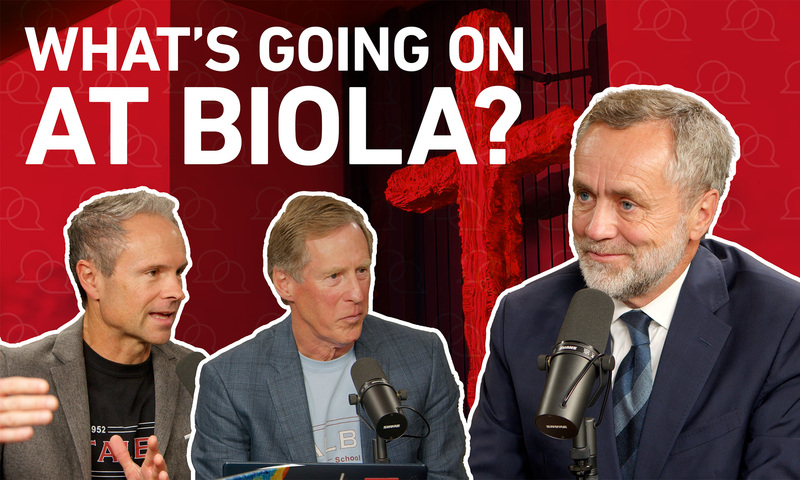
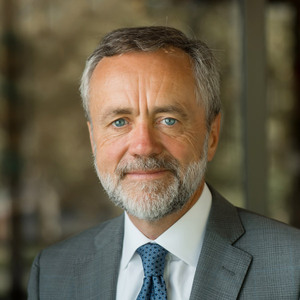
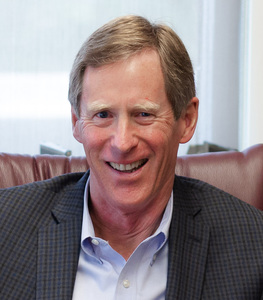
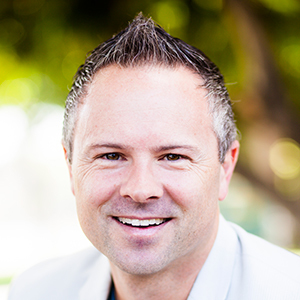
Is Biola University staying true to its biblical mission? In this candid episode of the Think Biblically podcast, Biola University President Dr. Barry H. Corey joins hosts Dr. Sean McDowell, associate professor of Christian apologetics, and Dr. Scott Rae, senior advisor to the president for university mission and professor of philosophy and Christian ethics, for a conversation about the pressures facing Christian universities and what it takes to stay faithful in an increasingly hostile culture.
With nearly two decades of presidential leadership behind him, Dr. Corey reflects on Biola’s unwavering 117-year mission, the challenges of guiding a university in a polarized world, and his vision for raising up a generation that holds firmly to biblical truth while embodying the winsome fragrance of Christ.
Together, they address some of today’s most important questions facing Christian institutions, including:
Has Biola experienced mission drift?
How has the university course-corrected over the years?
What role do critical theories play in higher education today?
How are hiring practices shaped by theological conviction?
Whether you’re a Biola student, alumnus, parent, or someone following the future of Christian universities, this episode offers clarity, transparency, and hope rooted in biblical conviction.
Further Reading:
- Biola University Theological Positions
- Articles of Faith (included in the Red Book)
- Statement of Biblical Principles
- Principles of Free Expression and Diversity of Thought
Ó£ÌÒÊÓƵ President Corey
Barry H. Corey is the eighth president of Biola University. Since assuming the role in 2007, Corey has led Biola into its second century with the launch of an ambitious 10�year university plan, completing the largest fundraising campaign in Biola’s history by exceeding its $180 million goal, creating four new academic schools and embarking on a major university transformation journey to position Biola to flourish for decades to come. He has done this while honoring the mission of the university and its unique contribution to the landscape of higher education.
A native of New England, Corey previously served as dean of the faculty and vice president for education at Gordon�Conwell Theological Seminary as well as its vice president for development. He received his B.A. in English and biblical studies from Evangel University and his M.A. in American studies and Ph.D. in education from Boston College. As a Fulbright scholar, Barry lived in Bangladesh, where he researched educational programs for children of the landless poor. Corey is the author of the books The Treasurer: A Biography of Herbert Stewart Gray (Westbow, 2025), Make the Most of It: A Guide to Loving Your College Years (Tyndale, 2020) and Love Kindness: Discover the Power of a Forgotten Christian Virtue (Tyndale, 2016), and his writing has been featured in publications like The Washington Post, The National Review, Relevant and Converge, among others.
He currently serves or has recently served on governing boards such as that of Gordon-Conwell Theological Seminary, the Museum of the Bible, the National Association of Independent Colleges and Ó£ÌÒÊÓƵs, Christianbook International Outreach and the Council for Christian Colleges and Ó£ÌÒÊÓƵs
He and his wife, Paula, have three children: Anders — who is married to Ashley — Ella and Samuel.
Episode Transcript
Sean McDowell:
President Barry Corey. Biola is experiencing, let's just say, an interesting moment right now. We have some of the most positive things occurring on campus, including some, I hear, from two of my own kids who are here, yet some of the most vocal critics in years. Before we get to the concerns and your response to some of them, what are some positive things that encourage you about Biola right now?
Barry Corey:
Well, thank you, Dr. McDowell and Dr. Rae, Sean and Scott, if I may.
Scott Rae:
You may.
Sean McDowell:
Please.
Scott Rae:
Yeah. Thank you.
Barry Corey:
I will say that as this year began, I was truly thanking the Lord that this is one of the strongest missional years we've had, and this is my 19th year in the role here at Biola. And matter of fact, not long ago, I got a text message, I shared that with somebody, from one of our more seasoned theologians, teaches at Torrey, who said he counts 2025 as the golden year of Biola missionally. So I just came to this year thinking we keep on getting stronger and stronger at who we are, and I think the evidence is in many ways, I mean, enrollment is up five straight years, and when you think about enrollment, biblical studies majors are higher than they've been in years. We welcomed the largest Talbot incoming class at Talbot School of Theology that we have ever had.
Sean McDowell:
Amazing.
Barry Corey:
I mean, I was following some research recently too, of what Barna is saying about Gen Z. They're heading back to church. And they want to be engaged in things that are enduring, are transcendent, not just caught up in these fashionable ideologies. Well, this is what we do at Biola, right? They want to come here for that. We have seen an increase of 11% over the last year in the number of Bibles sold in the United States, 20% more than the year before, I mean, so there's an interest in Scripture. Well, this is who we are at Biola, so this is a place that is kind of ready for this rising generation: church-going, Bible-reading, hungry for the kind of education that we uniquely provide. I was thinking about just the vibrant spiritual life we have on our campus. We have this Torrey Memorial Bible Conference. I mean, you know, our three kids went to Biola.
Sean McDowell:
Yeah.
Barry Corey:
You have two here, you had a child at Biola. We've been doing that for like 75 years, where we suspend classes every fall. And we did it again, where we go deep into God's Word and we don't, like, gloss it over, like it doesn't matter, like it's some kind of therapeutic self-help book. This is God's Word that lasts forever. We do this here, it's just in our bones. And our Missions Conference, I think it's our 97th, 98th, 99th Missions Conference, and the Great Commission is alive and well here. I mean, our students care about making disciples. It's not watered down, some kind of, like, lightweight social gospel seminar. This is about making disciples of the nations. I mean, like, this is who we are. We've been this way for 117 years, and I'm seeing evidence of it in so many different ways. One of our freshmen students, named Reese Eckard, she's an athlete here on the track team, and she was just honored with this national award because she refused to stand on the podium in Oregon, her high school senior year, because a trans woman athlete was being recognized as one of the placers.
And she was only, she said, I'm doing this not out of anger. I'm doing this for protection of the virtues, and protection of women, and certainly safety of athletes, and these are the kind of students, they stand up for their convictions. I see this over and over again. And lest I ramble on, because I could do that, it's what I like to do. I mean, people are giving to Biola and I think they're giving, I know they are. I talk to them. I talk to these donors. They're giving because they believe we're good at what we do and we're faithful to who we've been. And we just received a gift made possible by an executive in Silicon Valley of over $40 million for technology, robotics, engineering, math, physics, machine learning, and he said, I want to invest this in Biola because this is a place that can do that well, thinking about the future without forgetting the past. I mean, that's just who we are. So I mean, historic financial support, and faculty morale, student—I mean, I was in the cafeteria just a couple days ago, just talking to students, and I'm not a social scientist, right, so I'm just talking to them like, how's your experience here? And over and over again they talk about the depth of friendships, and relationship with Christ, and exposure to God's Word, and professionalism in the classroom. I mean, these are really good years at Biola. So let me just maybe push the pause button there.
Scott Rae:
You just mentioned you're in your nineteenth year as president of Biola, and I've been with you for eight of those past nineteen as a Senior Advisor of the President for University Mission. So I've walked with you through some of the challenges that Biola's faced, at least during the last eight years, but what would you say are some of the biggest challenges you faced during your eighteen, going on nineteen, year tenure here?
Barry Corey:
Well, first of all, thank you, Dr. Scott Rae, for saying yes to that invitation seven years ago. I actually think there are very few institutions that are faith-based of higher learning, that have such a role as a Senior Advisor to the President for University Mission. And given your own theological depth and your commitment at Talbot, your many, many decades at Biola, and your own spirit of thoughtfulness, I mean, I couldn't have asked for a better person. You've walked me through many of these conversations and been a voice of Biola to the board and to the external community in a very significant way.
Scott Rae:
I appreciate that. I've been honored to be in the room where it happens for some of those things.
Barry Corey:
As they say in Hamilton, yeah. Well, institutions drift. It's a sociological reality, and they never drift towards Christ-centeredness. They drift away. And it is my responsibility, our responsibility as a board, as a leadership, and even as a faculty to hold the sacred mission of Biola University in trust. And drift never happens in, like, one fell swoop. It happens in little concessions made for market niche, or for reputation, or maybe to fly under the radar, and that takes intentionality. The challenge is to make sure that we are keeping Biola University faithful to what our founders had in mind back in— You know, five or six years ago, I did this little retrospective. I thought, like, why did this university start in the first place? What were the convictions that our founders had in mind? One was that the Bible was going to be at the core of who we are. Another is that they're going to take scholarship seriously. A third is that the virtuous life mattered to every student then, fourth is that the Great Commission was going to be at the heart of this institution, making disciples in evangelism. And fifth is that we're going to be a community welcoming to anybody who God calls to this place.
And I thought, well, if those were the five then, are they still the five? And I would say yes. Do they still matter? Yes. Then how are we doing them? Because I think that, too often, leaders can be amnesic. They kind of forget where we came from, and then you trim your sails to prevailing winds, you go wherever the currents, and it takes intentionality not to do that. And you've been a good conscience for me, Scott, in that way. It's what C. S. Lewis called that chronological snobbery, like our unenlightened forebears, what did they know? We're the cool kids. We understand what's going on. That's a lie. If we forget where we came from, we won't know where we're going.
Scott Rae:
I think one thing I've appreciated just about that approach is, as we've said, that the founders actually own the mission of the University. And we are accountable not to the board, not to our donor, but to our founders, ultimately, at the end of the day.
Barry Corey:
And a lot of people think otherwise. They think we're accountable to the faculty, we're accountable to our donors, we're accountable to accrediting agencies, we're accountable to even the Board of Trustees, but ultimately, we're accountable to our mission. Our mission to provide a biblically centered education, scholarship, and service, equipping our students in mind and in character to make an influence and make an impact on this world for the cause of Christ. And that's who we are. That's who we've been. And that's where we're going. But again, you got to be focused on it like a heat-seeking missile, right, otherwise you'd be distracted and with distraction of all the other shiny objects, you look back and say, Hey, how did we get from one place to the next? If you look at a compass, like 360 degrees, if it's one degree off, you don't notice it right away. But over time, that gets wider and wider. And so our mission is to, and, you know, are we finding ways to refine our mission? All the time. My predecessors have, all seven of them, my successors will. So it's a constant vigilance to look at where we are and are we getting a little bit off course here or there? Let's do a course correction and let's stay on course. And that's what we do.
Sean McDowell:
I think that brings us naturally to our next question because there's a decent number of people who would say that compass was set, and we need to reset it, especially in the wake of COVID. Many people got an inside look not only at public schools, but also Christian universities, like Biola. This has raised some questions about Biola Chapels, residence life, faculty, and other issues that we're going to get to as well. But first, what would you say to those who are concerned at what they saw, maybe starting in 2020, and still see today, and are not satisfied with positive reports from Biola? As amazing as those are, and we could have gone on further, I could have shared about my own kids as well as the way Biola seemingly communicates there's nothing to see here, trust us, we're faithful.
Barry Corey:
Well, I would say if anybody hears me say an answer to these critiques, trust us, we're faithful. That's like an anemic response. It is. It's like saying, Hey, it's not about the money. It's about the money. Right? Trust us. We're faithful. How are we being faithful? That's the question. I have a friend of mine who has run an advertising business out on the East Coast. He says, don't keep on saying we're on mission. Just tell the story about where you're on mission. And so when you bring up, for instance, Sean, like chapel messages. Probably back in, I don't know, Scott, 2020 or so, I established the President's Council for Discipleship and Spiritual Formation to say, let's look at what our chapel themes are, who our chapel speakers invited to be. And I have had, since then, almost no complaints about chapel speakers. Our chapels are expositional.
We have prayer chapels, we certainly have worship chapels, but our Bible chapels are Bible chapels. We're going through the book of Luke this year. Frankly, some of the concerns are concerns that probably things fell between the cracks a long time ago, maybe before we set up this council. And this council is made up of strong, orthodox (small o) faculty members who understand Scripture, and hermeneutics, and theology, and they vet whoever our speakers are, and our speakers come, obviously on the inside, every one of our faculty members, as you know, because you do this every year, you affirm by your signature, the Articles of Faith and our Statement of Biblical Principles, which are as rock solid as I've seen anywhere at any institution, but our visiting chapel speakers: they have to read them, they have to know them, they have to teach within that framework, they can't speak against those.
And so that vetting process for our chapels, I think, has only gotten better. Granted, when that wasn't happening, and students were watching things at home, and families were watching chapels together, we did get some critiques. So, like I said in my last question, right, we find ways to course correct and we do that and that's what we did. As it relates to student development. Again, I think some of the critiques I hear are things that we settled, like, several years ago, if not more. Our student development functions are really working well. We orient our RAs and our Residence Life staff in a way that is consistent with our statement of biblical principles on human sexuality, on gender, on romantic expression, on how to love your neighbor. I mean, it's just there. And I've heard very little, even in recent years, about, not that we're going to be perfect, we are going to make mistakes along the way, but one mistake does not create a narrative.
Scott Rae:
Now, Barry, Biola has been around for 117 years, and since its founding in 1908, overall, how would you assess its mission faithfulness? And to be a little more specific, what exactly does it mean for Biola to be missionally faithful? Because we throw that term around, like everybody knows exactly what that means, but I'm not so sure that's true. So help us understand a little bit more what you mean more specifically by that term.
Barry Corey:
Well, it all begins with the Bible, the first letter in the Bible Institute of Los Angeles, and we hold everything in trust through the lens of Scripture. I brought this book with me. I hope you don't mind if I bring it out. It's a heavy book. We call it the Big Red Book.
Scott Rae:
It is big and red.
Barry Corey:
It is big and red.
Sean McDowell:
It's the first I've seen that, by the way.
Barry Corey:
Well, if you look in this book across the top, it has our Articles of Faith written. This book, for 99 years, has been signed by every single trustee at Biola. It is symbolic, yes, but it's also convictional. When we sign our name, and my hand shook in 2007 when I fixed my signature to this book for the very first time, and for decade after decade, this is a reminder that the Articles of Faith are theologically, biblically sound, doctrinal statements that were drafted in the early years of Biola, still matter today. We haven't taken our, basically, our eyes off the mark. And so you can see these signatures in here like page after page for decade after decade, and again, September of next year will be the hundredth year of signing this. And those statements haven't changed. And it's one thing.
Scott Rae:
You okay there?
Barry Corey:
A little sprain in my shoulder there. It's one thing to hold to what we believe to be true in language. It's another thing to hold to be true in practice. So, let's say, where does our Mission Statement really matter? Well, it matters in the classroom. It matters with our faculty. It matters how we do our co-curricular. So when I said that our faculty members hold dearly to these Articles of Faith and our statement of biblical principles, that means they don't wink, wink hold to them with their fingers crossed, or with a nod in the other direction. Have there been some that have campaigned for change, changed their mind, hoped for change? There have been. I mean, they might have held to these convictions early on and then, maybe thought, I don't know if I hold to them that soundly anymore. And in those cases, sometimes out of their own conscience, they've left. Other times out of our own decision, they've left. But I can truly say that in my almost 19 years here, we haven't had more faculty and staff on mission than in all these nearly two decades I've been a Biola. But it takes intentionality, it takes talking about it, it takes processing. How does it affect your curriculum? How does it affect your policies? It's your policies, it's your personnel, it's your practice, right? Do you have the policies? Do you have the personnel to enforce it? And are you actually putting into practice what you need to do? We work on all of those.
Scott Rae:
I think too, it's helpful for our viewers to know too, that the faculty, they don't sign the red book any longer, but they do sign off on all our theological statements every year when they sign their contract. And our co-curricular staff, they sign off on something very similar too.
Barry Corey:
They do.
Scott Rae:
And I think we've recognized that the co-curricular staff, they matter a lot because they're the ones who are more hanging with students on the day-to-day basis, as opposed to faculty—
Sean McDowell:
Yeah.
Scott Rae:
—in the classroom. And that's a change we've made in the last 10 years, to have co-curricular staff sign on to those very same things.
Barry Corey:
Listen, we're inheriting students that, by and large, are 18 years old. And again, I've been here for a long time. The students that are here now as freshmen were born the year I got here. So I've been here a while. But they come, I'm not sure what their formation is always like in their public schools, in their families, in their friends group, and even in their churches. So it's not like we're working with toddlers, we're working with young adults that come here. So they're on their own journeys. And so it takes some time for us through the good curriculum that we do, our formation that we're doing spiritually, as well as in our co-curricular programs, to help these students to begin, in the words of your podcast, not just to think biblically, but to live biblically. And it's probably more work than it used to be, but we're committed to it more than ever.
Sean McDowell:
You may have already addressed this question so much, because I wanted you to talk about the process for chapel speakers and/or Torrey or Missions Conference. How does the university assure that speakers align with Biola's Mission and Theological position, or is it okay to have some speakers who don't align with Biola's Theological Position at times?
Barry Corey:
For chapel, you align, at least in understanding what our positions are, what we hold to be true. You don't teach outside of that. You read it. You're thoroughly immersed in that. And our expectation is you come holding those convictions. Maybe in a lecture it's different. We're a university, so we wrestle with ideas. We might bring in some with a contrarian view. And I often say that we're not this bubble to protect students from the world of ideas. We're a university, but we're not this ideological bootcamp to indoctrinate them or to brainwash them into a certain fashionable way of thinking, which is happening a lot today, right, in higher education? But we are this greenhouse where we have this ordered and sequence way of learning and thinking in the classes that we take to help our students to be wise and knowledgeable both. But sometimes you have to do that by exposing them to different ideas and different theories. And we do that through a biblical lens. But in chapel, we're pretty much straight down the middle saying this is a place where we worship, where we exalt the name of the Lord, where we hold high the primacy of Scripture, where we celebrate the resurrected Christ. We allow the work of the Holy Spirit in our community, and that's what happens in chapel. So more and more, I think you're seeing in Biola's Chapel that we are on the mark.
Sean McDowell:
So if that doesn't happen in chapel, somebody has gone off script or they're clearly teaching something that they're not supposed to in a chapel setting. Other conversations and dialogues aside, that would clearly be what's happening in chapel. If that happened.
Barry Corey:
And again, it's been a while since I've heard of the chapel speaker that has just kind of gone rogue.
Sean McDowell:
I agree, I agree.
Scott Rae:
Dr. Corey, one of the first issues that was raised in some of the criticism we faced in the last few weeks has to do with a group on campus that we've called The Dwelling. Can you tell us a little bit about what that group is, what its purpose is, and what the status is of that group?
Barry Corey:
Yeah, happy to, Scott. Thank you. So The Dwelling was structured originally with good intentions of being a supporting place for our students to process human sexuality in a way that is biblically faithful, within our own framework of human sexuality, which I've talked about, the way in which we understand marriage, the way in which we understand sexuality, the way in which we understand sex or gender, and the way in which we understand romantic expression, romantic expression of Biola is teleological. It's meant to lead you towards what we believe the ideal for marriage is based on God's word between a man and a woman, and sexual intimacy only happening in that context. So romantic expression has to be heading in that direction. So all of this is important for, I think our outside folks to understand, but the goal was always pastoral care, to care for these students, to help them steward their sexuality, to understand that their identity is in Christ and nothing else. So, again, this aligned with all of our biblical convictions. And at the same time, there was still confusion on the outside, maybe the ways in which we worded the description, maybe the ways in which it was featured in student newspaper coverage. And so we are making some changes moving forward. So in the coming spring semester, The Dwelling will be discontinued.
And we're going to do something new. So I'm calling on this same group that I mentioned a little bit ago, the President's Council on Discipleship and Spiritual Formation, co-chaired by you and our Dean of Spiritual Life, Mike Ahn, and having some really thoughtful faculty members as part of that community, to imagine what are the ways in which we can care for our students, because we care for all of our students here, and are some students here that have same-sex attraction. We want to be able to care for them, and likewise help them think about what does that mean, as it relates to Scripture, and how do they live their lives in a way that is biblically faithful? But this President's Counsel on Discipleship and Spiritual Formation, I'm challenging them to come up with a new model of what we can do, what will this look like as we go forward, and I've got great confidence that, as we discontinue The Dwelling, which we will in the spring semester, that this very thoughtful, theologically sound, biblically grounded, pastorally hearted group will be able to present to me and our Vice President for Student Development, a new model of what this would look like. And I trust you, in this group, to be able to think about the ways in which we are caring for our students while also stewarding well, basically our biblical mandate as it comes to how do we live our lives as sexual beings? I've got great confidence moving forward.
Sean McDowell:
You talked about this huge red book right here, the Articles of Faith that holds our theological commitments as a community, as a faculty. There's allegations and concerns that there might be some faculty who don't align with the theological positions. What's the hiring process at Biola University? Now, I know I went through it and could talk about it, but I'd love for other people to hear what it takes for somebody to get hired to work here as faculty.
Barry Corey:
So it ain't easy. Let me just say that. To get hired here.
Sean McDowell:
Agreed.
Barry Corey:
The provost and I, our provost, you know, very strong, theologically minded provost, Dr. Matthew Hall, who had been at a leading evangelical seminary for years as a provost, has been with us for three and a half years now. We interview every faculty member, but before we even get to that stage, every faculty member has to write a narrative on every point in those Articles of Faith, as well as every point in our statement of biblical principles. And those statement of biblical principles deal with origins of life and sanctity of life and sexuality and gender and marriage, and the ways in which we care for God's creation and the way in which we love one another and how everyone is made in God's image. They have to write a narrative on all of those, not just check boxes like happens at some schools.
They have to engage with that. And I can tell you many faculty members say that was such a refreshing, daunting, but refreshing exercise to go through. Part of that is they also have to be interviewed with a theologian or a biblical scholar on our campus and that theological interview with their respective dean. And by the way, we have eight deans and I think our deans are the strongest core of deans we have ever had at Biola, both theologically, missionally aligned, academically credentialed and professionally directed. So they're in the room when it happens as well. And so, very clearly, our expectation is that they go through this thorough theological vetting. Here's one thing, Sean, I say more and more to faculty when I'm interviewing them. I say, like, we want you because you fit this theological culture, and as a bonus you get to teach accounting, right?
As a bonus, you get to teach robotics, as a bonus, you get to teach elementary education, whatever it might be. But there's some schools like, hey, I'm going there to teach accounting and I'll put up with the culture of the school. We invert that whole thing here, and we've been doing that more and more. And I can tell you when I say that, especially to recent hires, the last five or six years, they light up. They said, this is the kind of school that I've been looking for. And they're going to graduate schools at places like Stanford or Caltech or Cornell or Yale, and they come to Biola because they say, I don't want to separate my faith and my scholarship. I can do it all here. But that cultural fit is so essential to the wellbeing of this university. Now, fair enough, do, as I said earlier, do people change their minds? And people change their minds, and when they do, we expect them with integrity to be able to say, I don't think I fit at Biola anymore.
And if they do say that, we bless them as we dignify them, finding a new place to work, and other times it's just become evident to us that they aren't a good fit anymore. I think, when I meet with our faculty, they would say, yeah, I am teaching screenwriting as a bonus, but I get to be part of this university of hundreds of faculty members who are aligned theologically. Is there a spectrum of opinions within that theological framework? Of course there is, and we wouldn't be a university if that wasn't the case.
Scott Rae:
You know, another issue that's come up recently is the head of our counseling center submitted an amicus brief in favor of Colorado's ban on what's become commonly known as conversion therapy. I know Biola has been an ardent defender, and rightly so, of religious liberty, and we specifically spoke against the ban on our podcast with Sean and me.
Sean McDowell:
We did, yeah.
Scott Rae:
So I'm just curious, how did this happen that the head of the counseling center is in this position, and what's being done about it?
Barry Corey:
So Scott, we learned about the brief that was submitted, just last month, and this employee submitted that brief as a private citizen without sharing it with us first. So I want you to hear me on that. I also want you to know that we're all in this together regarding that support of a defender of religious liberty that you have argued here on the Think Biblically podcast. We argue the same way as a university. That's a position that we would hold, and we do hold. That said, regarding that staff member, we have accepted her resignation. And that's all I can say about that. But as it relates to Biola and religious freedom, I can honestly say I know a very few faith-based evangelical colleges or universities who have signed as many amicus briefs as we have, protecting religious freedom. I could go through, name by name, of what we've signed.
We have sued HHS over the requirement to have abortifacients as part of our healthcare plan. I mean, we have been the tip of the spear on religious freedom, but because we believe that our constitutional right is to be able to live into our convictions, so the big picture of that particular question that you asked is that Biola is unequivocally a champion of religious freedom and has aligned over and over and over again with case after case, including litigation, in order to be able to protect our rights to live into our deeply held religious values.
Scott Rae:
So just to follow up on this, our Rosemead School of Psychology has a statement that they do not teach conversion therapy, nor do they advocate for it. How does that fit with what you just said about our commitment to religious freedom and our commitment to allowing people to be involved in this type of therapy for adults if they so choose?
Barry Corey:
Yeah, I will say this, and this is long been the position of Rosemead School of Psychology, that they don't teach techniques for conversion therapy or condone techniques for conversion therapy, stating that the scientific evidence of what are the steps you can take to make someone change their orientation sexually? That said, every one of our faculty members and our leaders and our counselors believes deeply in the transforming work of the Holy Spirit that can change lives, and the impact that the Gospel can have on our own orientations, whatever sinful orientations they might be. So, I mean, for us to be the kind of university where we're thinking about the strategies and the academic research on conversion therapy does not dismiss at all the fact that we take seriously that the Gospel, through the work of Holy Spirit, can change lives. And that's been our approach for as far back as I've been here, if not farther.
Sean McDowell:
Barry, concerns have been raised about wokeness at Biola. So I've got a two-part question for you. Number one, can you really clarify exactly Biola's position on wokeness? And by wokeness, I realize that term is malleable and has changed and can mean a lot of things. So really, I mean critical theory just popularly applied. So what's Biola's position on that? And second, can you speak to parents who may be concerned that their kids might encounter wokeness at Biola? And I don't mean that they are taught to think about wokeness. I just had a class last week, and I showed them a debate between a Christian and a non-Christian taking different positions on this. I mean that it would be advanced at Biola. Speak to those parents if you would.
Barry Corey:
Yeah, I would say that we are a university, to your point, and we teach about critical theories. I imagine in your Gospel, Kingdom, and Culture class, this comes up,
Sean McDowell:
It does.
Barry Corey:
and you're able to talk about these theories. You're able to talk about the origin of these theories. You're able to talk about their flaws, you're able to talk about the concepts behind them, and I hear that over and over again, that our students are not being shielded from how to think deeply about these critical theories. And when it comes to wokeness, I mean wokeness being defined as everybody categorized into groups of oppressor or oppressed, and the whole world is seen through that lens, or maybe heavy on people's feelings and light on truth being very relevant. So, whatever your feelings are, that's who you can be and express yourself to be and living into your own appetites. I think that all of that is fundamentally antithetical to who we are as a university.
But we're a university. What I say to parents is that if you want your child to be able to think deeply and Christianly through a biblical lens about the world's ideas without being shielded from that world, this is a good place to be. If I could indulge you, I got a letter this weekend from a dad, pastors a Lutheran church, conservative Lutheran church in Seattle, and he said this, I'm writing to let you know that I'm praying for God's strength, wisdom, and peace for you and your team as Biola is under continual online criticism. My son is a junior and I want you to know that I am so thankful. My son's faith has grown by leaps and bounds as a direct result of his time at Biola, and I simply could not be more thankful that he is there. As a pastor of a church in Seattle, right, but in a conservative denomination,
I know what woke is, and it is most assuredly not Biola. Whenever I see one of these come across my social feeds trying to paint Biola as errant and woke, I write a comment telling my story and experience, and I speak up for your and Biola's fidelity to Scripture and to God himself. I'm sure Biola is not perfect, and we're not. But I greatly empathize with the challenges in the current cultural environment as we try to be faithful to Scripture while also helping our organizations grapple with difficult issues in a biblically faithful and compassionate way. I will do whatever I can to share my experience of Biola as a transformational environment that is biblically faithful and that helps students grow in faith in ways that are simply astounding and breathtaking.
I can just assure you that fundamentally, Biola takes the high road on all of these issues, to look at areas of critical theory through a biblical lens. Are there different interpretations of what that lens might be at Biola from different faculty members? That certainly could be the case, but all of our faculty members are expected and held accountable to be able to defend their positions through our very conservative, orthodox understanding of Scripture. And by conservative, I use the word conservative a lot about Biola. By conservative, I mean we are to conserve the way God intended things to be, His order in creating the world, especially on institutions like the church, like marriage, like our own understanding of humanity. And by conservative, I also mean we have a conservative reading of Scripture. Whatever the Scriptures meant then is the way in which we understand them now. Similar to the way in which you'd say an originalist on the constitution, what did the founders of the country have in mind? This is the way we look at Scripture and we always go back to what did it mean then? So this is always our approach. Do we err off course every once in a while with someone thinking this or that? But we always are trying to bring ourselves back to the center of who we are. And that's a commitment to the primacy of Scripture as basically, the judge and jury of all ideas.
Scott Rae:
Barry, related to this, Biola hires lots of faculty who have advanced degrees, PhDs from secular universities. I mean, I'm one of them. And I'm often in fields where there are lots of secular presuppositions embedded in those fields, which we would expect if you're studying in some of the places where we have people who are getting their advanced degrees. So what does the university do to ensure that, across the schools, have done the work of aligning their fields with the theology that's defined Biola over the past century?
Barry Corey:
Yeah, that is an ongoing stewardship responsibility that we have for our faculty. And you're right, Scott, faculty could come here having done graduate programs where critical theories in the water and they come here and they might not have thought about some of the ideas that were presented to them in a way that was really biblically faithful and they love their Bible, and they follow Jesus, and they worship and they're involved in local church, but they haven't integrated in terms of thinking deeply and Christianly about their discipline, and we can't expect that necessarily.
Scott Rae:
Well, they certainly haven't gotten any help in their doctoral programs.
Barry Corey:
No, unless they maybe went to seminary, maybe went to a Christian college along the way and got some of that. But if that isn't the case, when we hire them, we hire them with a full expectation that there is this kind of regimented set of conversations that are required and not optional through their time, including when they go up for promotion and advancement in rank, that we look deeply. And you've done this as a dean of the faculty at Talbot.
Scott Rae:
I've been reading those applications for a long time.
Barry Corey:
So we don't take it for granted just because they love Jesus and they're involved in a local church that they understand through a biblical worldview, their own discipline. They have, maybe, some understanding of it, some more than others, but this is where we walk along the way and we do this, we incentivize them by just saying, this is you're going to love your discipline even more because in the rubric of God's entire canon of truth, like, your discipline of marketing or your discipline of adolescent psychology or your discipline of film production falls under that. And we're going to help you think about that more Christianly. And I see faculty members longing for that, and I see them growing in that. And we have faculty members that probably started that way, coming out of a non-Christian graduate program, who have been teaching here for 30 years, and they're seen as some of the leaders in all Christianity and their disciplines because they've grown in that, we've nurtured that growth along the way.
Sean McDowell:
President Corey, there was a recent article about Biola and the journalist said, quote, "To avoid this trap, one Biola professor advised parents to prepare their kids to be just as alert and cautious as if they were going to Berkeley." So I'd love to know what would you say to this unnamed professor and also to people who have read that.
Barry Corey:
I cannot imagine any faculty member at Biola ever saying anything like that. Obviously that person has either never been to Berkeley and has some kind of a utopian version of what that institution is, or they're on some kind of hallucinogen. Think about it. We are so profoundly missional in our Christian orientation. Think about it. Our students come here, and they have to minor in the equivalent in Bible, no other nationally ranked university does that. How distinct is that from any other school? Think about the expectation of our own faculty and the theological roots that you hang on to so deeply. I'm baffled that someone would even have that line to say, and maybe it was a long time ago, part-time faculty member or someone who's left here bitter. I don't know. But that is not the Biola I know, and that's not the Biola that you gentlemen know either.
Sean McDowell:
I share your concern and response, 100%. I actually think that's ridiculous. I think if somebody's going to say that and they teach here, they need to leave and go somewhere else. I've spoken at Berkeley multiple times, had family members go there, taken students on trip there to engage professors and other students on campus, and God bless them, what they're doing. But to compare Biola to Berkeley and say you have to navigate it the same, I think it's ridiculous. And does Biola have issues we've worked on, have to work on? Yes. But to make that comparison, I think it's crazy.
Scott Rae:
Barry, when parents or donors or just people in the public who read some of these online things, when they have concerns about things that they hear that maybe make them scratch their head a bit and think what's going on over there at Biola, how would you encourage people to process them and what can they expect from the university in terms of communication?
Barry Corey:
Well, first of all, I think we have always been a learning university, about how we can do things better. And I'm willing to listen to criticism. I don't ignore it. I think my skin is pretty thick. I can take it. John Perkins, as you know, was here not long ago, got the, well, a number of years ago, got the Charles Colson Award for conviction and courage, and he was the one who said when he was here, he said, we need more leaders with thicker skin and tender hearts. And he said, I'm seeing too many leaders with tough hearts and thin skin. They're easily offended and hurt, and we can take criticism. I always have, and you know me, we've worked together for a long time that I'd far rather talk across the table than shout across the airwaves. I'd rather talk to each other than about each other.
I believe that's the way in which we're called to communicate as the body of Christ in a broken world, to model to the world that we love each other and we want to lift each other up and not tear each other down. And we do that in the embodied way of having conversation. And when critiques come to me that way, and they have, I listen to them. When they come other ways, I still listen to them. I just wish the approach had been different. So we are always open for suggestions, but we're a private university and we have systems in place by which we process ideas. We hold our board of trustees as the ultimate authority and holding this university in trust, missionally and financially. And I have the responsibility of bringing the team together to set the vision that we're going based on our mission of the past.
But there's always ways to fine tune it. I inherited in 19, excuse me, in 2007, not long ago, an imperfect institution. And I will pass on to my successor an imperfect institution. But my desire is that the institution that I bequeath to the person who comes behind me, President number nine, is that we are stronger missionally than we were, even when I got this job. And I hope that that president says, when that person leaves, that it's stronger missionally than when they got the job, that we're continually to refine the strength of this institution missionally. We're not perfect. We make mistakes and we learn from our mistakes and we move on. And this is just the way in which organizations run by people, which we are, operate.
Scott Rae:
Alright, one final question for you. Really appreciate your candor and just being open with us about answering what I think are some pretty tough questions that we've had. Knowing what you know now, are there things that you would navigate differently over the tenure of your presidency? Hindsight's always 20/20, but are there certain things where you wish you had a do over?
Barry Corey:
I try not to live in the past. The things where I think I've made mistakes or wished I had done things differently have always been learning opportunities to do things better the next time. I came here realizing that I had to hold and trust this mission at Biola University, and I had no idea how much under siege, at times, the mission would be. I've only lived in two states, Scott, you know, Massachusetts and California. So I've skipped all the easy states in the middle. But we are in a state that is not necessarily benevolent to faith-based higher education. And so our approach that I'm learning more and more is, you know my worn out kitschy language of firm center soft edges. The firm center has to be profoundly firm, deep convictions of what you believe to be true steeped in the authority of God's inerrant Word. That's got to be at the core.
But how do we lead out of that with gracious spirits, right? So, when Jesus came, he came full of truth, firm center, and full of grace, soft edges. He said, love the Lord your God with all your heart and all your soul and all your mind, firm center, and love your neighbor as yourself, soft edges, right? Be wise as serpents, that firm center, but be gentle as doves, soft edges. Always be prepared to defend the hope you have, firm center, but do so with gentleness and respect, soft edges. And I just think that is the antidote to so much that's wrong in our world today. And I worry about a generation that maybe has soft edges in this flimsy, weak center. That's not what the world needs. And the world doesn't need firm center with angry edges that everything is a battle to fight, and you wrap yourself and razor wire and go after the other side if they don't think the way you do.
How do we live in that alchemy of both truth and grace, not wavering on either. Jesus came full of both, not half of one or the other, and not part-time, one, part-time the other. And I mean, I think if I'm learning a lesson along the way, and you two embody that in the way in which you live, I mean, Sean, what you're doing with your podcast, and engaging so winsomely with those who have a completely different worldview than you do, that's how you become the aroma of Christ, right? When Paul talked about the aroma of Christ, he said to some you're the smell of life, to others you are the smell of death, and your job is just to keep smelling like Jesus and give off that fragrance. And I just think that this is what this generation, when we have 5,567 students at Biola, the potential that they have to live with that deep sense of biblical conviction, and exuding the grace of Jesus wherever they go: look out world, here they come.
Sean McDowell:
Dr. Barry Corey, I remember when you came in 2007. So it's kind of amazing to think it's been about two decades coming up on that, that you've been here. I stand by what I said. There's nowhere I would rather have my two kids go, freshman and a junior, than at Biola University, and they're loving it here. And I've always felt like you've supported me in my endeavor and my efforts, like the stuff you mentioned, YouTube, just encourage me to have those tough conversations, firm the center, soft on the edges. We were chatting ahead of time how it had been, I think, I don't know, I haven't done the math, three years or so since we've had you on. So let's make this, this issue aside, a little bit more frequent. We'll have you back soon. Thanks for coming on and taking some of these questions.
Barry Corey:
Thanks for having me. And I'm at Biola because I get to work with great colleagues like you and hundreds more. So it's an honor for me to be on your program, and honor for me to serve at Biola.
Scott Rae:
We appreciate the time and the candor, and we're delighted to have a chance to talk to you.
Barry Corey:
You're welcome.