Biola University
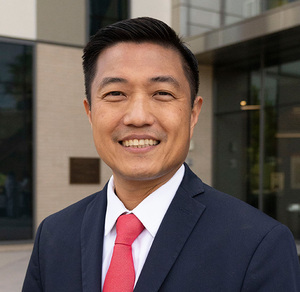
How should we think biblically about AI? What are some of the exciting prospects for AI in the future? What should make us nervous about some of the uses of AI that are growing rapidly? We'll discuss these questions and more with our guest, Dr. Yohan Lee, Associate Dean of Technology here at Biola.
Dr. Yohan Lee holds the Promod and Dorcas Haque Endowed Chair of Technology and is Associate Dean of Technology and Professor of Computer Science in the School of Science, Technology and Health at Biola. He has been privileged to serve as a civil scientist (U.S. National Institutes of Health), Principal Investigator (Google AI), Chief Science Officer (Riiid Labs, Inc.), and CEO of his Silicon Valley AI startup (Scaled Entelechy, Inc). He holds a Ph.D. in neuroscience and genomics from UCLA.
Episode Transcript
Scott Rae: [upbeat music] How do you view artificial intelligence within a biblical and theological framework? What are some of the positive prospects for using artificial intelligence in sort of, in redemptive ways? And what are some, what are some of the ethical challenges posed by artificial intelligence as well? We're here with one of our AI gurus on the campus, Professor Yohan Lee, who is the Associate Dean for Technology at Biola University. We'll let him spell out a little bit more about what that role involves. But, we are so excited to have you educate our listeners about some of the prospects and perils of AI, some of the things you're excited about, some of the things you're nervous about related to AI. So welcome. Really glad to have you with us.
Yohan Lee: Thank you, Scott and Sean. Thank you for inviting me. I'm super excited to be here. Yes, as far as my role is concerned, I, run the divisions for, math, computer science, robotics, physics, and engineering, and so that's how we define technology here.
Scott Rae: Okay, that's, that's, that's, that's quite an umbrella. [chuckles]
Yohan Lee: Yeah. [chuckles]
Scott Rae: There's, there's a lot, there's a lot that fits into that.
Yohan Lee: Yeah.
Scott Rae: And what-- Your background specifically is in what area?
Yohan Lee: Yes. So, early days, I started out in molecular neuroscience, which is, understanding how the brain works, how the brain processes- ... Information, learns, connotes, cogitates, calculates. And, then I went into cancer research for a number of years- ... Specifically in brain cancers, because I knew the brain pretty well.
Sean McDowell: Makes sense.
Yohan Lee: And then, at that time, the human genome had come out, so that was really- ... The advent of high-quality, high-resolution big data. And now, with electronic medical records and then MRIs, you complex that all together, and that gives you a formula for really good AI, because now you have data that's visual in the MRI, you have data that is text, coming from the electronic medical record, and then you have high-resolution signal data coming from the genome. And so that's how I got into machine learning.
Sean McDowell: How urgent and pressing is it at Biola and beyond to deal with this? Like a, like a nine on a ten-point scale, like a five? Like, talk us through, 'cause people feel it in the wider culture, things are shifting, but from the inside, give us your sense.
Yohan Lee: That's a great question. I'm gonna date myself. [chuckles]
Sean McDowell: [laughing]
Yohan Lee: This is turning it into an eleven, right? And the-
Sean McDowell: Oh, wow!
Yohan Lee: Yeah. And the reason is because, like, I feel this is a time for us to call Christians into technology in a broader call. And the reason for that is, it's actually one of the most exciting times in science and technology th-- than in the last fifteen years, specifically in the areas of math, physics, and AI. And what I mean by that is this: So on the one hand, you know, just last week, Harvard acknowledges that they had to create a remedial math course, MA5, because of America's math collapse. And this is because, in part, of we're, we're still coming out of COVID. And then the National Education Assessment test, when they looked at eighth graders and their math proficiency, seventy percent of those math, students in eighth grade could not hit proficiency. And so on that side, we are at a serious lack of bench strength right here in our nation. On the other side of it, you have the most sophisticated mathematicians and physicists building the AI of the future, which is driving trillions in economic activity, both here and abroad. And so on that side, you see these tremendous opportunities. And because AI is telling us what it analyzes, what it reads, and how it suggests to us what we think may be fact or fiction or useful or copyrightable, if you don't have absolute, values in place- ... That point to absolute truth, you waste a lot of time, money, and energy on relativism.
Scott Rae: Let, let's back up just a second.
Yohan Lee: Okay.
Scott Rae: Briefly.
Yohan Lee: Yeah.
Scott Rae: And tell us a little bit about how you frame technology-
Yohan Lee: Yeah
Scott Rae: ... Biblically and theologically.
Yohan Lee: From a definitional perspective, technology is applied science. And what is science, right? Science is the ability to observe and reproduce and discover that which is in our physical and our natural world. And all of those things are the things that God created. And the most powerful forces in this universe, our known universe, are the invisible forces. And that's where, you know, physics comes into play, and that's where what we learn from the Bible comes into play. And so for me, the production of our natural universe came from Christ as that purveyor, if you will. Creation flowed through Him with the Holy Spirit. And so because of that, I have many times in my scientific career, looked under the microscope or looked at data and felt an unbelievable conviction that this must be, like, the work of God.
Scott Rae: So what... But the, but the Fall-
Yohan Lee: Yeah
Scott Rae: ... Certainly-
Yohan Lee: Yes
Scott Rae: ... Complicates technology.
Yohan Lee: Yes.
Scott Rae: How, how do you factor that into your framework?
Yohan Lee: Okay, that's a really amazing question. I'm so glad [chuckles] that you asked that.
Scott Rae: [laughing]
Yohan Lee: So, you know, pre-Fall, one way we could think about things is that God intended us to be the stewards of His natural creation on this earth. That's tending towards the earth. It's, it's the minerals, it's the water, it's the food, it's everything on our planet. Post-Fall-
Scott Rae: Mm-hmm
Yohan Lee: ... That mandate never went away. We are still responsible for tending to the Earth.
Scott Rae: Agreed.
Yohan Lee: And post-Fall, I think the added responsibility to us is: What can we do with the material resources He has given us and our ability to discover these material resources? How do we then use those to redeem the Earth and make b-... The work of our hands, and our minds, and our hearts redemptive. And so for that, it is what I call redemptive AI, for example, is using AI to essentially address and heal the sins of the world, which is, can we use AI to, create machine translation so that every person on the Earth can understand the Bible, right? As a, as a response against Babel.
Sean McDowell: Awesome. Yeah.
Yohan Lee: Can we use, AI to develop new carbon nanotubes to filter pathogens in areas of the world where water access is challenging? Can we use AI to empower drones to deliver blood products in parts of Africa for pregnant women where they don't have access to refrigeration? And there's a wonderful company called Zipline that does that, right? And so it's take all this capability that we have, you know, and God gave us the hint in Babel that there's almost nothing impossible out of our reach- ... If we do it in a way that could be edifying and for all the people that occupy this wonderful Earth.
Sean McDowell: So how do we do it? That's, that's the task, right? You said do it in a way that's edifying.
Yohan Lee: Yeah.
Sean McDowell: Reverse the fall-
Yohan Lee: Yeah
Sean McDowell: ... Or carry out the cultural mandate.
Yohan Lee: Yeah.
Sean McDowell: But there's a ton of people going, "Well, AI, in principle, is taking my job."
Yohan Lee: Right.
Sean McDowell: It's doing what used to be-
Yohan Lee: Yeah
Sean McDowell: ... Or at least was considered human tasks.
Yohan Lee: Yeah.
Sean McDowell: And things are becoming dehumanized now.
Yohan Lee: Yeah, yeah.
Sean McDowell: So is it that the technology is neutral and can be used for good-
Yohan Lee: Mm-hmm
Sean McDowell: ... And can be used for bad?
Yohan Lee: Mm-hmm.
Sean McDowell: I presume you view AI that way.
Yohan Lee: Mm-hmm.
Sean McDowell: But how do we do it in a way that's edifying?
Yohan Lee: Yeah, yeah. So, eh, it starts... This is kind of where objective measures matter, right? And it starts by being able to master the technology, right? And this is why I'm trying to do a call for people, Christians, to come into technology, right? Here at Biola, you know, we talk about being brilliant for Christ. What does that mean here?
Sean McDowell: Love it.
Yohan Lee: It means you're never gonna be able to convince or persuade anyone who is secular in technology to espouse these same values that we have, unless they respect you. And they're gonna respect you when you are excellent. You are bringing something to the table that is- ... Undeniably high quality, high caliber, where they say, "Whoa, this person's got some serious game here." And that goes back to, you know, if you wanna be able to do AI really well, it goes back to math and physics, right? Being able to do those things well, merge that in computer science. But to answer the question that you're trying to say at a larger level, you know, at a meta level, at a metacognitive level-
Sean McDowell: Mm-hmm
Yohan Lee: ... What are we talking about here? AI is fantastic. Why has it grabbed traction in the market? AI is fantastic when it allows us to practice at the top of our license. You know, really taking what we do really well, and then being that perfect assistant that can help us pose questions that we have not posed, explore things that we haven't explored. And I'll give a concrete example. So, not too long ago, about a month ago, a bunch of, [tsking] semiconductor chip scientists who build, Wi-Fi, antennas for cell phones and technology, were trying to come up with a new circuit design. And they used AI to come up with a whole new series of circuit designs, and it did it within a month, which normally takes about a quarter. And the shocking, awesome part was it came up with circuit designs that were completely contrary to human intuition-
Sean McDowell: Huh
Yohan Lee: ... And human best practices, and human capabilities. But these brand-new designs were more performant, more power efficient, and more effective. That's when AI gets exciting. That's when we can use it to help us at the top of our license, rather than using it to, like, say, cheat on a writing exam or something like that.
Sean McDowell: [laughing]
Yohan Lee: And so that's where I feel AI is useful- ... Where it helps us explore and discover things that, because of our intuition or our history, historical preference, or our, training, for example, may give us a bias to never consider areas of unexplored thought.
Scott Rae: I think if the cell phone towers change, we're all gonna have to buy new phones-
Yohan Lee: Right
Scott Rae: ... Immediately.
Yohan Lee: Yeah, [chuckles] that's a fact.
Scott Rae: Something like that.
Yohan Lee: So I'll give you an example to that, right? So 6G is maybe five year, four years away from coming right now, and the current 6G technology, this is, this is fantastic, actually doubles the volume and speed of data that can travel from 5G. So we're not talking an incremental increase, we're talking a significant increase.
Sean McDowell: Crazy.
Yohan Lee: And what that increase means, you know, on an entertainment level is, you know, from 5G to 6G, you will be able to download an entire season from Netflix in minutes now, not entire episodes, entire season in minutes. That's the doubling-
Scott Rae: Yeah. Yeah
Yohan Lee: ... Effect of what 6G can do instead of 5.
Sean McDowell: But that raises the question, like-
Yohan Lee: Yes
Sean McDowell: ... Is this good?
Yohan Lee: Right.
Sean McDowell: Or is this not good?
Yohan Lee: Right.
Sean McDowell: Do we need a full season- [chuckles]
Yohan Lee: Correct
Sean McDowell: ... Of Netflix-
Yohan Lee: Yes
Sean McDowell: ... In minutes? We don't ask that question in our culture.
Yohan Lee: Absolutely.
Sean McDowell: We just move forward with efficiency is good.
Yohan Lee: Absolutely.
Sean McDowell: But I could also imagine in some settings where that efficiency is good.
Yohan Lee: Yes.
Sean McDowell: I'm not against Netflix down-
Yohan Lee: Yeah
Sean McDowell: ... Like, that's, I think that's actually awesome-
Yohan Lee: Right
Sean McDowell: ... 樱桃视频 to jump on a plane, but there are side effects from that-
Yohan Lee: Yes
Sean McDowell: ... Maybe we don't think through-
Yohan Lee: Correct
Sean McDowell: ... That could have, you know, impacts on culture.
Yohan Lee: So people ask me: What is the value of a liberal arts education in a technology school?
Sean McDowell: That's a great question.
Yohan Lee: And I said, "It's incredibly valuable." And, and they asked me why, and I said, "Because careers in technology, whether we like it or not, are gonna be the most lucrative and influential for the next 50 years because of what it affords humanity. It's convenience, it's a capability, it's communication, it's education, it's the ability to create energy cleanly," right? But the question that you asked is the most important question. If we, who espouse the Lord in Christ and biblical values, are not the leaders in that space, then we are not the decision-makers in that space. When you are the leader, and you lead by excellence and brilliance, then you do- you get that seat at the table, and you are influencing the decision.... And that in- decision often sometimes will hit a b- hit up against Wall Street and the commercial interests involved that are- ... Demanding a return on investment. Now, Wall Street is important. Raising capital is important. If you invest in something, you getting a return on investment is important. It's moral, it's ethical, [chuckles] but at what cost? And do we then continue to do the work that is excellent, but then also ethical and purely refutable? It has to be that way, otherwise, we'll continue to be brilliant geniuses who are gonna do horrible, detestable things to others- ... At the cost of what it takes to satisfy Wall Street quarterlies.
Scott Rae: And you de- you described AI as coming alongside of us-
Yohan Lee: Yes
Scott Rae: ... And helping us elevate our game.
Yohan Lee: Yes.
Scott Rae: How, what- how do you distinguish between the applications of it that actually do that-
Yohan Lee: Mm-hmm
Scott Rae: ... Or things that replace-
Yohan Lee: Yes
Scott Rae: ... Parts of our game?
Yohan Lee: Yes.
Scott Rae: And so, and I think what you described, Sean, diminish us from being fully human.
Yohan Lee: Yeah.
Sean McDowell: Mm-hmm.
Yohan Lee: Yeah. So, [chuckles] believe it or not, it's gonna come down to our heart. And here's an example of that: So on the one hand, yes, I am very cautious and skeptical when AI can take away jobs of folks who, because they didn't have education access or opportunity access or economic access, yes, jobs will be taken away from folks, at a lower, socioeconomic status. That w- that grieves my heart. I'm always then looking for new jobs that we can supply-
Sean McDowell: Sure
Yohan Lee: ... And careers for folks who may be losing their jobs, because I know that demand signal will continue to be there, and so I always look for new jobs that a human then can do in that space. That's one. The second part of it is access in the other sense of economics. And so I know schools in Nigeria, elementary, primary, secondary schools, that have literally thousands and thousands of students within their student body, and they have only a fraction of qualified instructors. And so for those schools, they literally meet on a roadside under a tree, because that's how close that student can walk from their village to that school, and that instructor is likely not to have a four-year education in a particular area. And so for them, that's access to student education for that instructor who cares and loves that student but may not have, you know, two years of geometry to be able to pass on. That's where I feel like that technology can make the difference for those folks and for those students.
Scott Rae: So let's spell out a little bit further. What are some of the things that make you nervous?
Yohan Lee: Oh, yeah.
Scott Rae: What are some of the applications of AI that just sort of, I don't know, make you just sort of clutch in your gut-
Yohan Lee: Yes
Scott Rae: ... And think-
Yohan Lee: Maybe wake you up at night now and then.
Sean McDowell: Yeah.
Scott Rae: Yeah, keep you- [laughing]
Yohan Lee: Yeah. [laughing]
Sean McDowell: [laughing]
Yohan Lee: So, you know, when I was a kid, you know, growing up here in the States, when I saw something on television, when I saw something on Sesame Street, you know, when I saw something on PBS, I would trust it, 'cause in my mind, I actually thought to myself, you know, Americans wouldn't allow content to be on TV for kids if it wasn't approved for kids. And so I remember when I was in class, in s- in school, and my teacher would tell me, "Ain't is not a real word." [laughing]
Scott Rae: [laughing]
Yohan Lee: And I said, "But I saw it on TV." And I thought, "Whoa!" That was a cognitive collision in my mind. Why was ain't, you know, people and actors saying the word ain't on TV okay if ain't's not a real word? So I had this preconceived notion that what you allow on TV is something that's approved and cared for and curated for young minds. Because of deep fake technology, that same preconceived notion goes right into the garbage, because now you can see videos of a president of a nation-
Sean McDowell: Oh, man
Yohan Lee: ... Doing something, and for young children and discerning audiences, they don't know if that's a deep fake or not. You know, as a technologist, whenever we build a product for general availability, the first question that we always ask ourselves is: Could my grandmother use this? How would my grandmother use this?
Sean McDowell: Mm-hmm.
Yohan Lee: How would my grandfather use this? How would my spouse use this? How would my children use this? We usually do a 360 of a user profile. But when more and more of those cannot be checked off the box, it tells us, "No, [chuckles] we are not designing the technology in a way that makes sense for all people that then can benefit from it." So it makes me nervous. You know, deep fake is one of them. Influencing democracies and elections is another one. So those are the things that make me nervous.
Sean McDowell: So we've asked what makes you nervous. Give me an example of a technology, and you gave one earlier about-
Yohan Lee: Yeah
Sean McDowell: ... You know, 6G.
Yohan Lee: Yeah.
Sean McDowell: But one of AI that just blows you away. And, and I ask this 'cause I had a chance to interview John Lennox-
Yohan Lee: Mm-hmm
Sean McDowell: ... A while ago.
Yohan Lee: Yes.
Sean McDowell: He has a book, 2084, on this.
Yohan Lee: Yes.
Sean McDowell: And you would understand this way better than I do, but he was talking about how grad students would just kind of work on certain DNA or genome, and it would take, like, five years to do one.
Yohan Lee: Yes.
Sean McDowell: And now with AI, it's like [snaps fingers] moments-
Yohan Lee: Yes
Sean McDowell: ... You can just nail it. So we've done millions now.
Yohan Lee: Yes.
Sean McDowell: Like, that's an incredible technology. Tell me one where you're just blown away at what AI can do.
Yohan Lee: Yeah. I'll give you two quick ones, actually. So, you know, see your bet, raise you one. So I'm a huge fan of-
Sean McDowell: Good, do it
Yohan Lee: ... Professor Lennox.
Sean McDowell: [laughing]
Yohan Lee: I was really excited about that you had him on the show. So we'll-- let me use the health one for a second then, right?
Sean McDowell: Okay.
Yohan Lee: So the human genome right now, you know, we can get a high-resolution whole genome cranked out within hours now, which is fantastic, and it's true. So back in my day, a PhD-
Sean McDowell: [laughing]
Yohan Lee: ... Was one genome of a, of a thing, like a brain tumor.
Sean McDowell: Gosh!
Yohan Lee: But then, by the time I'd graduated, and the students that were behind me, they would-- had to do three genomes or four genomes to do a comparative analysis. So one thing AI is really good at doing is pattern recognition of subtle signals.... Why is that important? There are huge swaths of, in fact, the majority of swaths of the human genome that are still not coding, where we don't understand the function of what they do yet. That's where you need to do a lot of correlation and analysis, and AI is built for that. And so discovering parts of the human genome, the function of what they do, and how they work in ways that we have yet to decipher and interpret, that's a big area. Like, we're at the beginning of where cardiology was forty years ago. So cardiology, forty years ago, identified every piece-
Sean McDowell: Oh, okay.
Yohan Lee: -every tissue, every component-
Sean McDowell: Mm-hmm
Yohan Lee: ... And then what it does. We know all the pieces of the genome now, we just don't know what everything does still, and a lot of it is really sophisticated at, like, three layers or four layers or five layers of sophistication. So that's, an area where there's gonna be a lot of discovery, where AI is gonna be huge.
Scott Rae: That's really helpful 'cause we used to call that junk DNA.
Yohan Lee: Right!
Scott Rae: And, mm-
Yohan Lee: Yeah, that's important for the AI argument.
Scott Rae: And, and it was like-
Yohan Lee: Right
Scott Rae: ... You know, when the Genome Project was first-
Yohan Lee: Yes
Scott Rae: ... First came out, junk DNA constituted about ninety percent of it.
Yohan Lee: Correct.
Scott Rae: And finding out th- what the rest of our genetic code actually does-
Yohan Lee: Yes
Scott Rae: ... Super helpful.
Yohan Lee: Yeah, 'cause at that time, we were looking at things in two dimensions, really. But really, what this is multidimensional. DNA is-- has a spatial component to it. It has a temporal component to it. This is where AI is gonna help us in a lot of ways that's super important.
Sean McDowell: So is it fair to say, before we come to your second one-
Yohan Lee: Yeah
Sean McDowell: ... You talked earlier, like education, communication, in the world of healthcare-
Yohan Lee: Yeah
Sean McDowell: ... We will probably see as much or more of the most exciting AI advancements as anywhere. Is that fair?
Yohan Lee: I think so. 'Cause we just don't know how to think beyond seven dimensions, eight dimensions mentally. It's, it's hard.
Scott Rae: How soon-
Yohan Lee: Yeah
Scott Rae: ... Do you think it will be reality that ev-- that all of us have our full, genetic code-
Yohan Lee: Mm-hmm
Scott Rae: ... In our primary physician's chart?
Yohan Lee: So that's available now. The, the point is, we don't do it all, and the other piece is, there is an economic component to it, right? It used to cost a thousand dollars to get a whole genome sequence at this. The costs have dropped down tremendously, but you gotta store it, you gotta build it out, and most physicians, who are over the age of forty-five, and I'm gonna use that 'cause I'm forty-seven, [chuckles] did not get genomics training.
Scott Rae: Did not get trained in that.
Yohan Lee: Right.
Scott Rae: Makes sense.
Yohan Lee: And so then how to use it, how to, you know, prescribe against it, that-- we still haven't discovered a lot of that. But what we do have is, the more data we have on that, we're gonna start learning more about the higher dimensional things, especially in really challenging neurodegenerative diseases. Yeah.
Scott Rae: Okay, so give him-
Sean McDowell: Your second one.
Yohan Lee: Yeah. [chuckles]
Scott Rae: Give him the second one that blows your mind.
Yohan Lee: Yeah, yeah. Energy, right? So-
Sean McDowell: Oh!
Yohan Lee: Yeah.
Sean McDowell: Okay.
Yohan Lee: So, like, sixteen months ago, December 2022, was a really important time in physics. It was the first time that fusion energy-- so this is when you, like, heat molecules and smoosh them together really well, and this is what happens in the sun, actually. This is how- ... Reactions happen in the sun. The, the National Ignition Facility here in the US, for the first time, generated more energy from fusion energy than the amount of energy that went into it, one point five times more. That's really important because now... So when those molecules came together, they released energy that then was more than what we put into it. Like, it's been forty years since the dream of fusion energy was first conceived. The ability to create energy cleanly from molecules here at ten times hotter than the sun, on Earth, in a reactor. It lasted for seconds or half a second, but we did it, which shows it's possible, which means the possibility of clean energy for the future without having to build massive data centers that, you know, drain up all this energy, and mine all over the planet, and especially in parts of the world where they may not benefit from all that energy. This is a chance for us to do some really amazing work, and AI is gonna help us get there.
Scott Rae: That, that's a game changer.
Yohan Lee: It is.
Sean McDowell: That's incredible.
Yohan Lee: Physics. It's real. [chuckles]
Sean McDowell: That's incredible. I think the 1990s movie with Val Kilmer, called The Saint, was about, like-
Yohan Lee: Yes
Sean McDowell: ... Discovering fusion, and, like, the Russians, there's this conspiracy-
Yohan Lee: Yeah
Sean McDowell: ... And it was gonna turn the world upside down.
Yohan Lee: Yeah.
Sean McDowell: It's moving from science fiction to reality.
Yohan Lee: Published reality.
Sean McDowell: Is that fair?
Yohan Lee: Yes.
Sean McDowell: That's crazy.
Yohan Lee: I mean, this is published reality, sixteen months ago, right? And that's why all the big tech companies who have quantum computing chips that they're investing in, Microsoft, Google- ... All have a financial stake now in energy companies, because you need one-
Sean McDowell: Interesting
Yohan Lee: ... For the next, for the next.
Sean McDowell: Interesting.
Yohan Lee: Yeah.
Scott Rae: So you also used the term uncomfortable AI-
Yohan Lee: Yes, yes
Scott Rae: ... To refer to other things that-
Yohan Lee: Yes
Scott Rae: ... Maybe some things that blow your mind in a different way.
Yohan Lee: Yeah. So, you know, large language models that do this amazing work in providing answers to questions and dialogue components, you know, where secular technology is going is because they need to satisfy geopolitical interests. Because it's not good for business when entire countries and nations and their governments don't like you. [chuckles] That's not good for business, 'cause then they won't let you market their product inside their countries. And so where hap-- where examples of that are, is that then, basically, you know, AI chatbots then start becoming trained to respond based on what is acceptable to a sovereign nation's political and ideological values. What that causes then is more relativism and many shades of gray for answers that are politically and culturally very offensive and sensitive. And so then, what happens then is now, on the one hand, business can respond by essentially saying, "Okay, we'll make one AI for this company or one AI for this country and this subgroup of people within that," 'cause-... Engineers can do that. But then what it causes then is kind of like the worst part of what we saw in judges, everyone- ... Doing right in their own eyes. Because in my perspective, that piece of territory belongs to us, and in your perspective, that bel- ter- piece of territory belongs to you. That then is now creating an entire ideological slant where people can feel, or be led to feel, [chuckles] or be encouraged or reinforced to believe in certain things, which then gets pretty dicey.
Sean McDowell: I wonder what advice you would give to just Christians or people in general that feel like this AI train has come so fast, and then the ethics is now downstream from how we make sense of it.
Yohan Lee: Right.
Sean McDowell: So Scott and I did a review recently of, like, the state of the Bible-
Yohan Lee: Yeah
Sean McDowell: ... Bible engagement. And there was a whole section on AI.
Yohan Lee: Yeah.
Sean McDowell: And it was like, it basically concluded, if I remember correctly, it's kind of like pastors are figuring this out as we go. There's no standard for it.
Yohan Lee: Correct.
Sean McDowell: And so for me, I wanna save as much time as I can, but when it comes to, like, writing a sermon, I teach at my-
Yohan Lee: Yeah
Sean McDowell: ... My local church. Like, I refuse to have it just outline and give me practical points. I wanna work through the text, understand it myself, come up with an outline-
Yohan Lee: Yes
Sean McDowell: ... Come up with points. It takes more time.
Yohan Lee: Yes.
Sean McDowell: And I have an application. Then I go, "All right, are there applications for this text?" I'm like, "Wow, AI just gave me one," once I did my work.
Yohan Lee: Yes.
Sean McDowell: So I'll use it to save time for resources-
Yohan Lee: Yes
Sean McDowell: ... And then when I'm done, to give me reflection upon it.
Yohan Lee: Mm-hmm.
Sean McDowell: Some might say that's not effective with my time as possible, but I'm just trying to think through- ... Ethically, the wisdom of doing this. What advice do you just give to people when the tool is so powerful, and it can save time-
Yohan Lee: Yeah
Sean McDowell: ... And yet there's all the concerns that we've talked about? Give us a few guidelines to approach that.
Yohan Lee: Yeah. So one, I'm gonna say, you know, test the AI, test the technology, and make sure that it is aligning with the principles that you care about, and use common sense judgement. Like, we don't have to all suddenly learn how to do, [chuckles] hyperparameter tuning. But I'll give the example, right? Because, this c- same question came up at a, at a pan-faith conference, and meeting I was invited to, where they said-
Sean McDowell: Pan-faith, meaning across faith-
Yohan Lee: Yes
Sean McDowell: ... Like interreligious.
Yohan Lee: Yes.
Sean McDowell: Okay.
Yohan Lee: So Judeo-Christian, and then Islamic, and then Buddhist as well.
Sean McDowell: Interesting.
Yohan Lee: Because when you started... We started- we did this exercise where we posed questions specific to our denominational beliefs, and the folks in that audience were then taken aback when it responded in a way that... So, a Catholic person got a response which was very Protestant, and that person-
Sean McDowell: [laughing]
Yohan Lee: ... Did not respond well. And, and questions about God and the hu- and divinity of Christ did not sit well with the Islamic person as well.
Sean McDowell: Mm-hmm.
Yohan Lee: And so that's the example, right?
Sean McDowell: Mm-hmm.
Yohan Lee: It's... You wanna check and see if this tool is going to be consistent with your own beliefs in a way that is not gonna be saying anything that potentially could be distracting or concerning, right?
Sean McDowell: Okay, so before we keep going-
Yohan Lee: Yeah
Sean McDowell: ... This, your main point is that AI tools are not neutral.
Yohan Lee: Correct.
Sean McDowell: Their output-
Yohan Lee: Yes
Sean McDowell: ... Is still based on the input-
Yohan Lee: Yes
Sean McDowell: ... How it's selected.
Yohan Lee: It is.
Sean McDowell: What, what are some of the differences in the kind of input that's put in there that might affect the output differently, and how people could know to just pick wise AI tools?
Yohan Lee: So some of my Islamic colleagues gently bemoan a little bit that when they use ChatGPT, for example, they say, "You know, it's really good with Christian things." [laughing] "They, they- clearly, there's a Christian bias in it."
Sean McDowell: Interesting.
Yohan Lee: "Uh, it doesn't respond as accurately for things that are Islamic in nature." And the reason is because if you think about a large part of English language corpus, you know, how are these things trained? They read all of Wikipedia. They read all of this thing.
Sean McDowell: That makes sense.
Yohan Lee: They read all of this thing. It's not written in Arabic, it's written in English, and so there is a, there is an English-centric bias, number one. And because theologians in the Western civilization have been wrin- writing tomes in English for, since antiquity, there is a depth there.
Sean McDowell: That makes sense.
Yohan Lee: Yeah.
Sean McDowell: That's fair enough.
Yohan Lee: Yeah.
Scott Rae: What, what is your level of optimism, say, on a scale of one to 10-
Yohan Lee: Mm-hmm
Scott Rae: ... That regulation is gonna help put up guardrails to prevent abuses-
Yohan Lee: Okay
Scott Rae: ... On this?
Yohan Lee: Not good. I'm gonna say something like four on some days, and six on other days.
Scott Rae: Okay.
Yohan Lee: And the reason I'm, I'm saying it that way is, yes, some days I am an AI cheerleader, other days I'm an AI critic. Yeah, I'm a little schizophrenic. [chuckles] and the reason-
Sean McDowell: It's understandable.
Yohan Lee: Yeah, and the reason for that is because I know what the technology can do, and the fact that, folks who are being mindful and on the ethical, regulatory side, they don't speak our language. They're usually not technical to begin with. So then sometimes they put a mallet when a scalpel is needed, right? Flip side, because I know that innovation is driven by market forces that respond to quarterlies on Wall Street, and that you need to keep producing, it's never a question of, you know, "What have you done for me?" It's, "What have you done for me today?" And so there is that need for the innovation to keep pushing, that it'll always be, a ge- a game of ca- catch up. And
Scott Rae: So the question might actually not be, what are you doing for society?
Yohan Lee: Right. I think the question would be, [lips smack] what can you do for the society that is universally valuable and helpful, i.e., satisfying the demands of the economy, but then also in ways that are irrefutably useful for people?... When you think in terms of that vector, then you can start answering and thinking, "Okay, ways to, better diagnose, you know, an occult disease, that's important." Better- being able to write better, you know, grammar assistance, and inspiration, and ideas, or copyright checking and saying, "Hey, this is a great idea I have for a story. Am I, ... Did somebody do this before?" You know, checking for things like that. Actually using it as the tool to, help us, be ethical. That's a tremendous area, I think. And so as far as, regulatory bodies being able to develop on that, Europe is always a little bit more intentional than the US is when it comes to, those pieces. I think they set some really great ideas. And then overall, allowing for as many voices to be into that space and give as many, you know, bespoke use cases and examples and comment, that's gonna be helpful.
Scott Rae: At present-
Yohan Lee: Yeah
Scott Rae: ... Would you say it's, the regulatory environment is still a bit of the Wild West?
Yohan Lee: I would say it's-
Scott Rae: Or is that too strong?
Yohan Lee: Yeah, I think that's too strong. I think we're gonna be in this uncomfortable adolescence for a little while. [chuckles] We'll overreact in some places, underreact in some places, and then we'll start to get to a steady state. But the fact that we have these bodies is actually deeply comforting to me. We just need not only the financial incentive, but then also the technol- technical, room and encouragement to have these conversations with regulatory bodies that are not going to, again, slam doors and, you know, use giant, you know, Whac-A-Mole approaches. We need-- This is a, this is a place for discernment and subtlety.
Sean McDowell: In some ways, Gen Z has kind of been the social media generation-
Yohan Lee: Yeah
Sean McDowell: ... Born, like, 1997 to about 2010 or 2012. So when social media hits in the early 2000s, they're just kind of eight, 10, 12 years old-
Yohan Lee: Yeah
Sean McDowell: ... Able to use social media. Now, 12, 15 years later, we're going, "Oh, that was not such a great social experiment on-
Yohan Lee: Yeah
Sean McDowell: ... Relationships, and the brain-
Yohan Lee: Yeah
Sean McDowell: ... And depression." It's like schools are catching up, going, "Maybe we should have tech-free-
Yohan Lee: Yes
Sean McDowell: ... Spaces."
Yohan Lee: Yes.
Sean McDowell: I realize this is an impossible question- ... But in many ways, I'll say Gen Z is the social media generation. Gen Alpha is the artificial intelligence generation.
Yohan Lee: Yes.
Sean McDowell: What will define them, probably more than anything, is being raised when AI is just prevalent-
Yohan Lee: Yeah
Sean McDowell: ... Everywhere. Any sense of, like, the red flags we should look for or sense of how this might affect this generation? I know it's impossible [chuckles] to predict.
Yohan Lee: Yeah.
Sean McDowell: Where it's like five and 10 years, we look back and just say, "Gosh, we should have anticipated and seen this coming," or is it moving so fast that we literally just can't even know?
Yohan Lee: Yeah.
Scott Rae: It's impossible to predict, but that's exactly what we're asking you to do.
Yohan Lee: No. Yeah, no, [chuckles]
Sean McDowell: Yeah.
Yohan Lee: So let me start with this one. On the one hand, I feel like we need to double down on common sense, like actually teaching our children what common sense is. And the reason for that is because s- they have such a disembodied experience, you know, on a circle-
Scott Rae: Yeah
Yohan Lee: ... Like on a phone, on a TV- ... On a dialogue, on a podcast, et cetera. So us sharing stories, sharing common sense again, grounds people because it's concrete, you know? So us sharing the stories of our parents, of our grandparents, and sharing the stories of ourselves, especially the s- the failure stories that we have, that brings an embodied piece to it so that it gives students and children an anchoring of what is real and not real. I think that's one piece. The second piece to it is, you know, I talked about objective measures, right? Why I came to Biola so that we could double down on building the confidence of students, and one of the ways that we build confidence of students is by teaching them how to discover. And the way to do that is doubling down on critical reasoning, symbolic reasoning, algorithmic thinking, and frankly, it's like exegesis and hermeneutics, like helping ... You know, the Bible has this amazing self-referential integrity, so does science. You run the experiment again, you change the experiment, you run it again, and you see the answers come out over, and over, and over again. That empirical observational reasoning, when you double down on that, it helps a grounding for us to know, is this real? Is it not real? Is this static? Is this dynamic? Is this an opinion, or is this actual observable fact, right? Doubling down on those things, like the common sense piece, the embodied piece, and then doubling down on critical reasoning, and algorithmic thinking, and systematic evaluation, which comes, again, back to math and physics. You know, those two areas are the best at it. We can teach students how to discover, and when they discover, beauty. And here's this amazing thing about math: math, when done really well, and it's capturing and discovering something truly informative, it's actually beautiful. The equations have a symmetry or a beauty to them that you just are struck, and you are convinced, "Oh, my gosh, this is real!" We need to teach students how to do that. When we do that, it's gonna harden their discernment of what is good, what is wheat, what is chaff, what is good, what is not.
Sean McDowell: And what's so interesting about that is you're talking about effort.
Yohan Lee: Yes.
Sean McDowell: And so there's a joy that comes from a discovery-
Yohan Lee: Yes
Sean McDowell: ... And seeing the beauty when you've put the work in-
Yohan Lee: Yes
Sean McDowell: ... Which gets short-circuited-
Yohan Lee: Yes
Sean McDowell: ... By AI when I can just pull it up.
Yohan Lee: Yeah.
Sean McDowell: So there's always-
Yohan Lee: Yeah
Sean McDowell: ... Been temptations.
Yohan Lee: Yes.
Sean McDowell: This is what technology does-
Yohan Lee: Correct
Sean McDowell: ... Is it's quicker from A to B in a car. That's not bad.
Yohan Lee: Yes.
Sean McDowell: But when we start short-circuiting human processes-
Yohan Lee: Yes
Sean McDowell: ... Then we miss out on the joy on the other side.
Yohan Lee: Yes.
Sean McDowell: That could be a loss that we reflect back on and see in greater ways than we even anticipate right now.
Yohan Lee: ... Some of the greatest moments of my life, you know, have been when I discovered something and when the math made sense. There was a linear algebra class I was in a long time ago by this professor at UCLA, that's where I did my undergrad and PhD, where he showed on the board the equation and then the graph of what deeply I hoped and envisioned was possible- ... As a student. I saw the math exemplify what I deeply thought could be, should be, I want to find this, and that moment was one of the key moments of my life, academically and spiritually.
Scott Rae: Wow! That's wonderful. Wow.
Yohan Lee: I felt like I was touching the face of God, right? I want every student to have that feeling.
Scott Rae: Yeah.
Yohan Lee: That feeling when they won- ... When they put in a tremendous amount of work, got that discovery, got that product, got that code to work, got that machine to work, got that lever to work, got that turbine to work, where they realized, "Oh, my gosh, I did it." Because that is a highly and hugely affirming moment, and when you're doing it to something that is gonna help people and save the world and help others, you feel like you've done your service, you've, you've made your contribution to society, that you are a good and faithful servant.
Scott Rae: You feel alive.
Yohan Lee: Yes.
Scott Rae: That's exactly right.
Yohan Lee: It is the most exhilarating feeling-
Scott Rae: I love that
Yohan Lee: ... Along with getting married, having children [laughing] and, you know-
Scott Rae: Of course, of course.
Yohan Lee: Right, it... And because, all of it together-
Scott Rae: Huh.
Yohan Lee: Right? Yeah.
Scott Rae: I'd say that's, yeah, and I'd say that's part of your service to Christ- Well said.
Yohan Lee: Yeah, exactly
Scott Rae: ... As well.
Yohan Lee: Yeah.
Scott Rae: Can I ask him one final question? Yeah. Say it.
Yohan Lee: Please, wrap it up.
Scott Rae: 'Cause one of the things we had talked about, before-
Yohan Lee: Yeah
Scott Rae: ... You came on the air here, is that your goal is to turn Biola into a Christian Caltech.
Yohan Lee: Yeah. [chuckles]
Scott Rae: What, what encourages you at present in pursuit of that goal?
Yohan Lee: Yeah. One, we have these beautiful, amazing students. They're just amazing. We have world-class faculty here. You know, there was a very large government grant organization that when they reviewed one of our grants, they said, "Oh, my gosh, you're like one of the best-kept secrets in Southern California."
Scott Rae: Really?
Yohan Lee: "We didn't know you existed." They're like: "How come we're just finding out about you now?" And I said, "Well, 'cause we didn't ask for government grants before." [laughing] You know?
Scott Rae: That's true.
Yohan Lee: It was 'cause of COVID that we had to. And so one... I'll tell a story about two wonderful students, Bethany and Ryan. They, they came in as freshmen last year. They did a summer engineering internship with us this summer with some of our beautiful faculty, who taught them the beauty of math. And so they actually extended work upon a original math problem from 60 years ago. They submitted it to a competitive conference in Washington, D.C. It got accepted. They went, they traveled, they presented there, and actually got the gold medal for an original math-
Scott Rae: That's fantastic
Yohan Lee: ... Project. It's called the stable marriage problem, and they added onto it's called a hill-climbing component, which is useful for math and physics and robotics, and they beat Harvard, right? [laughing] And these are sophomores. And we saw at our science fair, symposium poster session last summer, I looked across the room, and I just said: "Oh, my gosh, there is a lot of work in here that with just a little bit more effort, and a little bit more focus, and a little bit more support, is publication worthy." And so I think this is our time. This is our time-
Scott Rae: That's so great
Yohan Lee: ... To shine, to share the love of God, to have fun. This is a sizzling opportunity space right now for math and physics and AI right now. It just is. And these students that you're talking about, who are, you know, are Gen Alpha, they're gonna be our leaders of the future. We need to equip these leaders and give them the runway to do amazing things.
Scott Rae: What a, what a great note to end on. I feel like this conversation could go on for- [laughing]
Yohan Lee: I agree
Scott Rae: ... At least another, at least another half hour to an hour.
Yohan Lee: I agree.
Scott Rae: So we will definitely, Johan, have you back on with us, and-
Yohan Lee: Thank you
Scott Rae: ... There's a lot more to explore here. So we are so grateful for your work here at Biola, your role as Associate Dean for Technology, which covers a lot of, a lot of territory. And our prayers for you and for your students, that they do the good work that honors the Lord-
Yohan Lee: Thank you
Scott Rae: ... In the, in the years to come. So we hope you enjoyed this, we, our time with, Dr. Johan Lee. We'll see you next time. [upbeat music]