Biola University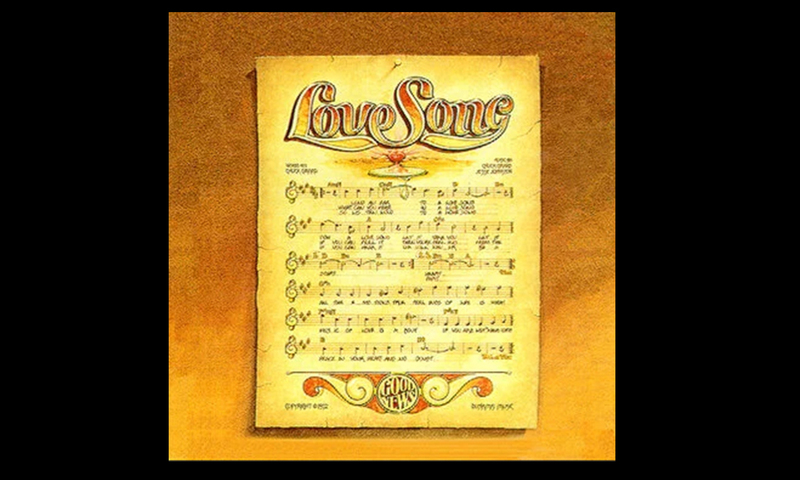
I grew up listening to a Christian rock group called Love Song. I listened to their music all the time. I even got to meet one of their founding members when I was in my youth. Love Song has sometimes been described as The Beatles of contemporary Christian music because of the oversized influence they exerted on the future trajectory of Christian music.
I was surprised and delighted to learn that about Love Song’s rise and ministry has recently been released. As I watched the documentary, I was powerfully reminded of the way God drew tens of thousands of people to himself through the Christian hippie music of the 1970s — which also happens to be the same moment when God awakened me to my need for Christ. But while watching the documentary, I found myself especially intrigued by one set of comments regarding their goals when composing songs.
The founding members of the band commented that when they composed their music, one of their goals was to include lyrics that would reach the hearts of unbelievers. These comments intrigued me enough that I decided to work through the lyrics of Love Song’s first album to ascertain how these songwriters went about connecting to the hearts of hurting and searching hippies in the early 1970s.
To this end, I limited myself to the songs of their , which was released in 1972, arguably the most important year of the Jesus Movement. My working question was: What was Love Song’s apologetic method? More precisely, what sort of were they doing? What concepts in their songs did they think would draw unbelievers to the Lord? Note that I’m not claiming that we should follow their lead in every way. Nor would I claim that this is all we should ever do in apologetics. But considering the fact that 1) tens of thousands of teens and young adults gave their lives to Christ in the early 1970s, and since 2) music played such an important role in the Jesus Movement, and furthermore, since 3) Love Song was one of the most (if not the most) influential Christian music group at that moment, I think that there may be something to learn from the way these Christian hippies built a musical bridge to unbelievers.
So what was Love Song’s apologetic method (at least as can be perceived through the lyrics of their songs)? What can we learn from the way they composed songs to reach unbelievers? Here is a short sketch of Love Song’s apologetic method based (solely) upon the lyrics of the songs found on their , which itself was entitled “Love Song”:
1. Love Song’s lyrics appealed to the transcendent feelings that many people experience, especially the longings they feel while listening to love songs (even secular love songs). Those internal feelings can lead people to seek a transcendent source for those feelings.
“What can you hear in a love song? If you can feel it, then you’re feelin’ from the heart.”
“All the emotions, true feelings of life, is what music of love is about.”
“So listen now to a love song. If you can hear it, we will never be apart.”
“Feel the warmth that each new day can bring by believing, by receiving Him. Feel the love…”
2. Love Song’s lyrics communicated that Jesus has the power to change a person’s life — no matter how far someone has fallen into sin.
“I’m goin’ through changes, changes in my mind. Holding on to good things that I find. I’m goin’ through changes, changes in my mind, and I’m leaving all my emptiness behind.”
“Jesus is the One who changes slowly, all the evil things that dwell so deep inside me.”
“He’ll do the same for you! He’ll give you freedom. He’s reaching out for you! He’ll give you freedom. He’ll set you free.”
“But now I been tryin’ out the back seat, and I find it is a very great relief. Now I’m ridin’ in the back seat, and I’m leavin’ all the drivin’ to the Chief.”
3. Love Song’s lyrics appealed to people’s quest to find meaning in their lives.
“All you had to do was to be what you always have wanted to be”
“I felt His hand and joy began and there was meaning”
“And I’m leaving all my emptiness behind”
“And He gave me His assurance. I then began to understand the blessed meaning.”
“Save the sadness for another time. Save the words for a song that rhymes. Save the crying for the ones who’ve lied, who’ve missed all the meaning and their souls have died”
4. Love Song’s lyrics appealed to people’s sense of disenfranchisement with traditional Christianity.
“Many know Him well, others just by name. If you don’t know for what He stands, you’ve really much to gain.”
“And it’s very plain to see, it’s not the way it used to be. Preacher isn’t talkin’ ‘bout religion no more; he just wants to praise the Lord. People aren’t as stuffy as they were before, they just want to praise the Lord.”
“Long hair, short hair, some coats and ties, people finally comin’ around. Lookin’ past the hair and straight into the eyes, people finally comin’ around. And it’s very plain to see, it’s not the way it used to be.”
“Sing unto the heavens with a brand new song. The one that we’ve been hearing’s been a hit too long. The lyrics sound confused as if they don’t belong. So sing unto the Lord and sing with feeling.”
“Much too long our music has been filled — filled with sadness.”
5. Love Song’s lyrics appealed to people’s desire for Christians to live in unity with one another. Conversely, their lyrics tapped into the frustration many people feel about so much division among Christians.
“They’re talkin’ ’bout revival and the need for love, that little church has come alive. Workin’ with each other for the common good, puttin’ all the past aside.”
“Lord, don’t let us fight against each other. Let us be one in you. Lord, give us love for one another in what we say, yes, in what we do. Lord, teach us to build up one another. Let us be one in you.”
“Lift your voice with us and sing”
6. Love Song’s lyrics assumed that listeners had an inner sense that there was something more than what they were already experiencing and deep down wanted to come to know the truth.
“But I can see that you know better now. You never were the untruthful kind.”
“All you had to do was to be what you always have wanted to be”
7. Love Song’s lyrics made an appeal to those who had some sort of Christian background to come back to what they formerly believed.
“Welcome back to the things that you once believed in”
“I know that you thought you could turn your back, and no one could see in your mind. Sometimes you just don’t know what you’re missin’ ‘til you leave it for awhile.”
“Yeah, and I’m so happy now to welcome you back”
8. Love Song’s lyrics highlighted the wreck that unbelievers were making of their lives and their desperate need for Jesus to take over.
“I was a ‘runnin’ from my Master, and I tried out every new thing I could find. But my life turned into one disaster, without the Lord I almost blew my mind. I was sittin’ in the front seat, tryin’ really hard to be the driver. Thinkin’ I was makin’ real good time, but always windin’ up the late arriver”
“I went barrelin’ out full speed ahead, I went a ‘runnin’ every stop sign that I’d see. Thinkin’ I’d give the Lord a shortcut, but I found out He don’t need no help from me”
9. Love Song’s lyrics communicated that God’s Spirit was at work, even if unbelievers didn’t yet know it.
“But He’s moved us here to you”
“For your sake let us learn to wait on the Spirit’s move”
“Lord, let us rest up in your Spirit, knowing full well that we’re in your hands. Oh, God, open up our hearts so we can hear it.”
“And the wind grew still. And he touched me with the power. Then came the fire, the strong desire to really serve Him. And the tears were joy. And He listened as I sang to Him. I bowed my head. He gently said I was forgiven.”
10. Love Song’s lyrics communicated that Jesus was going to return soon — so we’ve got to get ready for his return.
“We know that the hour is so late, and you’ll be coming soon.”
11. Love Song’s lyrics communicated that God made us for a mission, and, in particular, that our mission is to introduce others to Jesus.
“Accept Him with your whole heart. And use your own two hands. With one reach out to Jesus. And with the other, bring a friend.”
“Jesus is the One that makes me want to shout the news above the rooftops. Come on, let’s shout the joyful news, and let the people know that Jesus is the Lord!”
“Tell a world that’s waited now for much too long all the truths that God has been revealing.”
Perhaps we can learn a bit about how to communicate with those who do not yet know the Lord by paying attention to the way a group of Christian hippies used music to reach the hearts and minds of countless youth during the Jesus Movement of the 1970s.
Notes
Note that I have used the exact words of the songs, but have adjusted punctuation and capitalization to display these words as sentences rather than as song lyrics.
“A Love Song”
“A Love Song”
“A Love Song”
“Feel the Love”
“C³Բµ±ð²õ”
“F°ù±ð±ð»å´dz¾”
“F°ù±ð±ð»å´dz¾”
“Front Seat, Back Seat”
“Welcome Back”
“And the Wind was Low”
“C³Բµ±ð²õ”
“And the Wind was Low”
“Feel the Love”
“Two Hands”
“Little Country Church”
“Little Country Church”
“A Brand New Song”
“A Brand New Song”
“Little Country Church”
“Let Us Be One”
“Two Hands”
“Welcome Back”
“Welcome Back”
“Welcome Back”
“Welcome Back”
“Front Seat, Back Seat”
“Front Seat, Back Seat”
“Two Hands”
“Let Us Be One”
“Let Us Be One”
“ And the Wind was Low”
“Let Us Be One”
“A Brand New Song”