 Biola University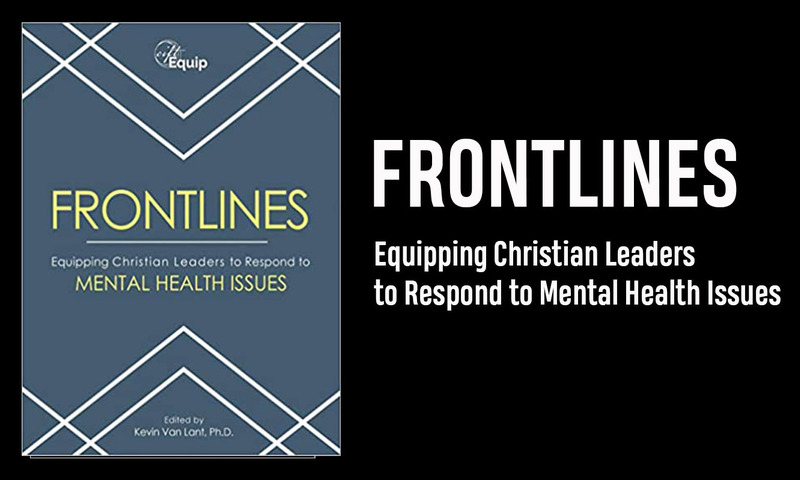
The number of people experiencing mental illness in our country has increased significantly over the past 15 years. Although causation may not be completely agreed upon, the data appears solid. This can be seen most clearly in the data tracking suicide. According to the U.S. , the annual rate of suicide has increased by 24% between 1999 to 2014. The tragedy of suicide is typically linked to one of several mental illnesses including depression, anxiety, PTSD, addiction and bipolar disorder. Data suggests that each of these mental illnesses have also increased during the past 15-20 years.
Why should pastors and Christian leaders be concerned about mental health?
Although research suggests that regular church attendance correlates to higher reported rates of subjective well-being, rates of mental illness experienced by those within the church have increased along with the national averages. These objective data, combined with my conversations with pastors and those working professionally in the Christian community, are the backstory that led to the publication of the Frontlines manuals. Several years ago, I noticed an increase in the number of pastors and Christian organizations asking me to speak to their staff and lay leadership about identifying and triaging mental health issues within their communities. Additionally, I noticed that the severity of the anecdotal stories being shared with me during these trainings were also increasing--particularly among teens and younger adults.
A New Resource for Churches
Over the past several years a colleague of mine from Rosemead School of Psychology has been graciously teaching an annual Mental Health First Aid certification course to my pastoral care and counseling students. My students enjoyed the training and found the content helpful in assessing and triaging people in their ministries who were suffering with mental health issues. Their only complaint was that the training manual was purely secular in nature. After listening to their comments, I began to envision a structured mental health training package for pastors, Christian educators, lay-leaders and parachurch organizations that contained solid information about mental health assessment and triaging but from a thoroughly Christian worldview and informed by scripture.
During the COVID-19 summer, several of my colleagues and I created two manuals designed to accompany a live training. Each of the contributors are seasoned Christian mental health professionals with deep commitments to the church and Christian ministry. We wrote one manual oriented towards the needs of an , which includes a chapter on the mental health challenges faced by older adults. An additional manual was also written to address the specific mental health needs of . Although topics related to mental health and mental illness can be complex and technical, we developed an accessible and readily applicable triaging model we refer to as “LASER�: Listen, Assess, Strategize, Explore and Refer (when necessary). Each of the 5 LASER steps assist the pastor, Christian educator or lay-leader in determining the type, intensity and necessary next steps is supporting and coming alongside someone who is suffering with a mental illness or perhaps a sub-clinical level of emotional distress.
The adult manual and training covers depression and suicide, anxiety and stress, psychotic disorders (schizophrenia and bipolar disorder), addiction, eating disorders, trauma and mental health issues unique to older adults. The adolescent and young adult manual covers many of the same topics but are written in a manner to assist those working with a younger population as their symptomatology and illness trajectory often differ from those experienced by adults and may require a more nuanced type of intervention.
Frontlines training can be tailored to a particular church, school or Christian organization. A complete adult training would typically consist of two, four-hour trainings while a complete adolescent and young-adult training would consist of one six-hour or two three-hour training blocks. We’re aware that the mental health needs of the Christian community are vital and our desire is to make this training as accessible and affordable as possible. If you’d like more information about Frontlines training or to discuss the possibility of bringing this training to your community please explore our website at or email me directly at kevin.van.lant@biola.edu.
.png)
.jpg)
_(1).jpg)